
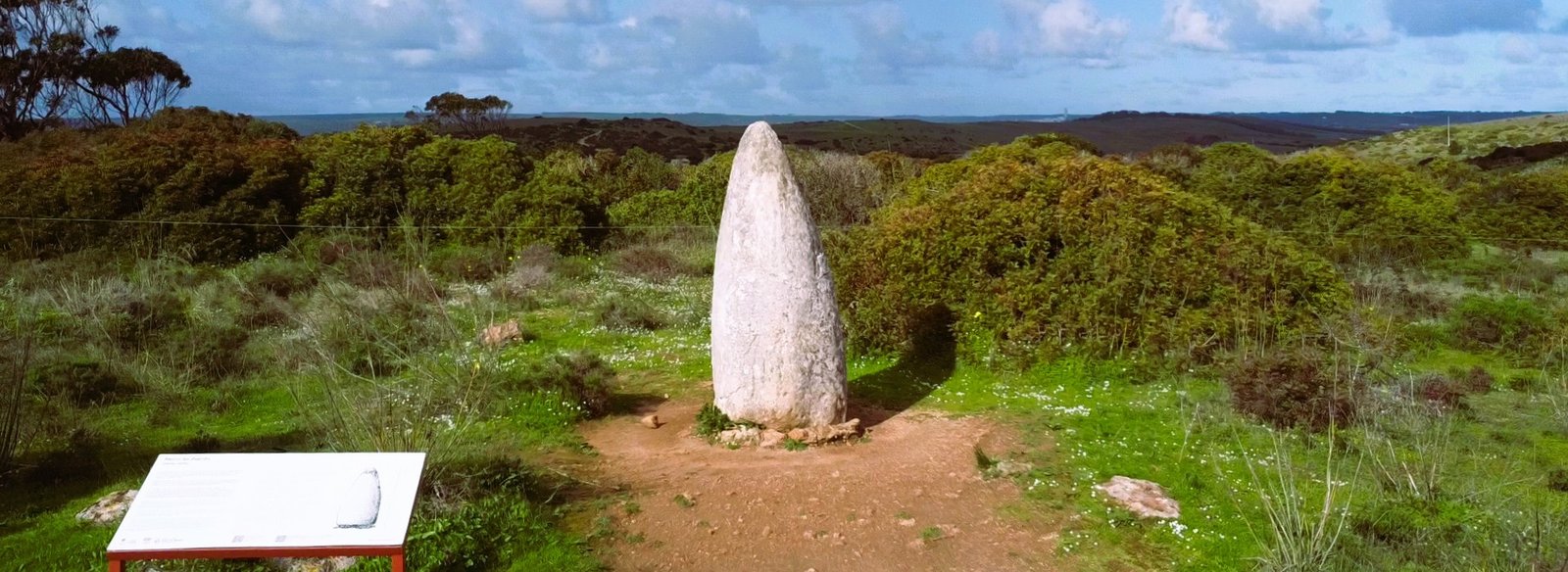
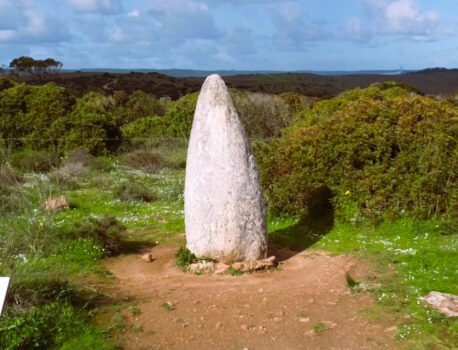
When people think of megaliths, their first thought is often of “standing stones” or menhirs. (In Portuguese: menir) These are large stones, often carved into a cylindrical or conical shape. They can stand individually or in groups, called cromlechs. Many menhirs in Portugal were toppled sometime in antiquity. Menhirs that are seen standing have often been re-erected by archaeologists. Some menhirs have been moved from private land into museums.
-
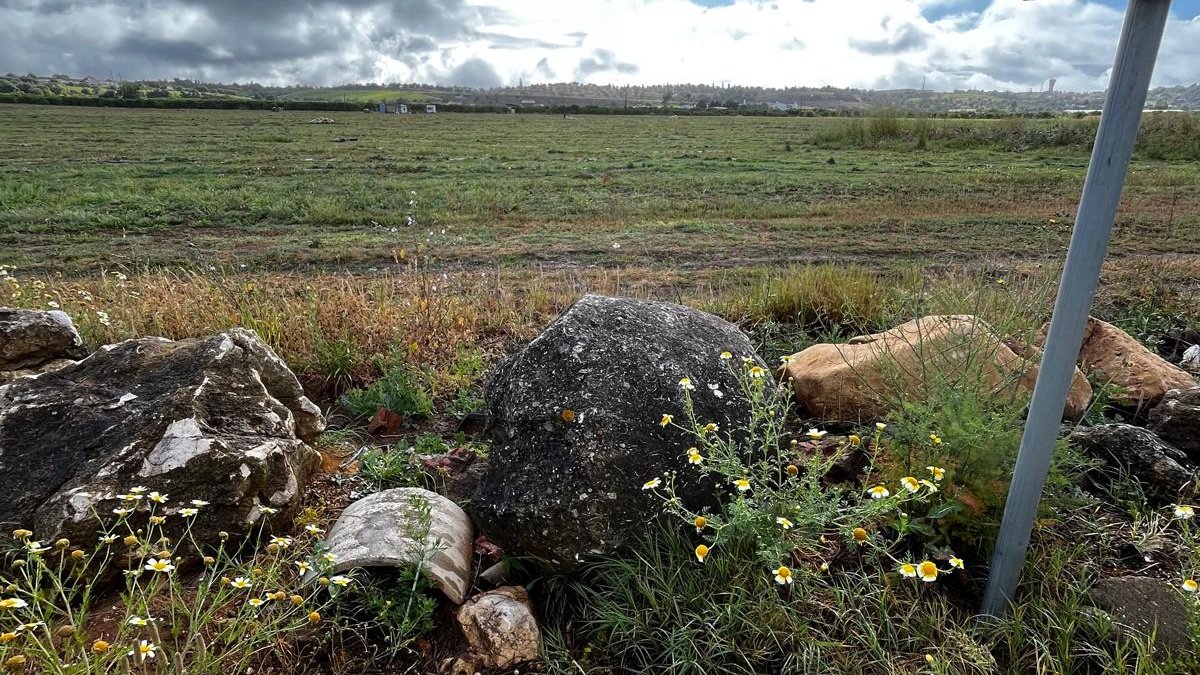
Menir da Torre
A fallen and broken stone, originally part of a menhir or standing stone. The stone is broken, and is lying beside the road as part of a stone border. It very likely was originally situated somewhere else, possibly in a field. The museum in Portimão has a display that says this is a “large monolith”…
-
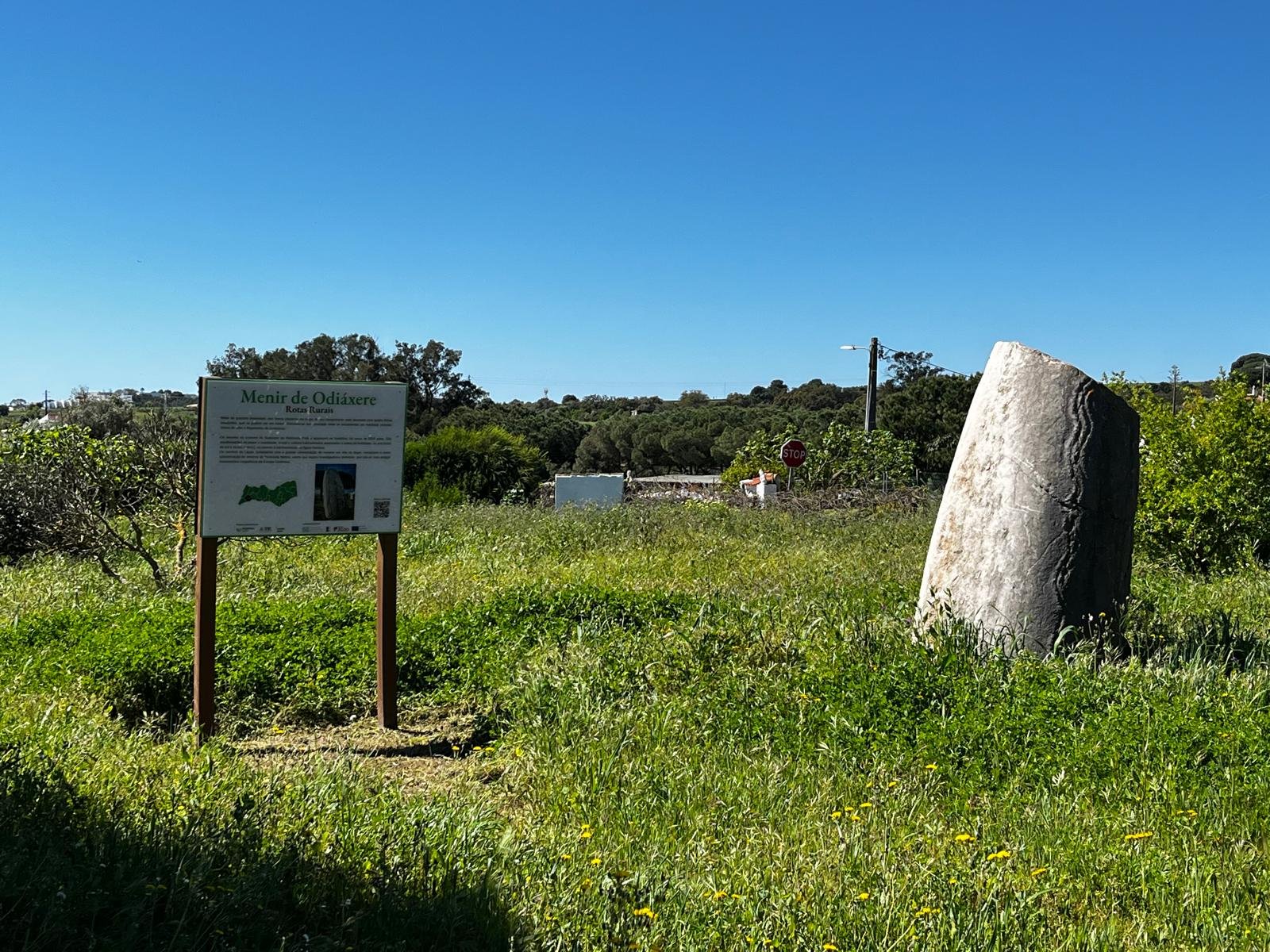
Menir de Odiáxere
Standing alone in a private garden, this stone proudly displays ancient carvings. (photographs graciously provided by one of our readers) This is a cylindrical menir, with the top broken. It is decorated with vertical bands of carved waving lines. (Serpentiform?) The menir was re-erected on the site where it was found by the landowner. Menir…
-
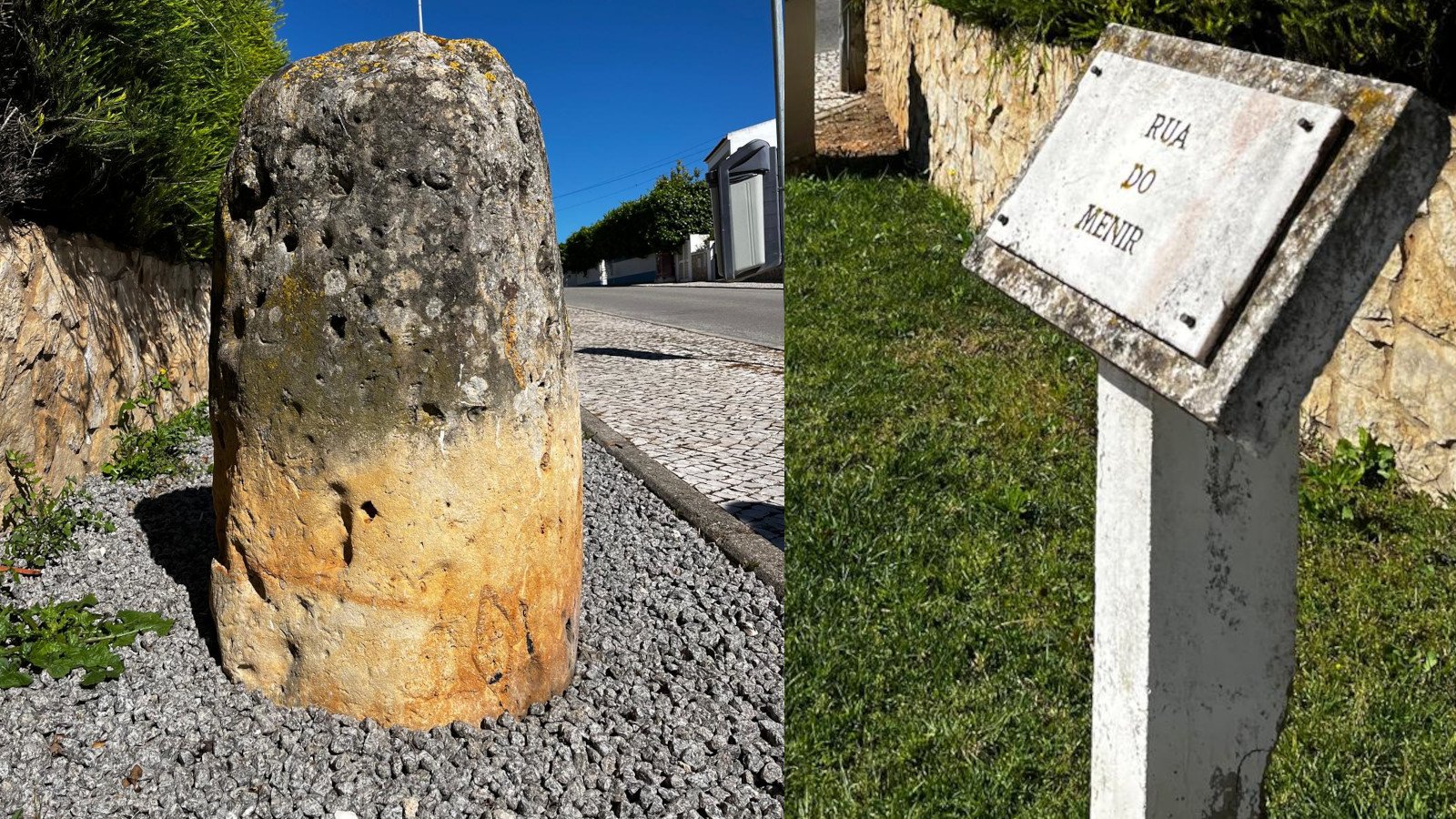
Menir de Vale da França
This little stone stands peacefully in an urban environment. Having been moved from its original location, it now serves as an enigmatic reminder to passers-by that people had lived here and built markers like this many thousands of years ago. (photographs graciously provided by one of our readers) This was apparently found in the area…
-
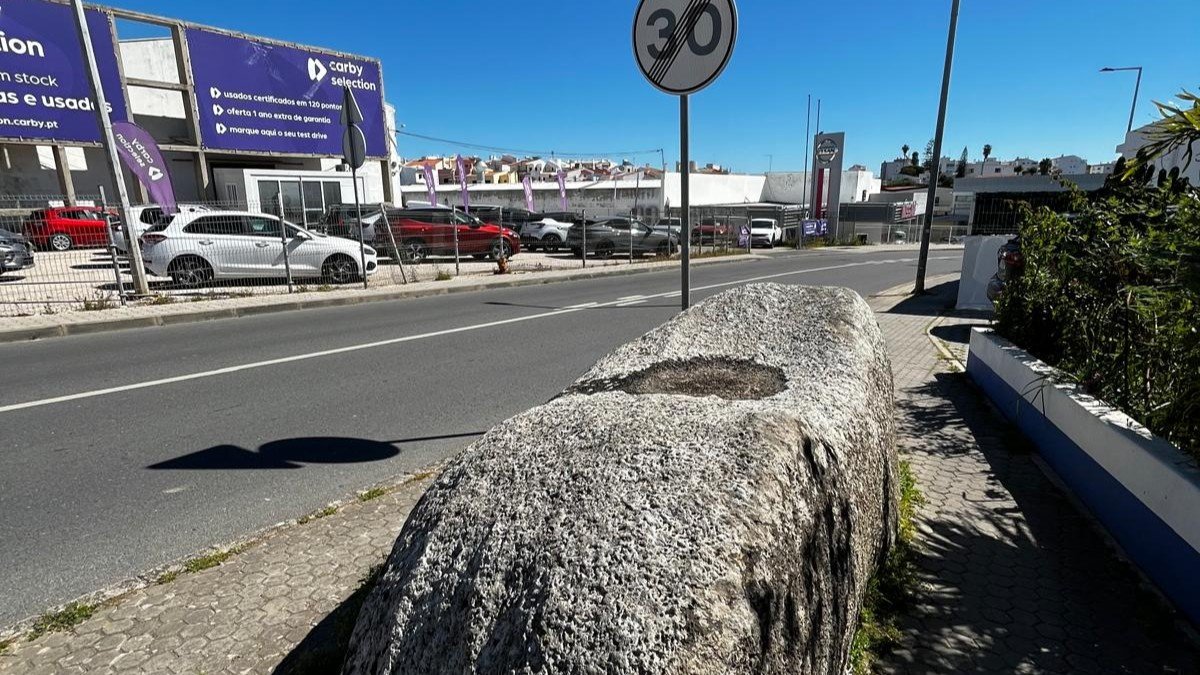
Pedra Moirinha
This rough stone is positioned in the middle of a sidewalk in an urban area of the town of Portimão. Having been moved from the distant mountains in prehistoric times, it was again moved in modern times because of construction. It now serves as an enigmatic presence in the urban context: challenging passers-by to think…
-
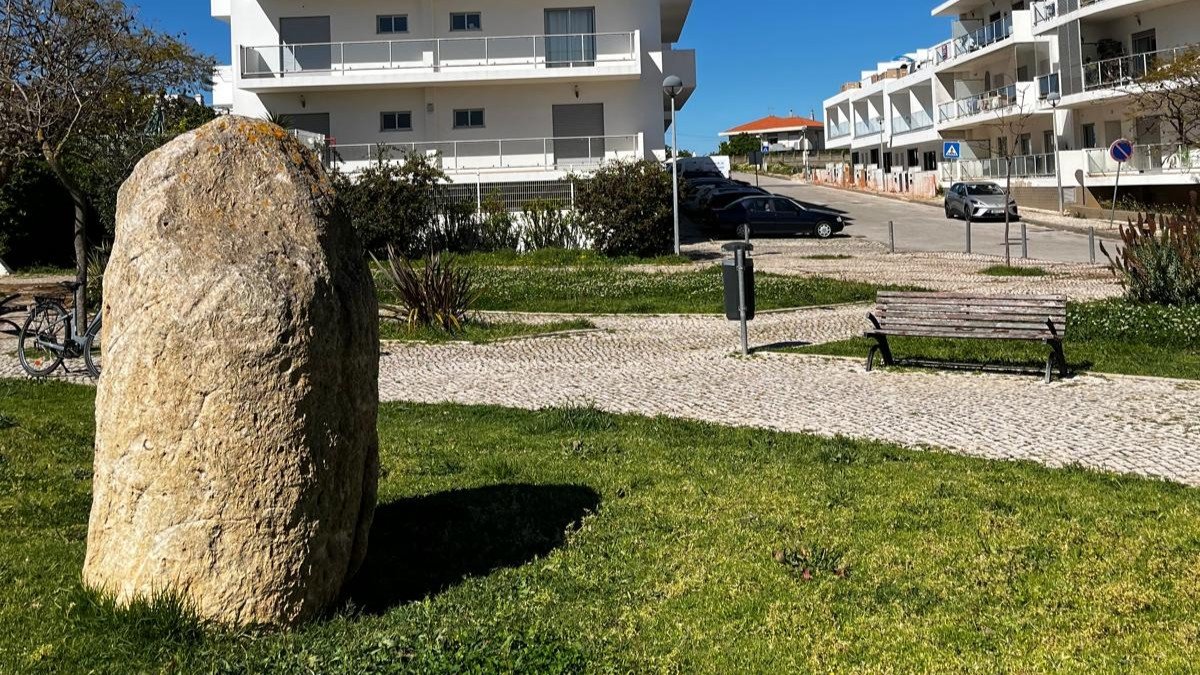
Menir dos Três Bicos
This Neolithic stone stands again in a park, slightly removed from its original position. Whatever its original purpose, it now stands as a focal point in an urban environment. (photographs graciously provided by one of our readers) According to a post from the Museum of Portimão, this menhir was found fractured, lying on its side…