
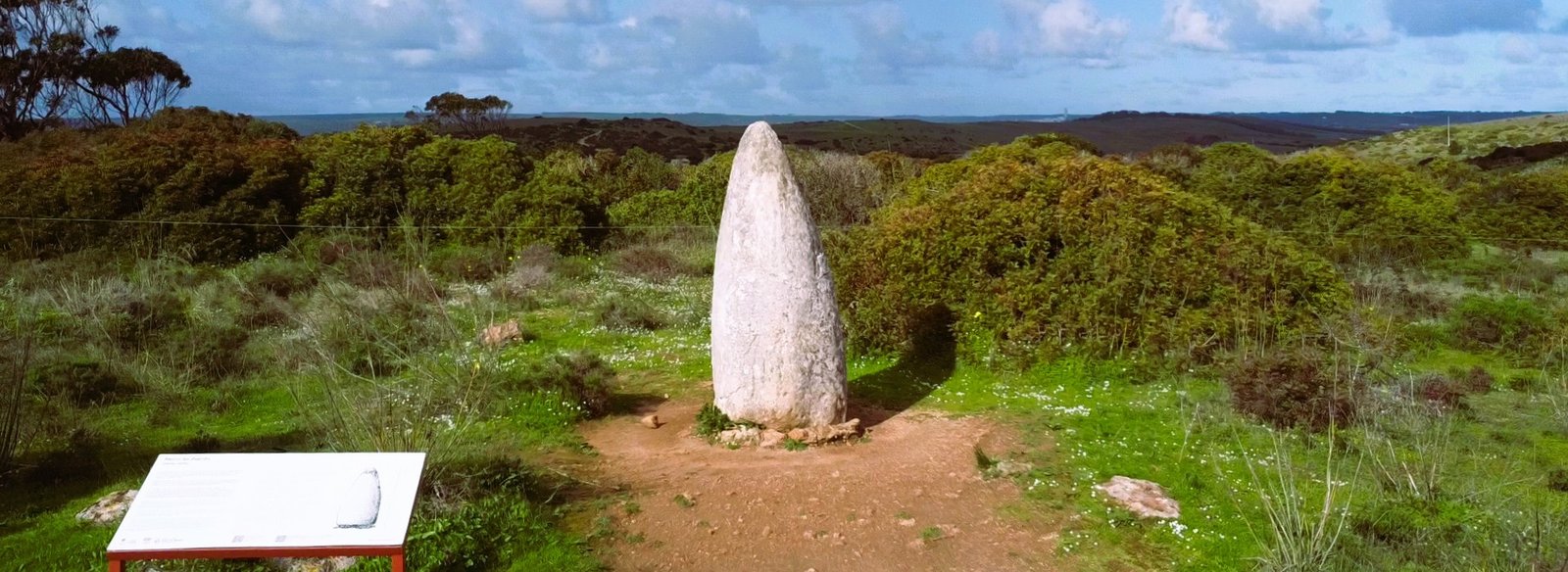
When people think of megaliths, their first thought is often of “standing stones” or menhirs. (In Portuguese: menir) These are large stones, often carved into a cylindrical or conical shape. They can stand individually or in groups, called cromlechs. Many menhirs in Portugal were toppled sometime in antiquity. Menhirs that are seen standing have often been re-erected by archaeologists. Some menhirs have been moved from private land into museums.
-
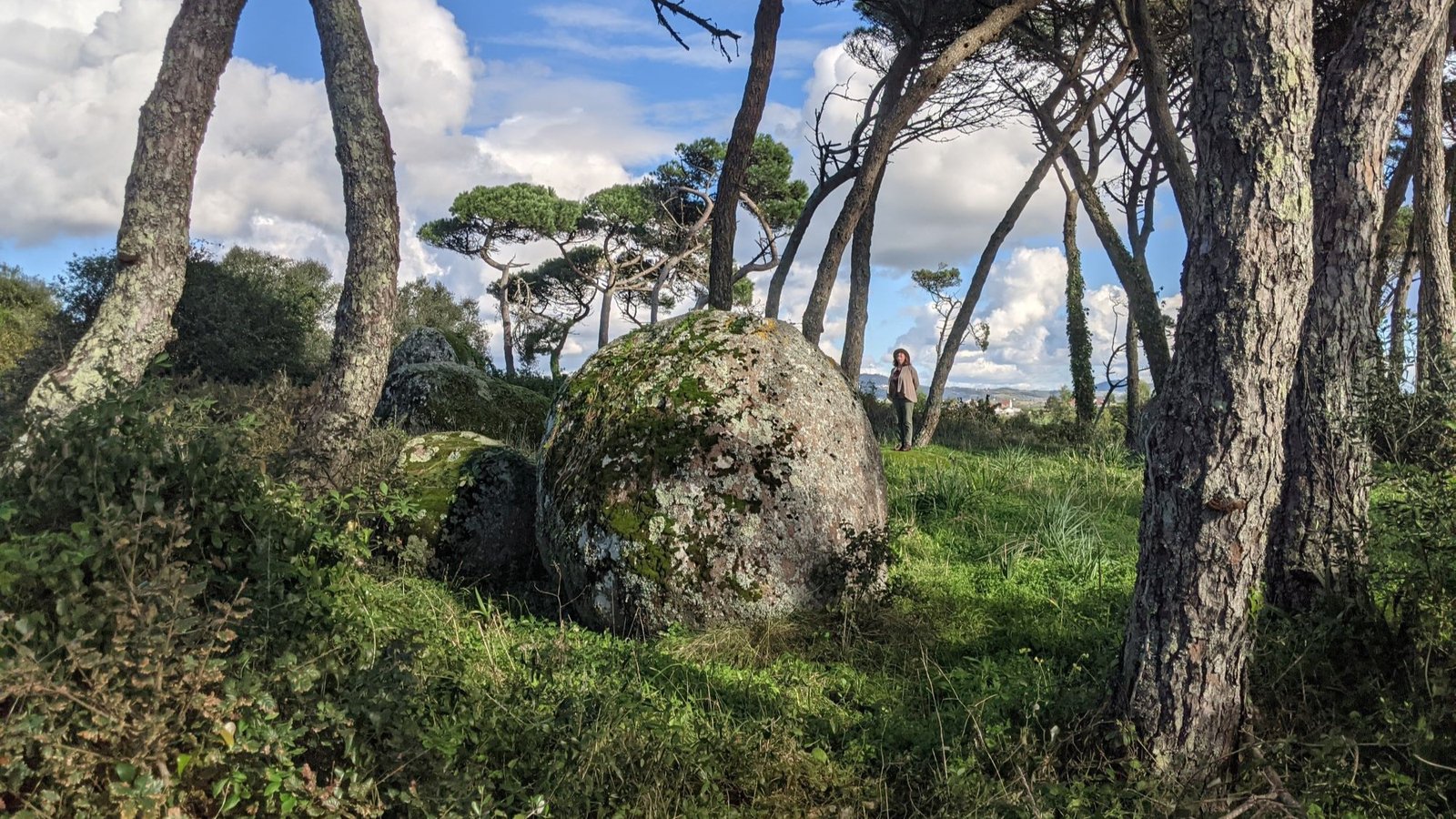
Barreira Megalithic Complex
Portuguese name: Conjunto Megalítico de Barreira, or Menires de Barreira Standing on the hilltop, surrounded by tall trees and lush undergrowth, you are surrounded by a tumbled abundance of giant stones, some standing brightly in the sunshine, with others covered in moss and/or ivy. To the east, you can see the Sintra hills, topped with…
-
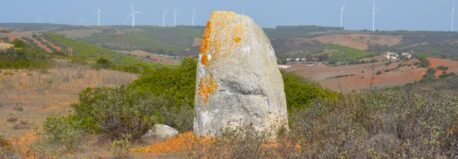
Menir de Aspradantes
Standing on a ridge of a hill, looking over the fields in the western Algarve, the silence belies the hum of traffic on the distant motorway and the whirr of the towering wind turbines on the far hills. These monumental emblems of the modern age of electricity seem to mock the tiny stone standing alone…
-
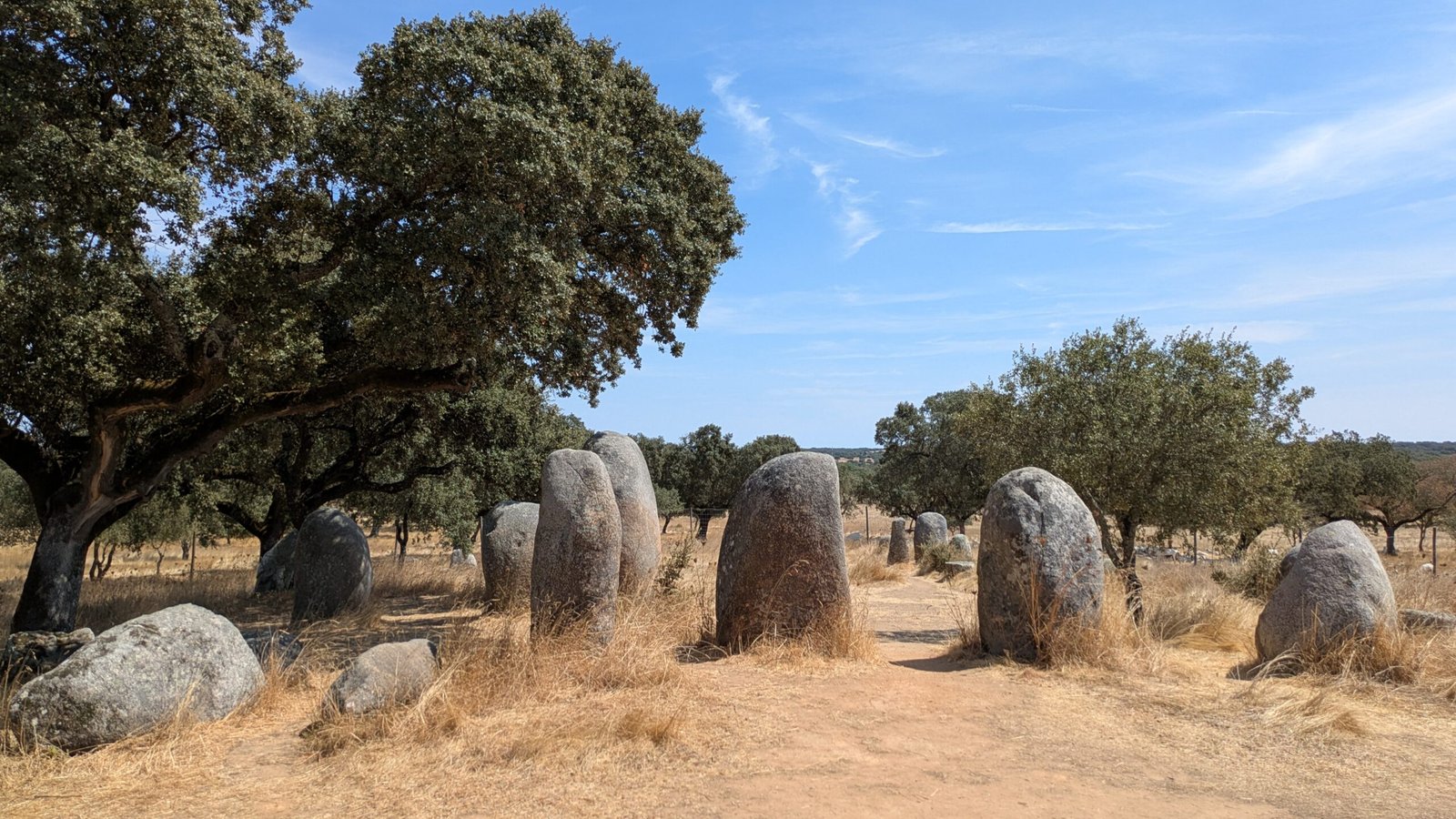
Vale Maria do Meio Cromlech
Portuguese name: Cromeleque do Vale Maria do Meio Nestled in a cork oak forest, the stones stand in an elongated group. The hot breeze blows past them and through the trees, making the leaves tremble and rustle slightly. That’s the only sound you hear, along with the buzz of insects. The stones reflect the intense…