
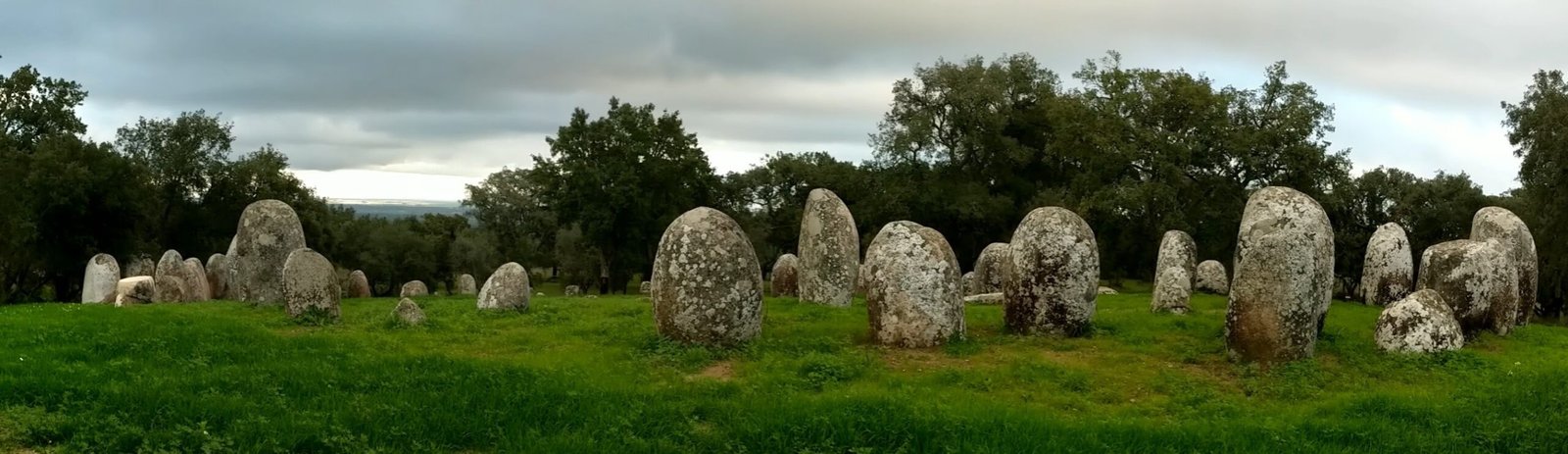
1. Purpose and Goals
Prehistoric Portugal is dedicated to:
- the research and documentation of prehistoric archaeological sites throughout Portugal,
- the promotion and celebration of the country’s prehistoric heritage,
- and the education of the general public, both within and outside of Portugal, in both the scope of this prehistoric heritage as well as good practices to protect and preserve it.
Our goal is to support the work of archaeologists in researching Portugal’s prehistory, and to educate the public in that work.
We aim to publicize sites throughout the country, encouraging the public to explore and engage with Portugal’s prehistoric heritage in a positive and sustainable way.
At all times, we emphasize safeguarding and protecting sites and artefacts, underpinned by a visitor Code of Conduct that promotes respectful and sustainable exploration.
2. Core Principles
- Evidence-Based Research: We believe that the rich, authentic prehistoric record of Portugal is fascinating in its own right. We approach site documentation and historical narrative through material evidence, documented archaeological context, and scientific research.
- Public Engagement & Collaboration: Prehistory belongs to everyone. We welcome contributions, field observations, and engagement from enthusiastic amateurs, independent researchers, students, and professional archaeologists alike.
- Preservation & Stewardship: Archaeological landscapes are fragile and irreplaceable. We actively promote the conservation of monuments, adherence to local heritage regulations, and the protection of sites from disturbance or looting.
- Clarity & Open Inquiry: We encourage curious minds and open inquiry, emphasizing transparent reasoning where interpretations are supported by observable data and verifiable sources.
3. Contributor & Editorial Scope
To ensure the platform remains a reliable, coherent educational resource aligned with current archaeological science, we maintain clear editorial boundaries regarding what falls within and outside the scope of Prehistoric Portugal.
What We Welcome and Encourage:
- Site Documentation & Field Reports: Detailed accounts, coordinates, and descriptions of Portuguese prehistoric sites.
- Photography & Visual Mapping: High-quality imagery, site sketches, and survey observations documenting the present condition and landscape setting of monuments.
- Research Summaries & Historiography: Overviews of past excavations, antiquarian accounts, and accessible summaries of published academic research and modern fieldwork in Portugal.
- Contextual Discussion: Thoughtful discussion and reasoned hypotheses, grounded in data and research, regarding prehistoric society, site distribution, tool technologies, and landscape use.
What Falls Outside Our Scope:
We recognize that people explore the past through many different perspectives, mythologies, and alternative traditions. However, to keep this project focused on evidence-based research and supporting the work of archaeological science, Prehistoric Portugal is not a platform for:
- Theories Lacking Material or Scientific Evidence: Speculative claims involving lost advanced civilizations, extraterrestrial intervention, or esoteric energy systems/earth mysticism.
- Unsubstantiated Interpretations: Claims presented as factual without reference to material remains, archaeological context, or peer-reviewed literature.
- Activities That Compromise Heritage: Content that depicts or encourages unauthorized excavation, disturbance of protected monuments, or unsanctioned metal-detecting on archaeological sites.
Contributors whose interests center on alternative, mythological, or esoteric interpretations of prehistory are kindly encouraged to share those perspectives on platforms dedicated to those traditions.
4. Guidelines for Submitting Content
When preparing a contribution for the site:
- Cite Sources: Where possible, reference existing registrations (such as DGPC/SIPA records), regional museum archives, academic papers, or published surveys.
- Distinguish Observation from Interpretation: Clearly differentiate what can physically be observed on site (e.g., “a fallen granite monolith measuring 2.5 meters”) from your interpretation or working hypothesis (e.g., “potentially part of a dismantled stone circle”).
- Respect Site Integrity: Do not publish directions or sensitive coordinate data for highly vulnerable, unexcavated, or privately held sites without prior discussion with the editorial team.
- Follow the Visitor Code of Conduct: Ensure that all visits, photography, and reports adhere strictly to our principles of leaving no trace and causing no disturbance to structures or surface finds.