
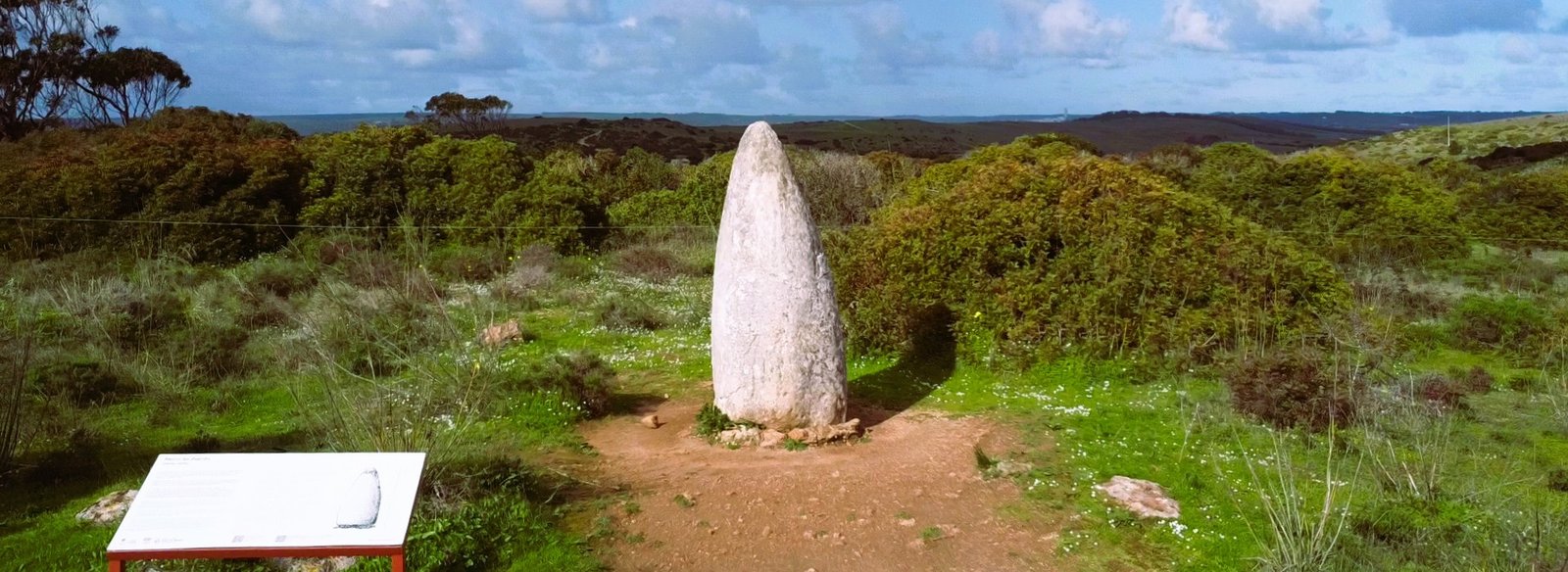
When people think of megaliths, their first thought is often of “standing stones” or menhirs. (In Portuguese: menir) These are large stones, often carved into a cylindrical or conical shape. They can stand individually or in groups, called cromlechs. Many menhirs in Portugal were toppled sometime in antiquity. Menhirs that are seen standing have often been re-erected by archaeologists. Some menhirs have been moved from private land into museums.
-
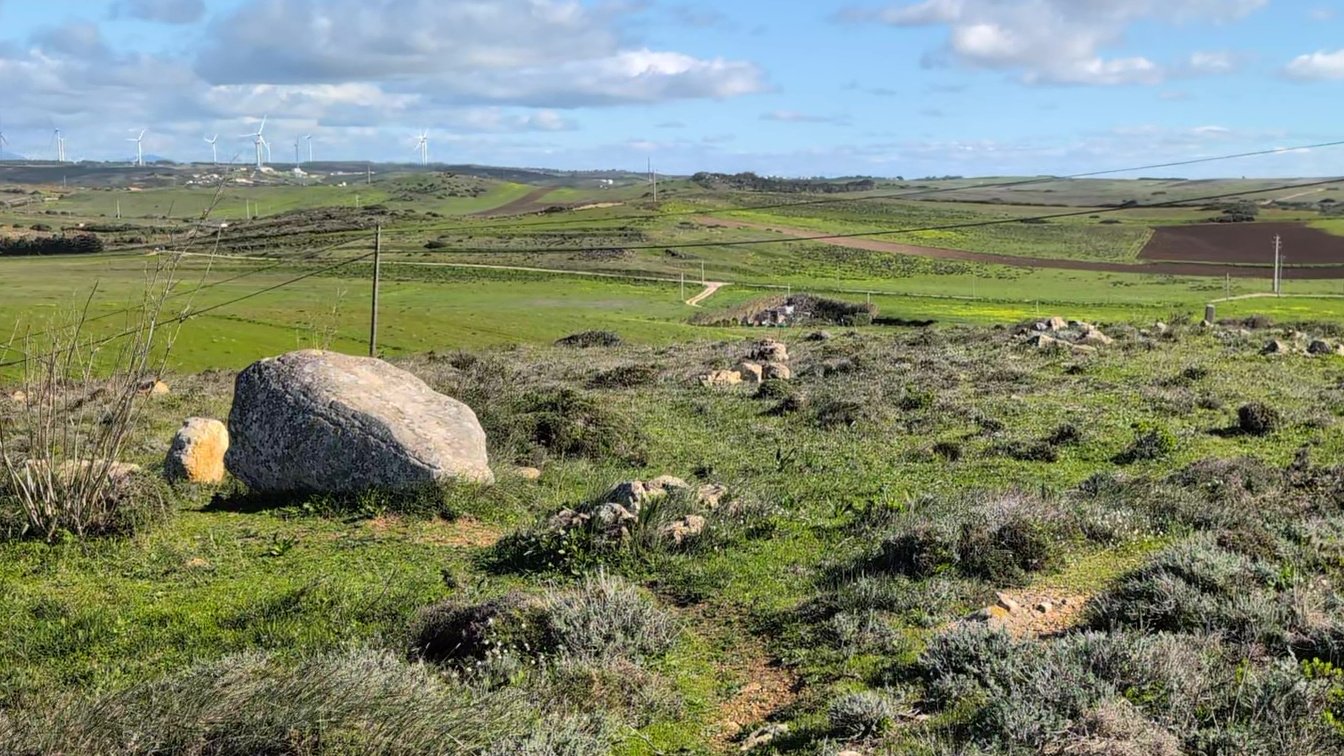
Pedra Escorregadia
Also known as: Menires da Pedra Escorregadia, Sepultura da Pedra Escorregadia, Necrópole da Pedra Escorregadia Stand on the hilltop, and listen to the cars racing past on the road below. On this hill, the stones have stood still for many thousands of years. Looking around the view, you can see to the ocean in several…
-
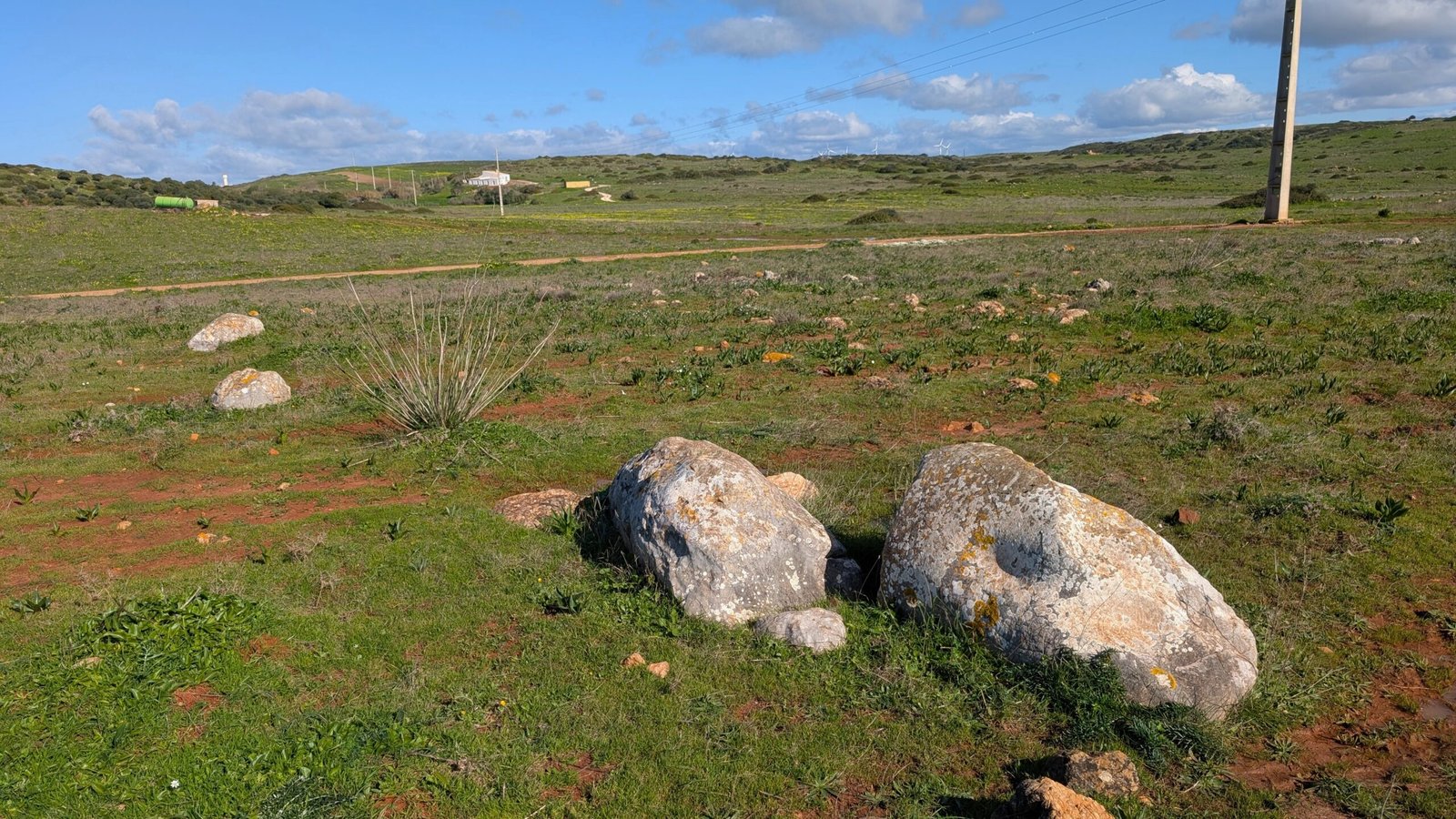
Cromeleques de Amantes
Two groups: Cromeleque de Amantes 1, Cromeleque de Amantes 2 (also known as Menires de Amantes 2) Walking around the field, several large stones stand out. They’re toppled over and broken, but their smoothed cylindrical shape belies their origins: these are shaped stones, made into menires (Portuguese spelling), or standing stones, thousands of years ago.…
-
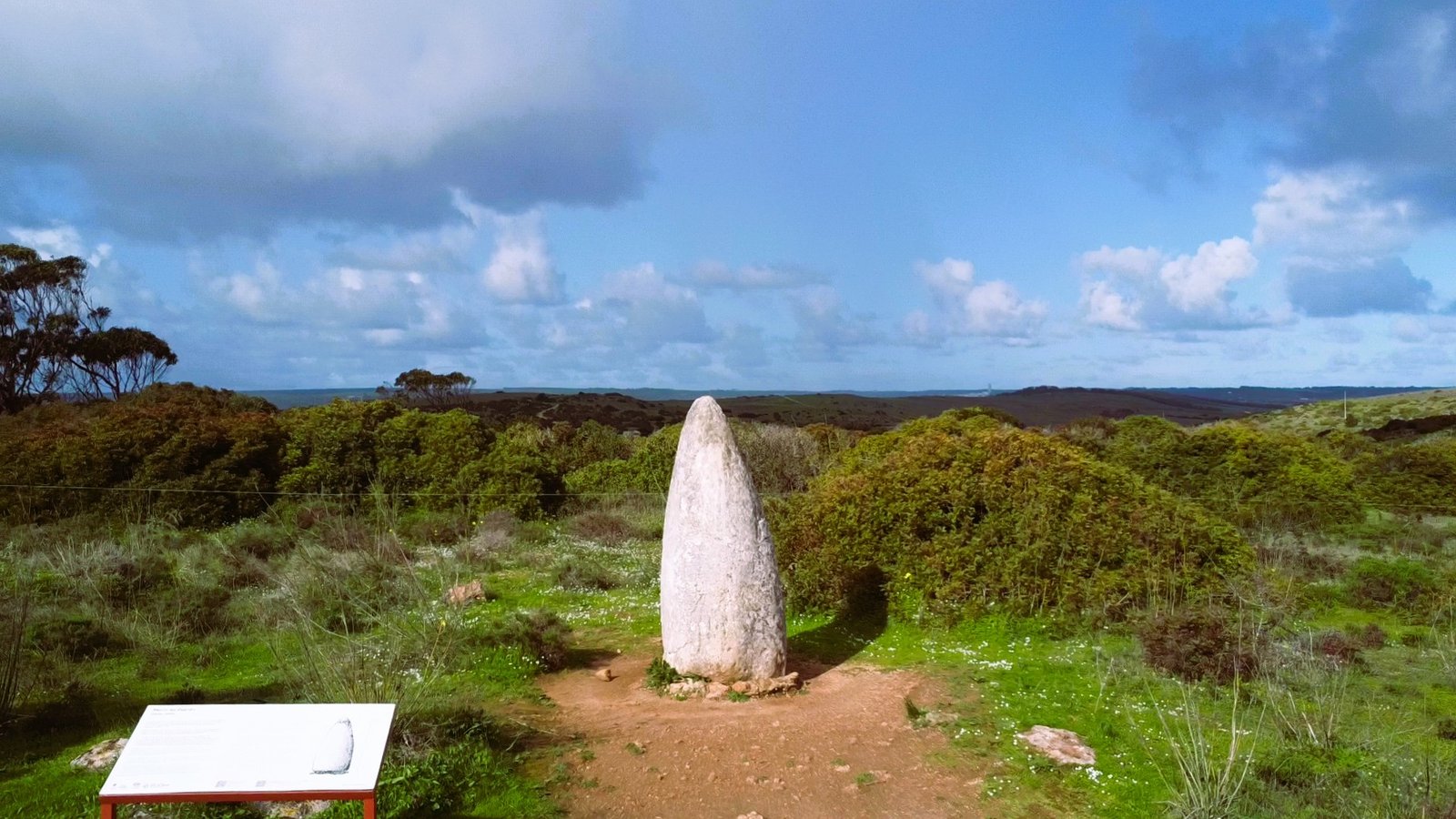
Menires do Padrão
Standing sentinel above the fields around Sagres and Vila do Bispo, the conical menir (the common English term is “menhir“) seems the solitary example of prehistoric megalithic construction in the area. But look more closely in the area, and you will find remnants of its original neighbours. Look around again and imagine the area dotted…
-
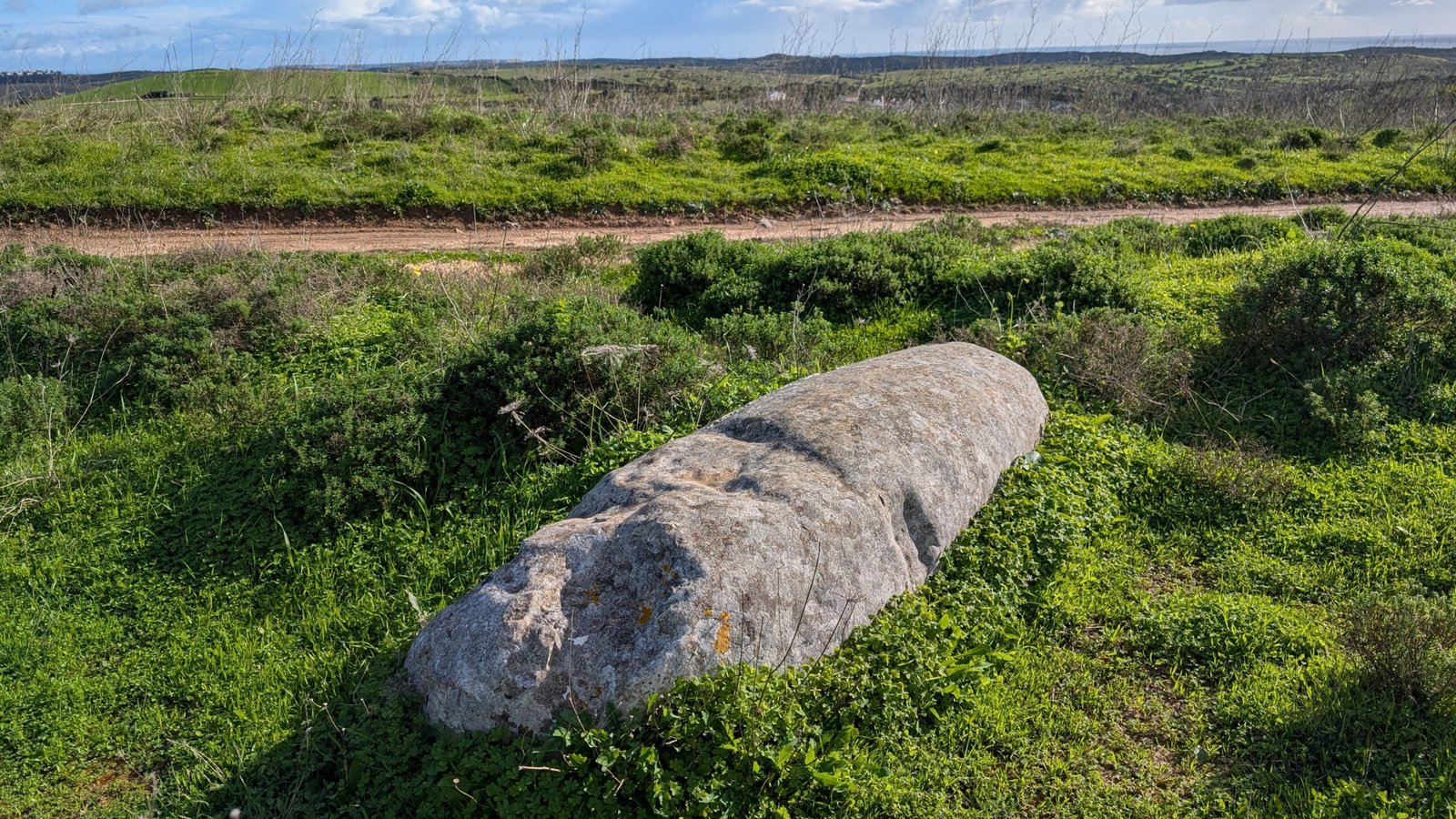
Menires de Milrei
Broken stones lie scattered in the fields above Sagres and the Cabo de São Vicente. If you look closely at them, you’ll see that they are shaped into smooth obelisks. Were these territorial markers in ancient times? Did prehistoric people use them for ritual purposes? We don’t really know. Today, they are merely stones lying…
-
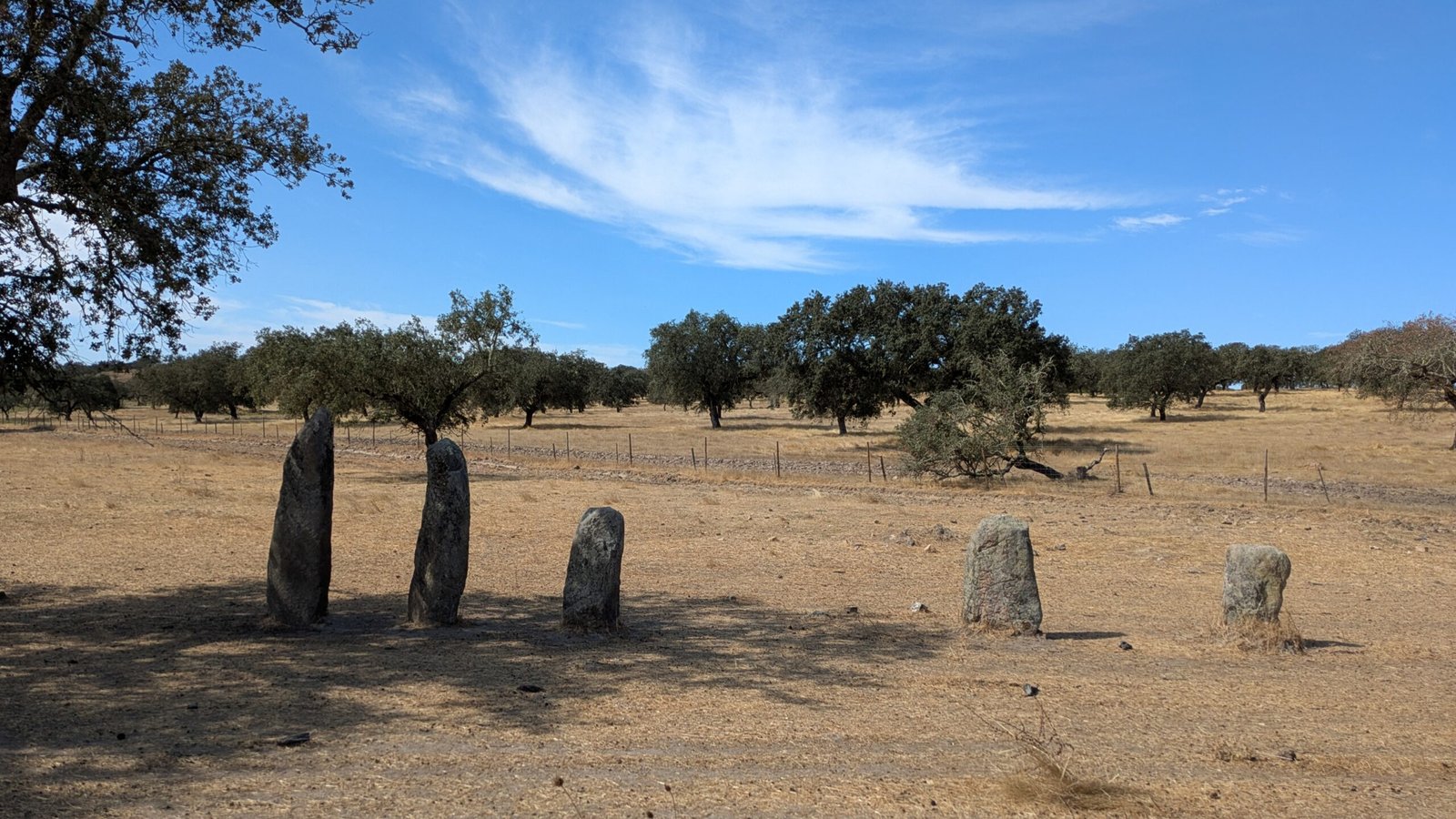
Conjunto Megalítico do Monte de Têra
Also known as: Alinhamento da Têra, Alinhamento do Monte de Têra Standing tall with flocks of sheep to keep them company, the stone pillars line up from East to West. There are gaps in their formation revealing the loss of some of their number over the thousands of years they have stood here. The five…