
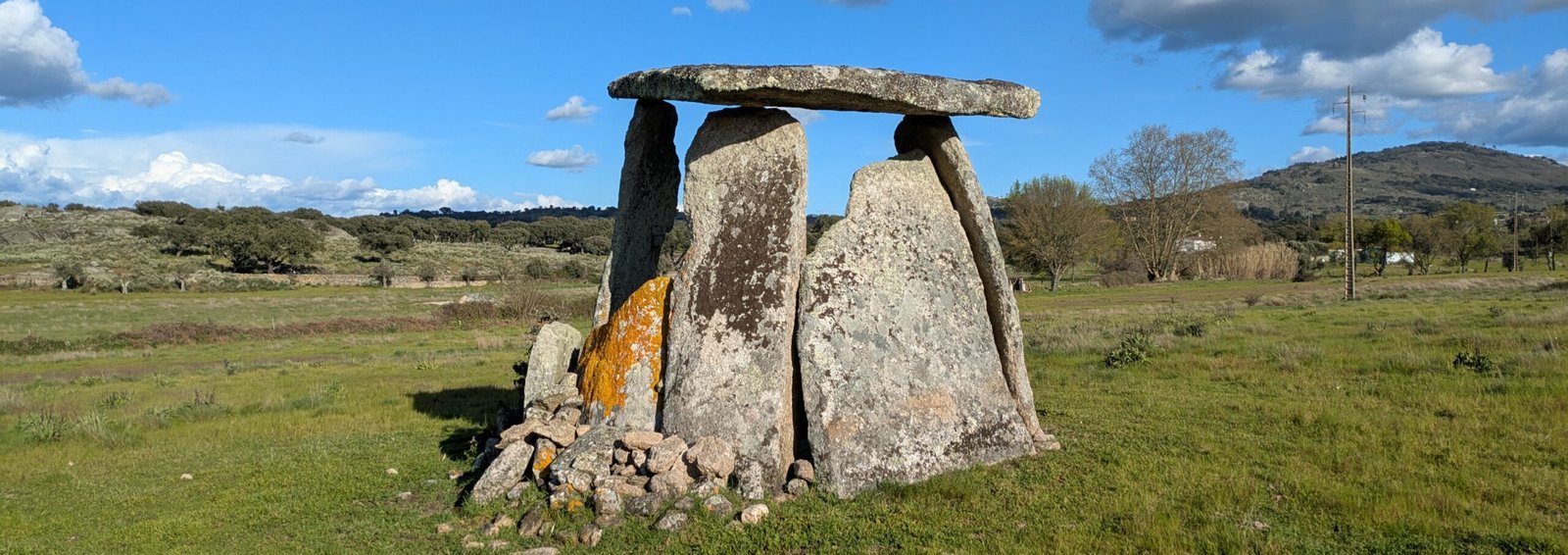
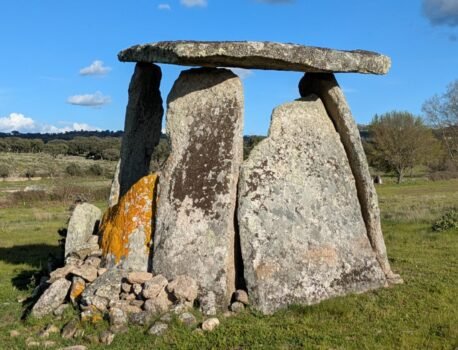
The most common type of megalithic structure in Portugal are funerary structures. These are typically tombs made of large stone slabs: these are called “dolmens” or portal tombs. In Portuguese, they are typically called antas but also dólmen or orca. Other types of funerary structures include large chambered tombs (including the famous Alcalar monuments), which uses stacked stones to make a circular chamber. This style of building is also called a “tholos” (plural “tholoi” or “tholoses”). I’ve included all large stone funerary structures into this category called “Dolmens.”
-
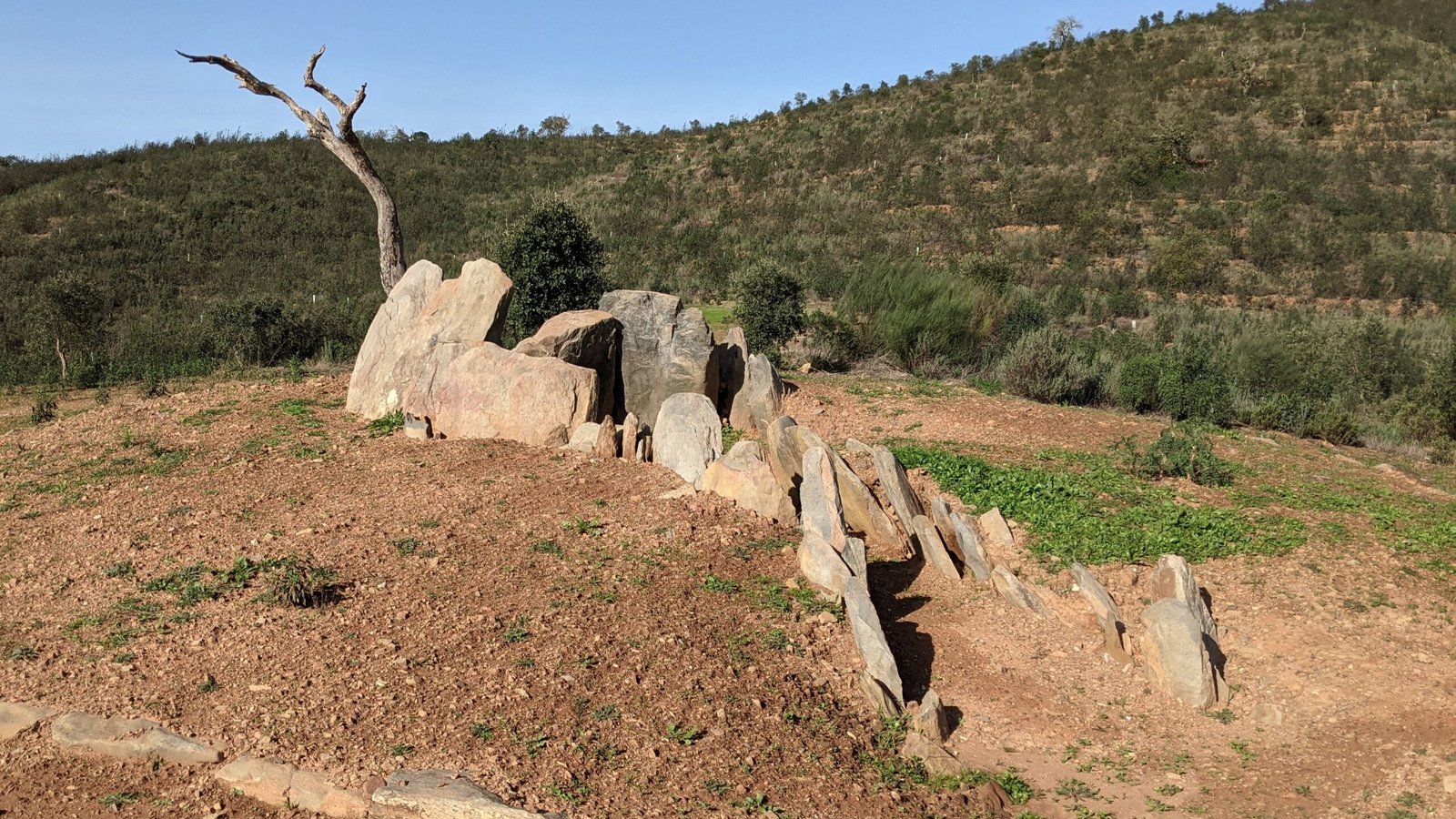
Anta do Beringel
Also called: Tholos of Cumeada On a hill in the heart of the Algarve, a bare dead tree holds vigil over an ancient megalithic tomb. The surrounding hills provide a backdrop of forest and low scrub, leaving the stones standing out under the hot sun. In the quiet, the millennia that stretch between its construction…
-
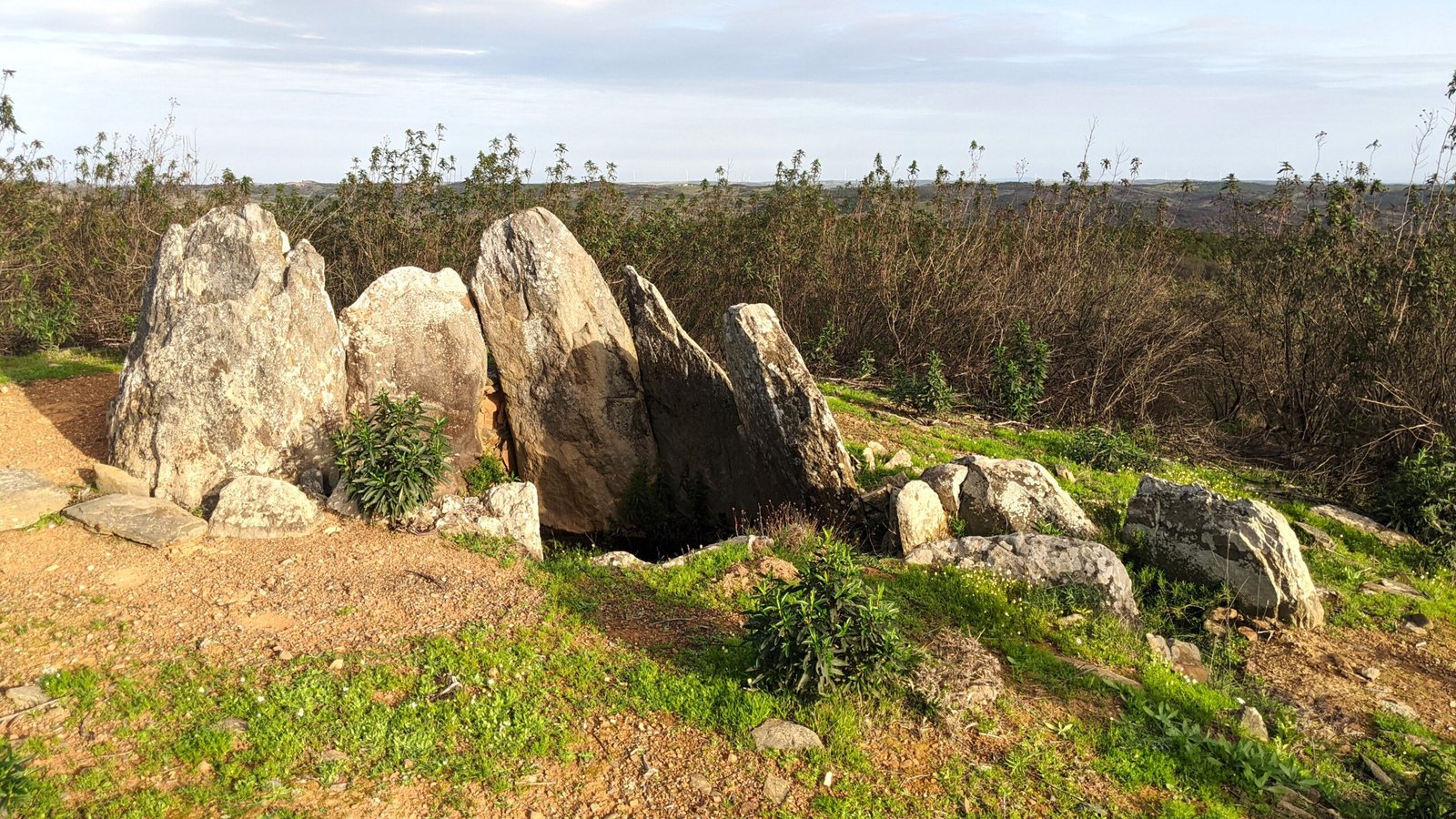
Anta da Masmorra
High on a hill, surrounded by nothing but low scrub and forest, stands an abandoned and ruined site: a shattered windmill tower beside the road, forlorn. Just beyond lies the far more ancient Anta da Masmorra, showing less damage than the (relatively) modern windmill. This prehistoric tomb rests quietly in relative anonymity and isolation. It…
-
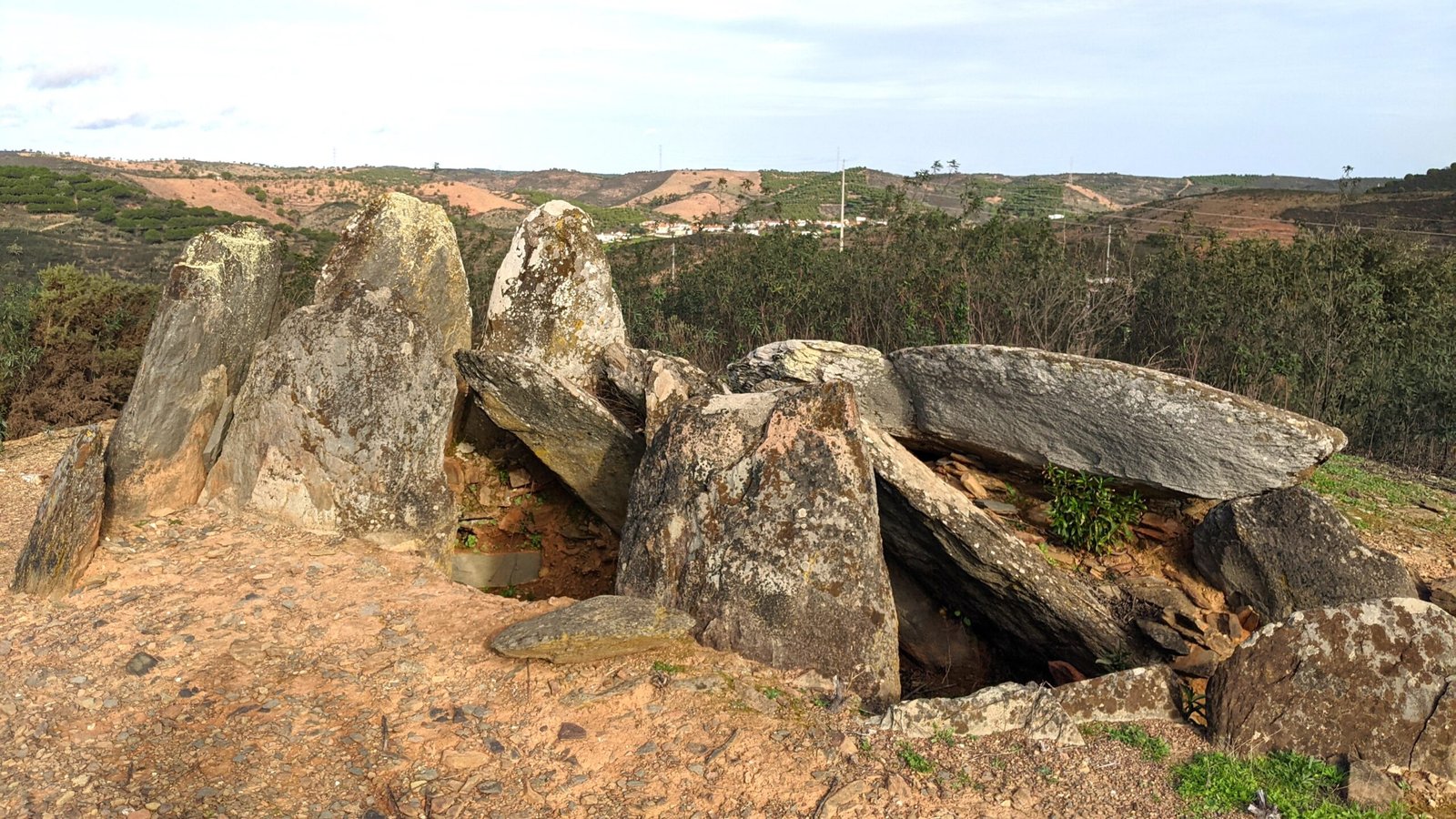
Anta das Pedras Altas
Sit on the hill and take in the vista of the Algarve countryside all around you. No town is near enough to hear. You might hear the birds, or possibly barking dogs, but mostly you’ll hear the wind. The dolmen enjoys this peace and quiet, and has done for thousands of years. The noise and…
-
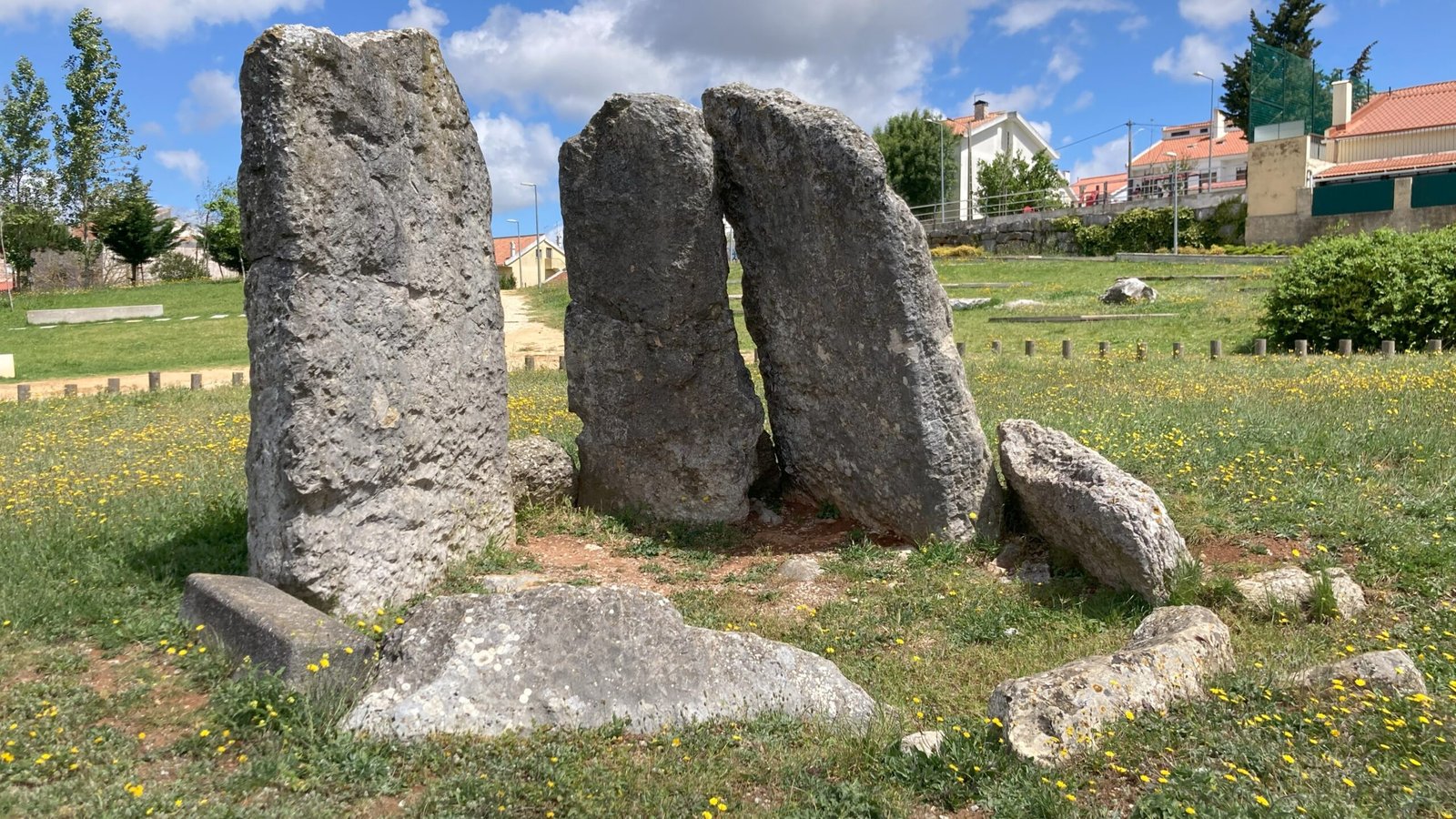
Anta das Pedras Grandes
The ancient stones stand regally in the centre of a large urban park. Despite the loss of many stones, the anta seems proud to be enshrined in such a prominent spot in the community. Passing dog-walkers may pay no heed, resting or picnicking families may not take time to read the informative plaque, but the…
-
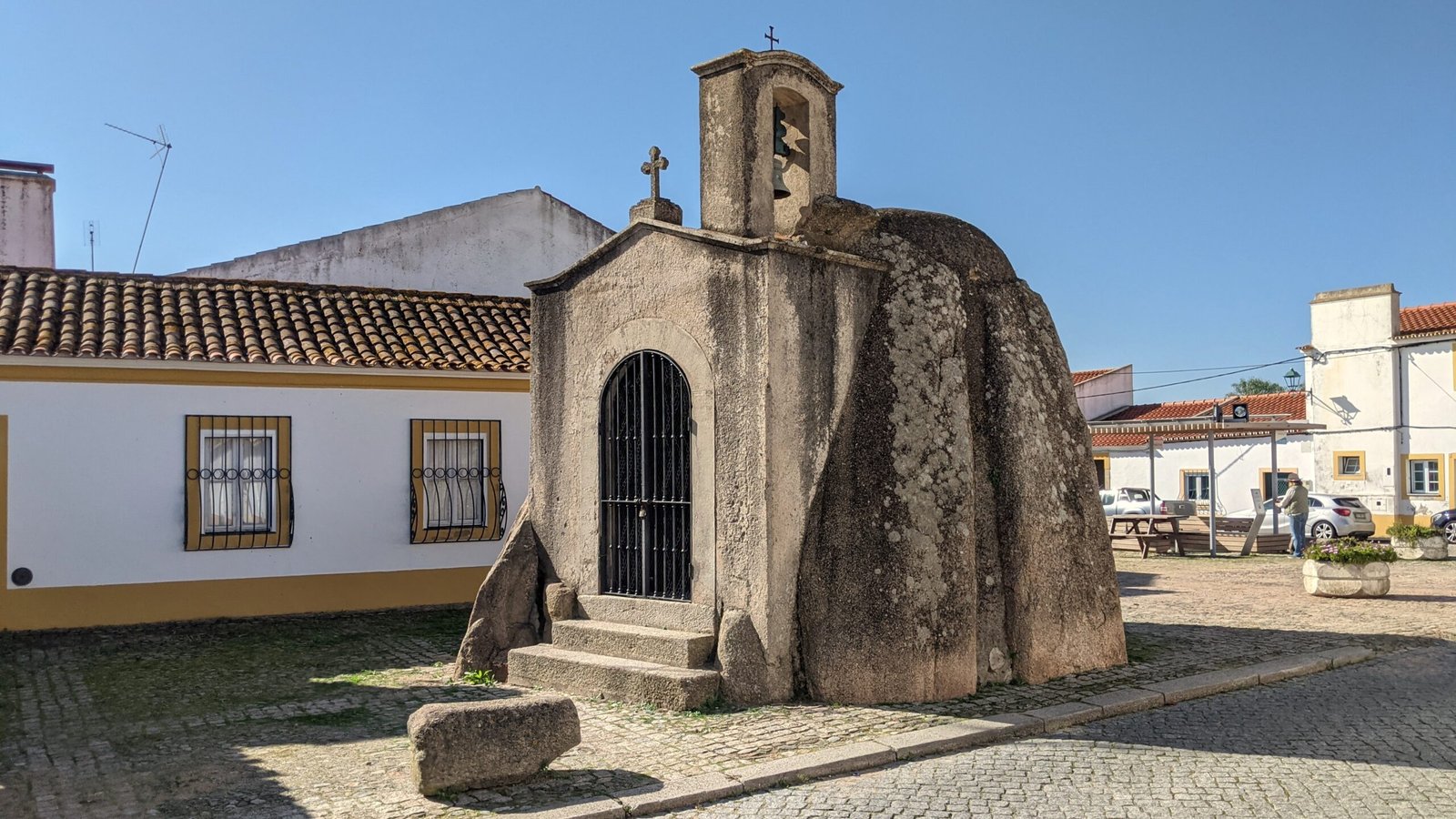
Anta-Capela de São Dinis
Also called: Anta de Pavia The enormous dolmen stands proudly in the square, grey and hulking beside the traditional yellow and white Alentejana buildings. It presents its original rear towards the square, but as you head around to its entrance its transformation becomes clear. The squared-off stone entranceway replaces the original corridor, and the cross…