

Also known as: Megalithic Monuments of Alcalar, Alcalar 7, Alcalar 9
It’s just about possible to see the sea from here, but this is not your typical Algarve beach spot. These hills, in the foothills the mountains of Monchique, hold a very special allure to entice people away from the beach. That allure was true four thousand years ago, and it’s still true. Here, you can visit ancient structures built by people thousands of years ago with stone tools and human strength, and reconstructed recently with more modern tools.
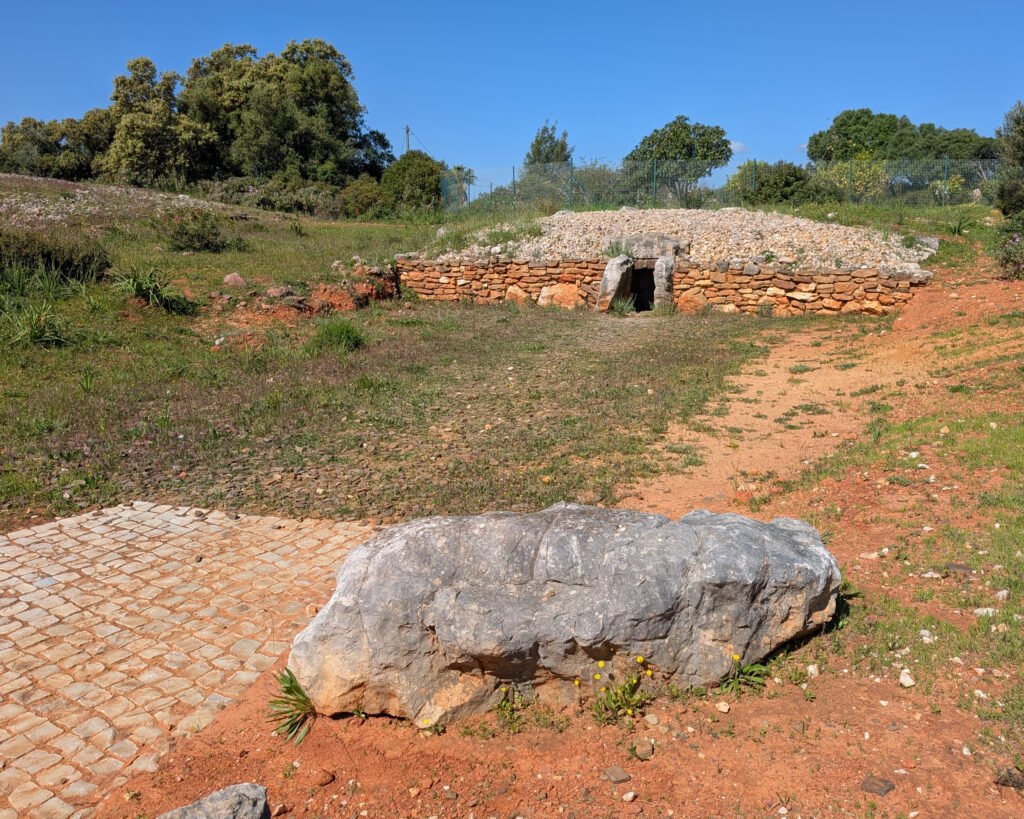
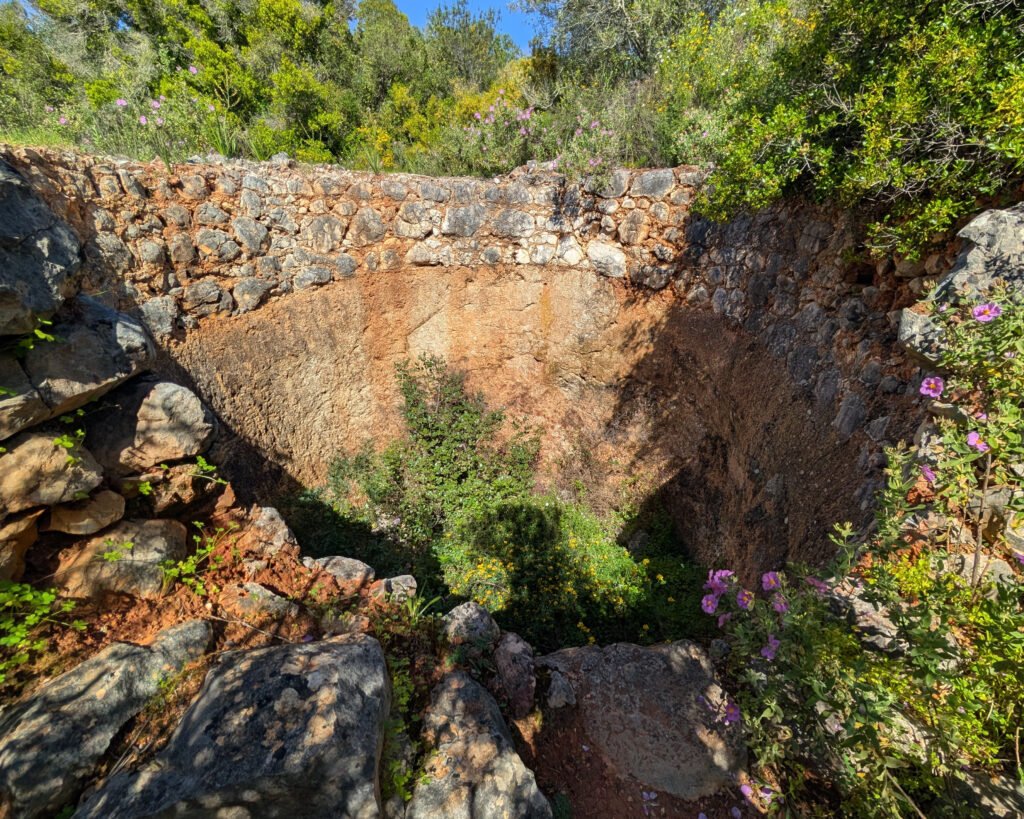
The official site of the Megalithic Monuments of Alcalar has two of the monuments. There are around 20 megalithic structures that bear the name “Alcalar,” which is also the name of the local village. There is also at least one location identified as a prehistoric settlement in the group. This whole area would have been populated, and there is some evidence that the nearby coastline (around Alvor & Portimão) was used for trade around the Atlantic and Mediterranean. The megalithic monuments are all funerary structures from the Chalcolithic period (approximately 2900 BC to 2000 BC). Many of the structures have been destroyed or at least are in a poor state of preservation, and nearly all are on private land and not visible.
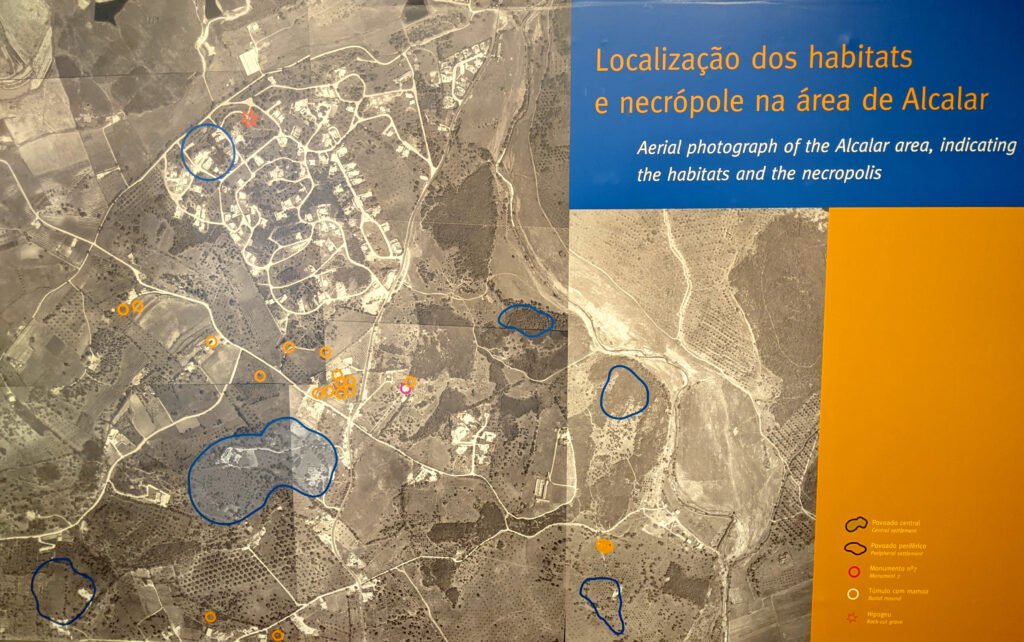
(photograph of the centre’s display board)
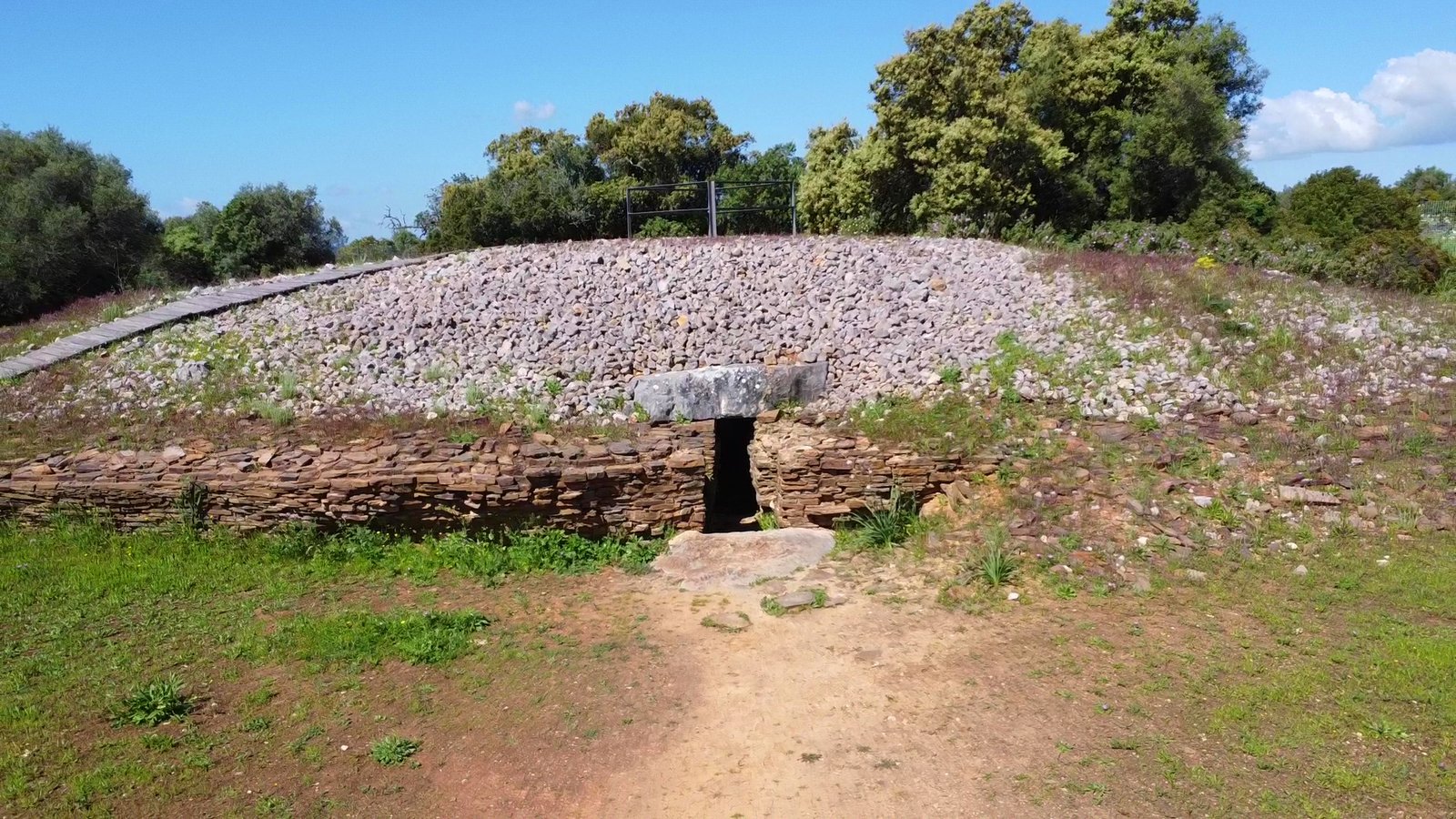
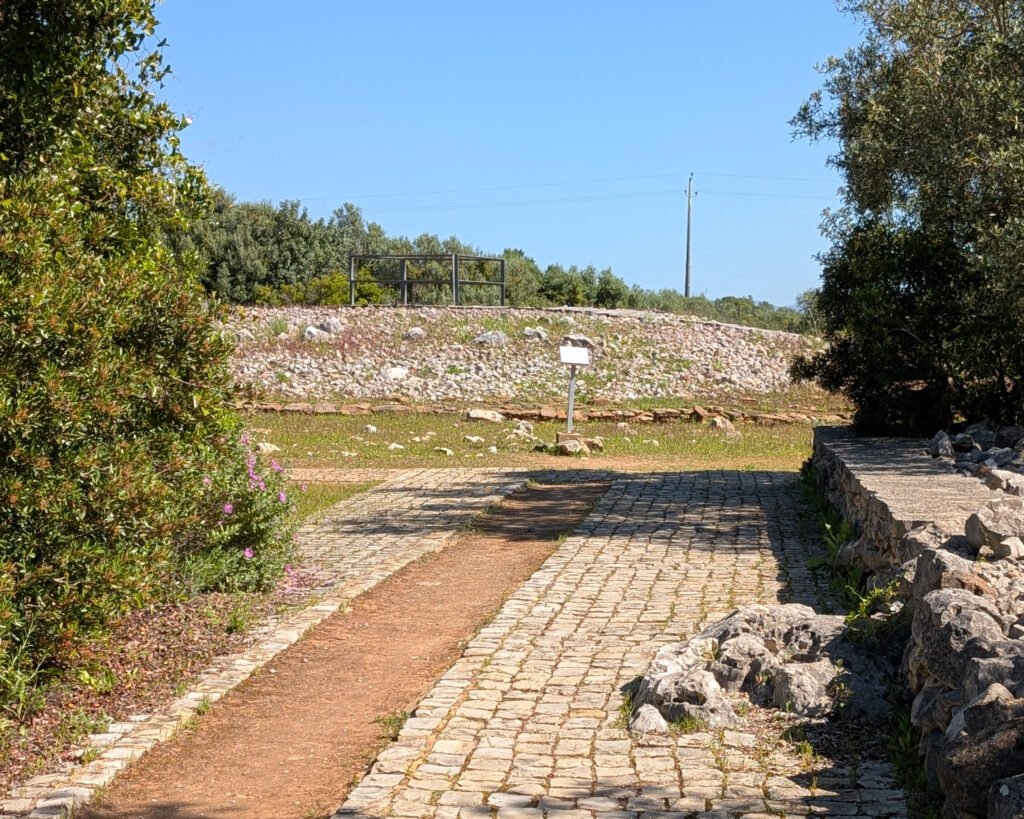
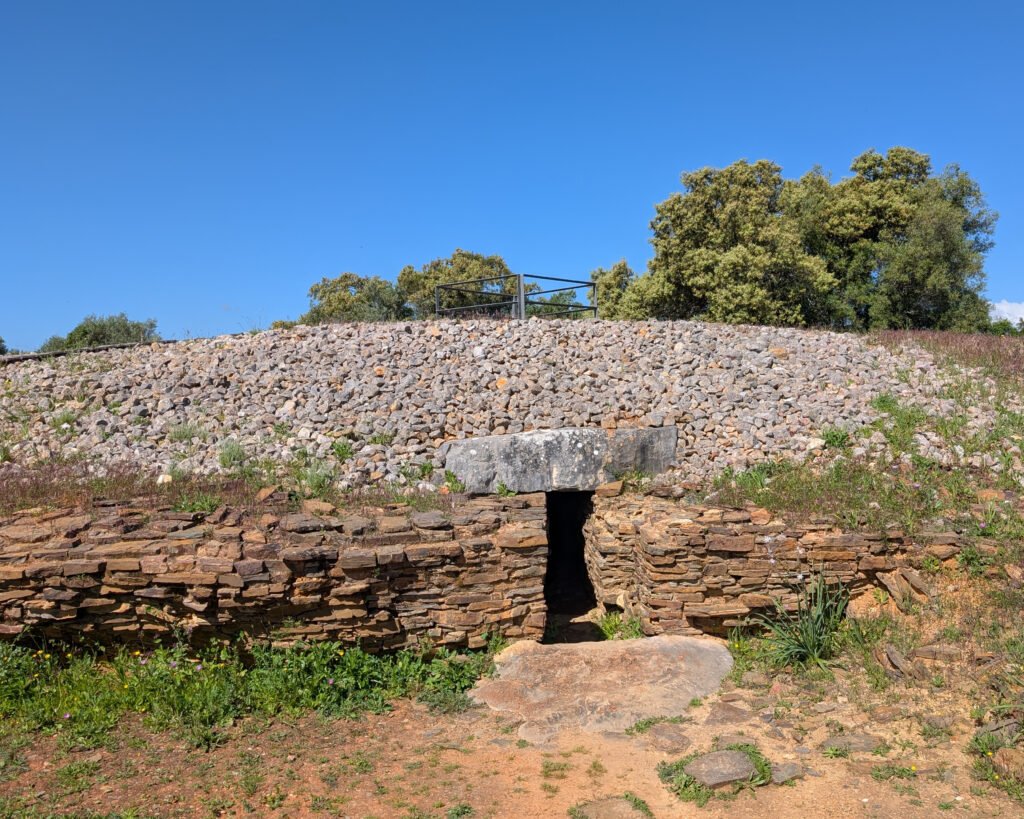
The two monuments on the visitable site are both tholoi: they are passage tombs each with a chamber made of stacked stone walls, forming a false dome a the top. They are surrounded by a large mound of limestone and dirt, with a slate wall around. Both of these monuments were reconstructed by professional archaeologists: the larger one (identified as “monument #7” in the Alcalar group) in the 1980s and the smaller one (identified as “monument #9”) in the early 2000s.
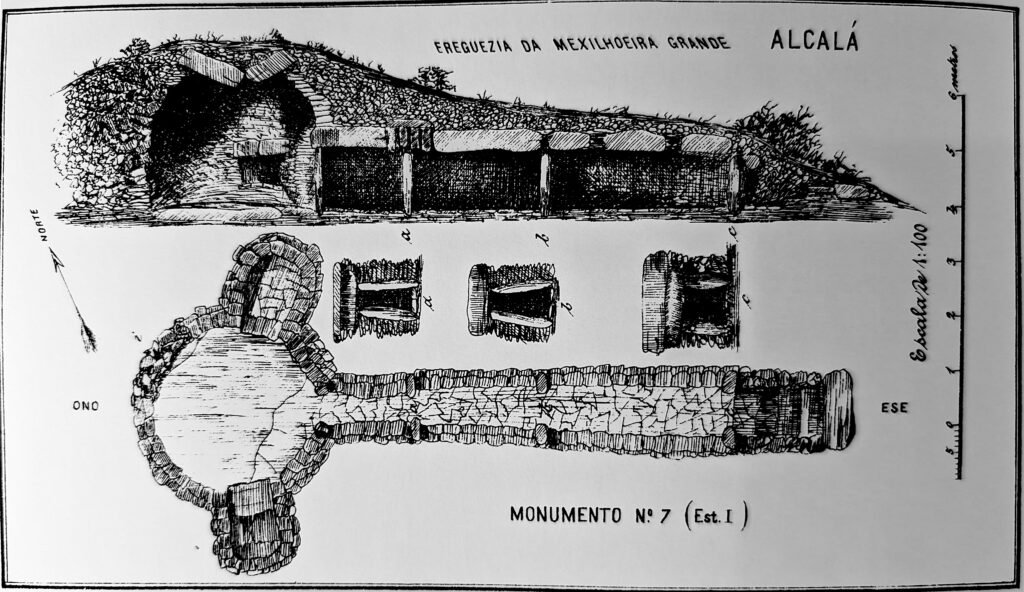
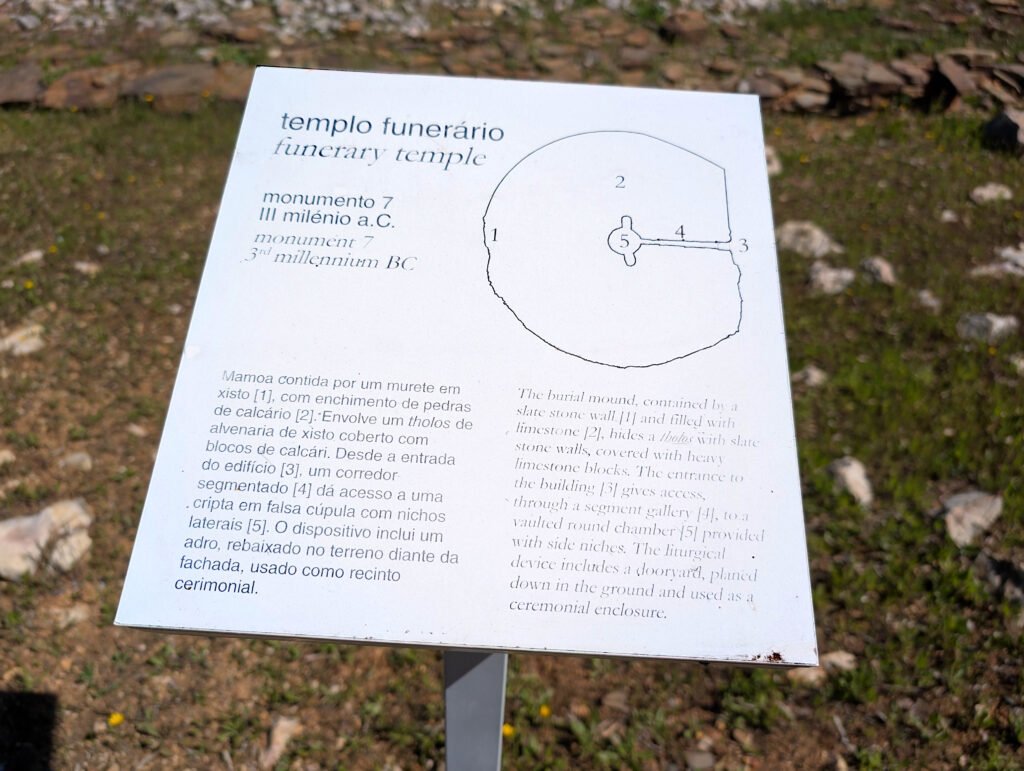
Monument #7 has a narrow entranceway that can be used to gain access to its chamber. The corridor is about 8m long and is very narrow. Inside, the chamber is paved with stone slabs and has two niches, North and South. A third niche, West, was discovered during excavation: it had been closed up sometime in the ancient past. There is a large skylight at the top, but the capstone has disappeared. A wooden walkway leads across the top of the monument’s mound (about 27m in diameter), offering a safe view down into the chamber.
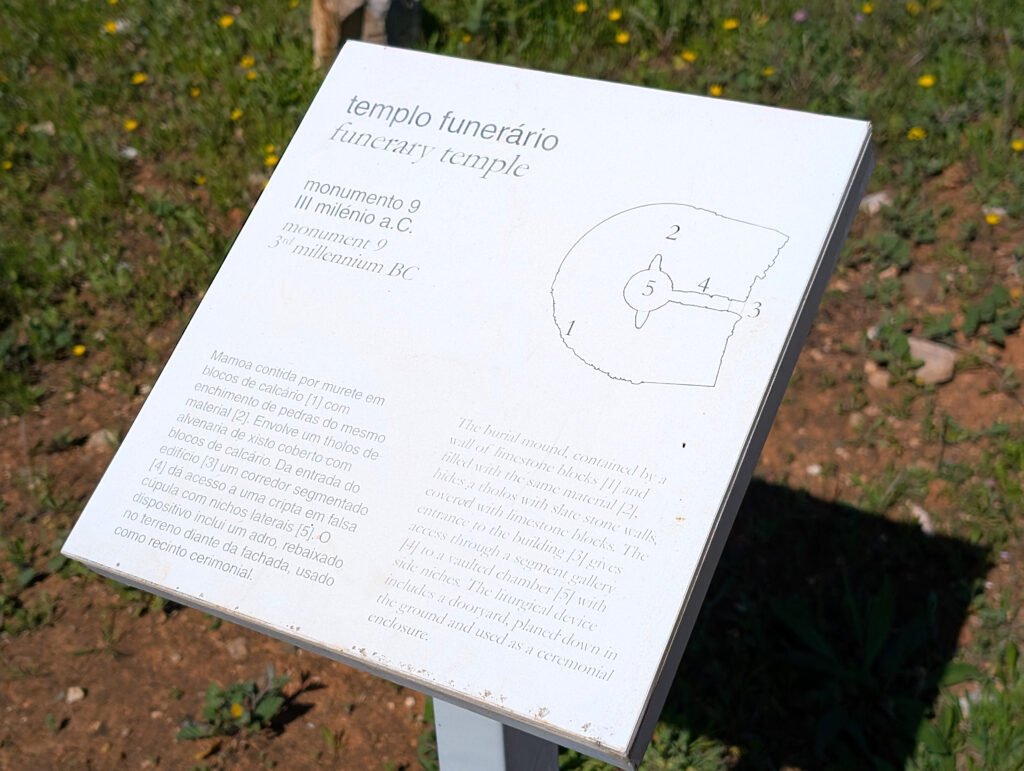
Monument #9 is much smaller and had been in worse condition. Its interior has not been able to be preserved, so it can only be viewed from the outside.
Both monuments have flattened eastern walls, with a single entrance in the centre. There were signs of an exterior atrium outside each, where ceremonies would have occurred.
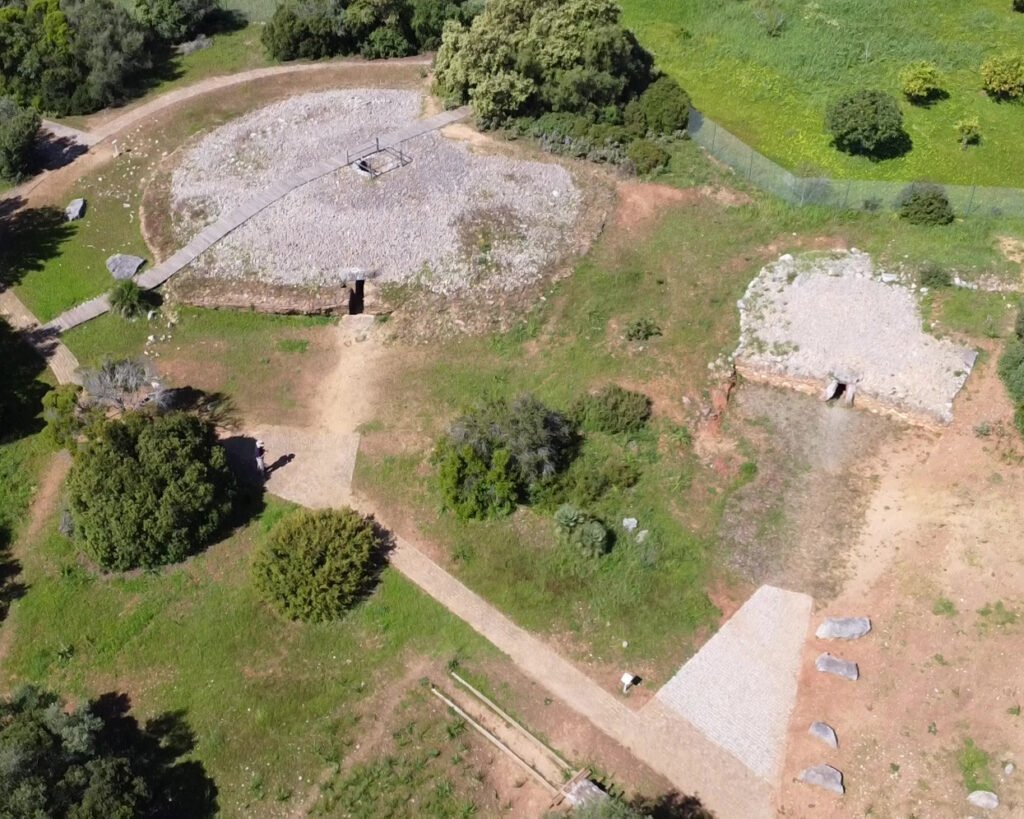
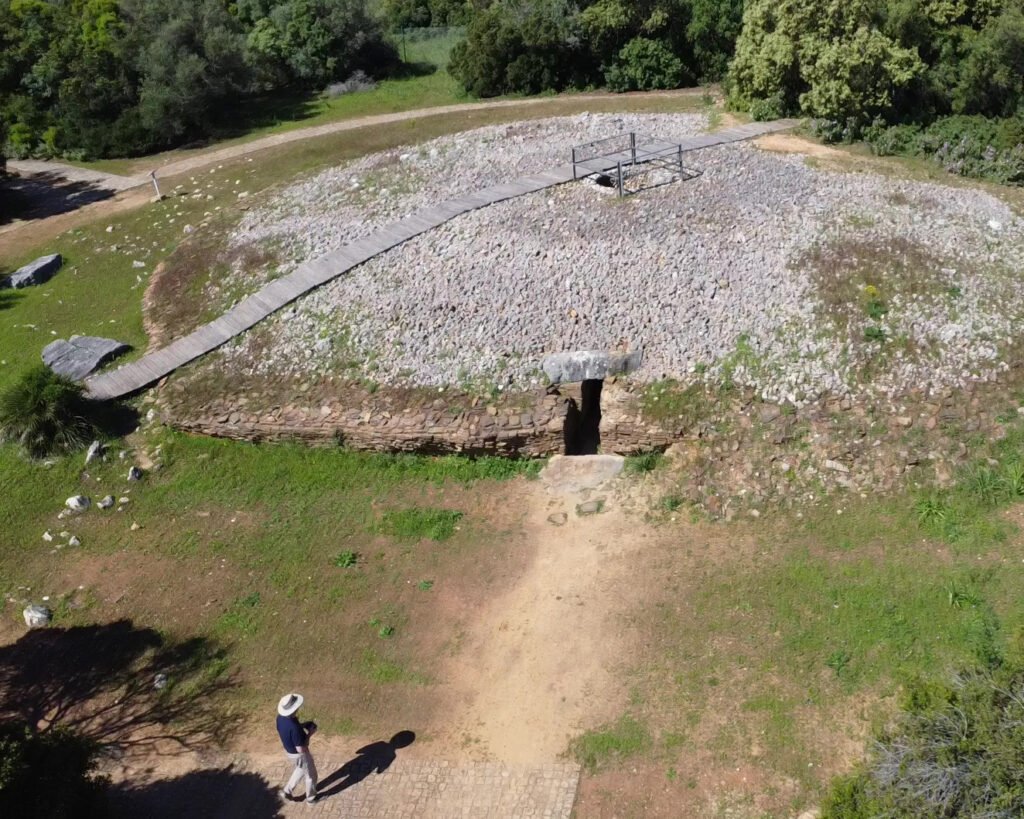
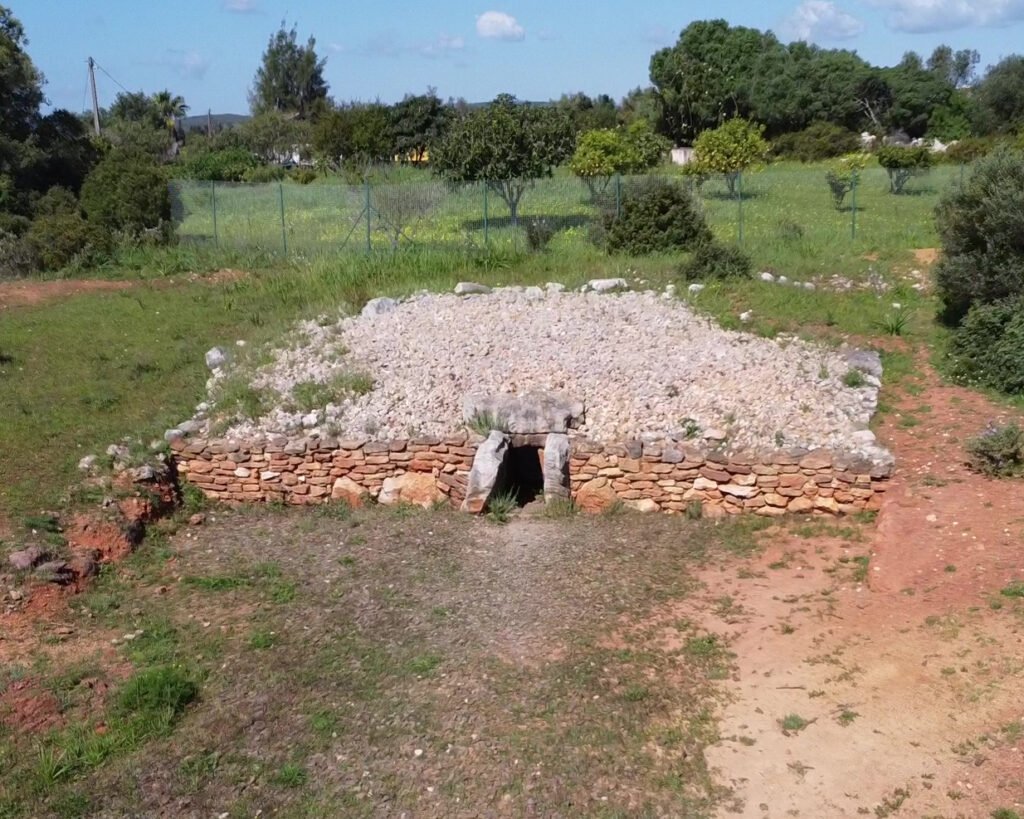
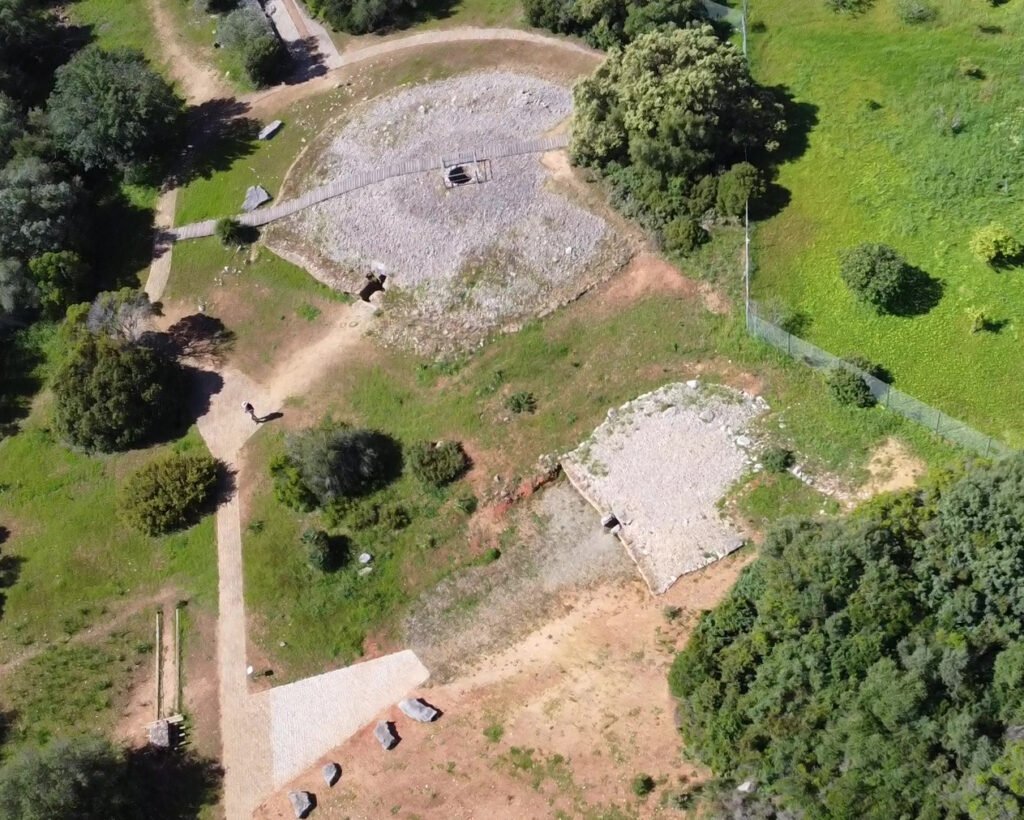
The sites were identified by archaeologists in the 1880s, and were initially excavated by Estácio da Viega. The site was designated a National Monument in 1910. The monuments had been examined and excavated a few times during the 20th century, but it was only in 1975 that the land was acquired by the government and proper excavations and reconstruction of Monument #7 took place starting in the 1980s.
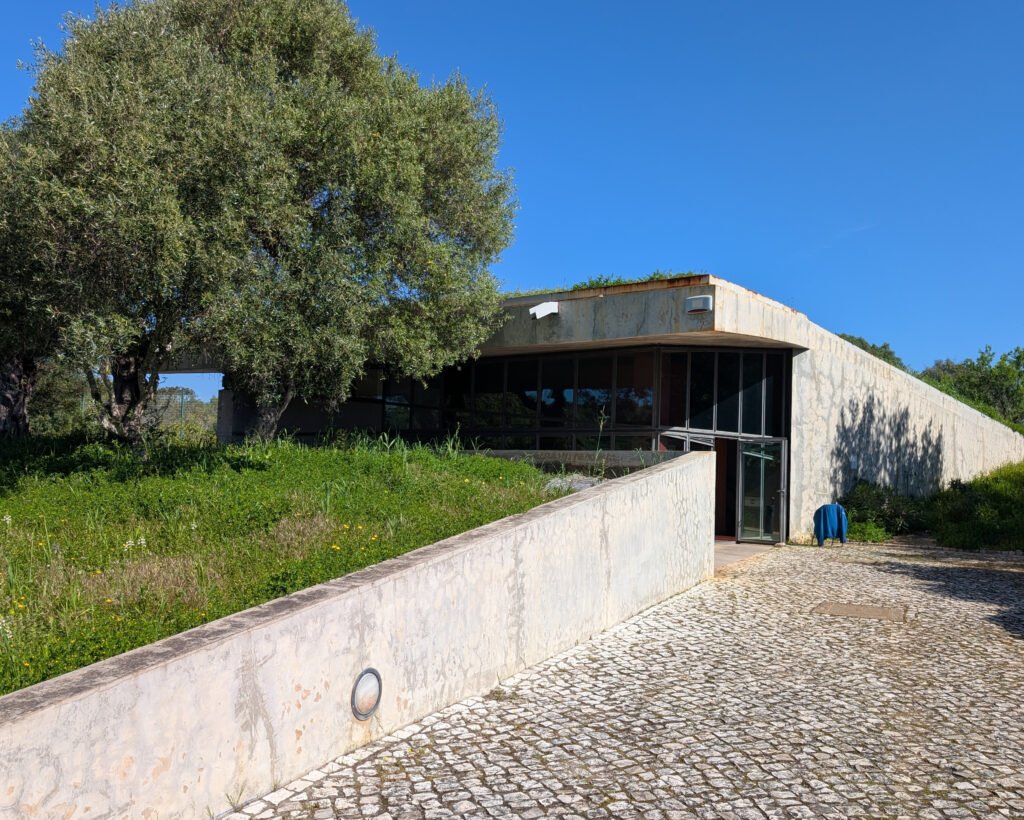
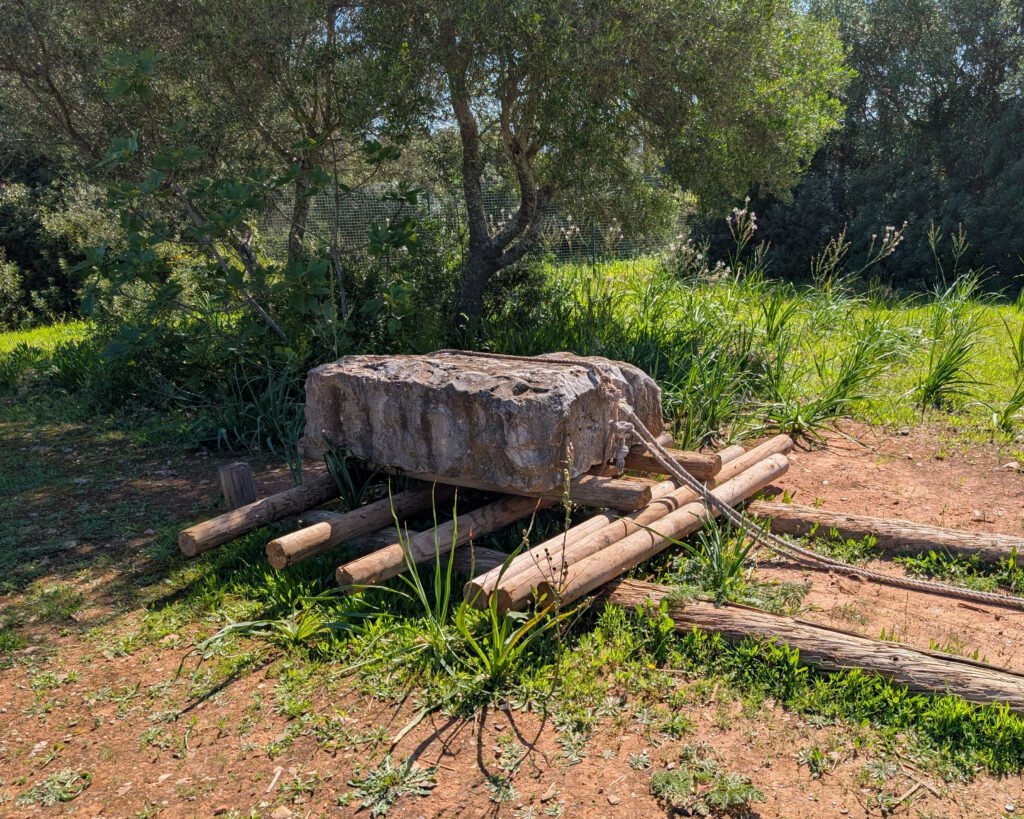
The site is maintained by the Portimão town council and the city’s museum, and regular educational workshops (including “Prehistoric Days” and similar) are conducted. A recreation of a wooden sledge and rollers is on display along with a large stone slab, illustrating how the large stones could have been moved. There are also recreation of looms and other materials in the Reception and Interpretation Centre, along with informative displays (in English and Portuguese).
The artefacts found in the monuments are on display in the Portimão museum.
Location
The site is in the Algarve, district of Faro. It’s in the municipality of Portimão, parish of Mexilhoeira Grande.
Coordinates (for the entrance & car park): 37.197802, -8.589039
Access
The site is just off the main road running through the village of Alcalar. It’s an easy walk around the two monuments, probably even accessible for people with mobility issues. The paths are paved (cobblestone), and there is a wooden boardwalk up to the top of Monument #7.
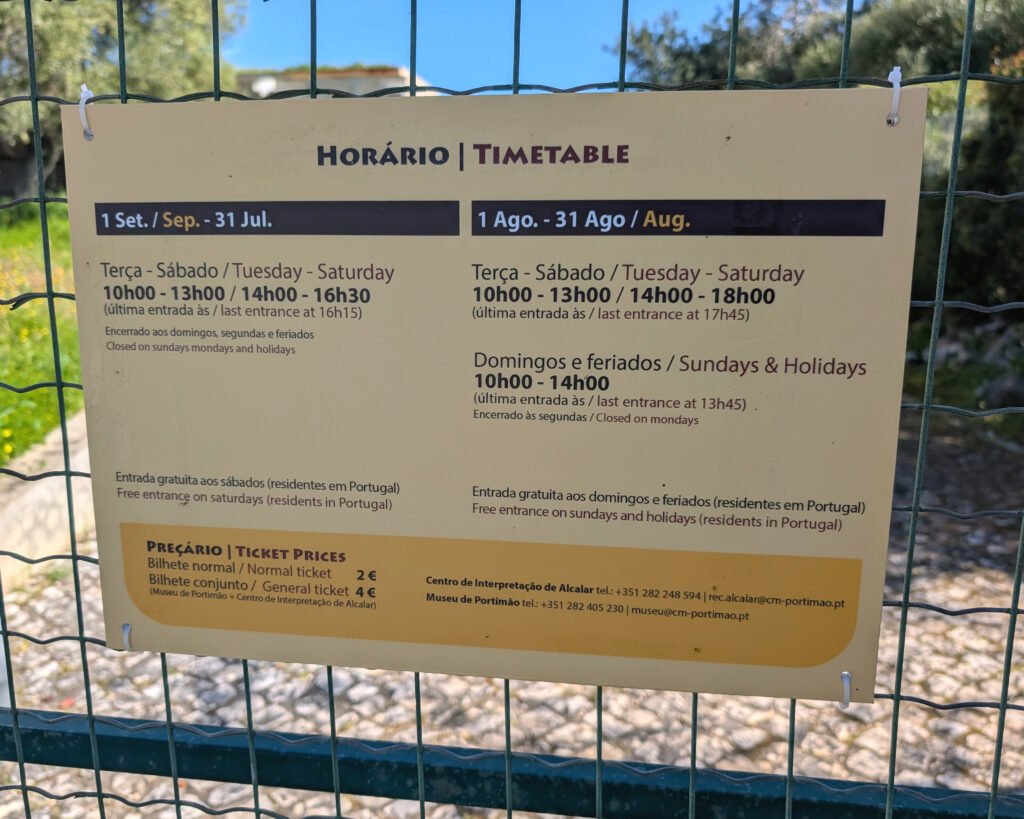
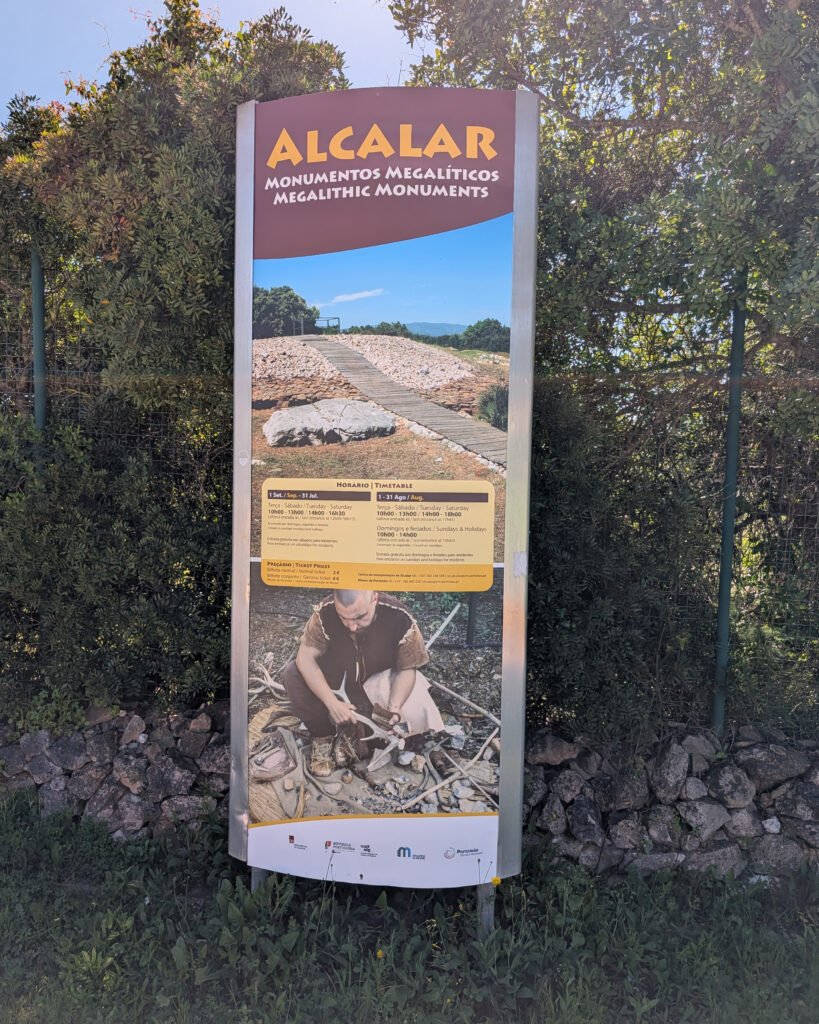
Entry is controlled. A normal ticket costs €2 (please bring cash). A ticket for the site plus the museum in Portimão is €4. There are discount tickets (€1) for seniors (>65) and youths (between 16 and 25). Residents of Portugal can get free entry on Saturdays and Sundays. The site is closed on Mondays.
Details for visiting the site are on the Portimão Museum website. There is also information on the gate at the entrance:
Signage
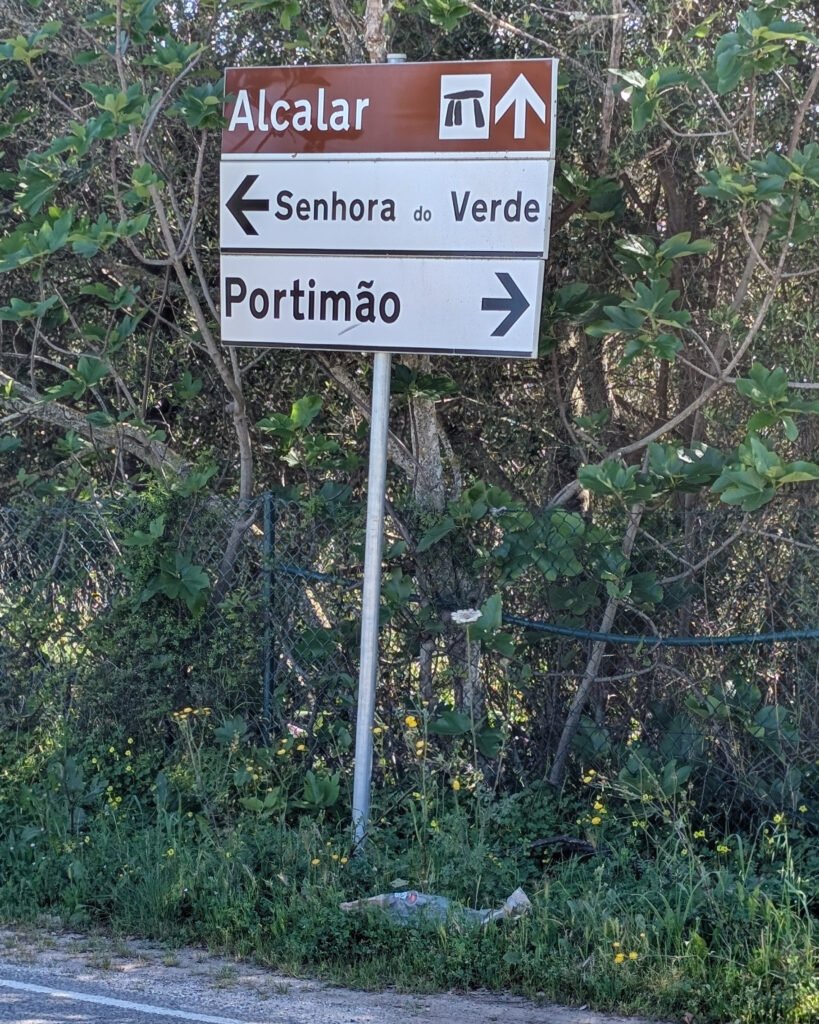
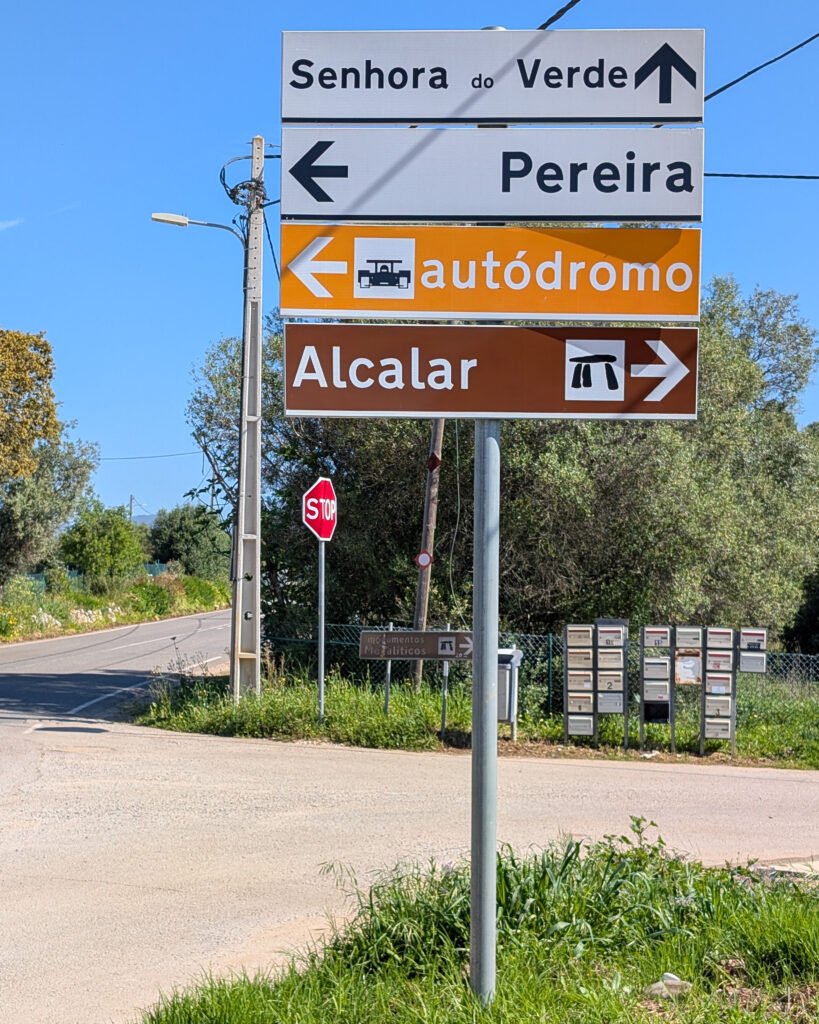
There are road signs in the area leading to the site.
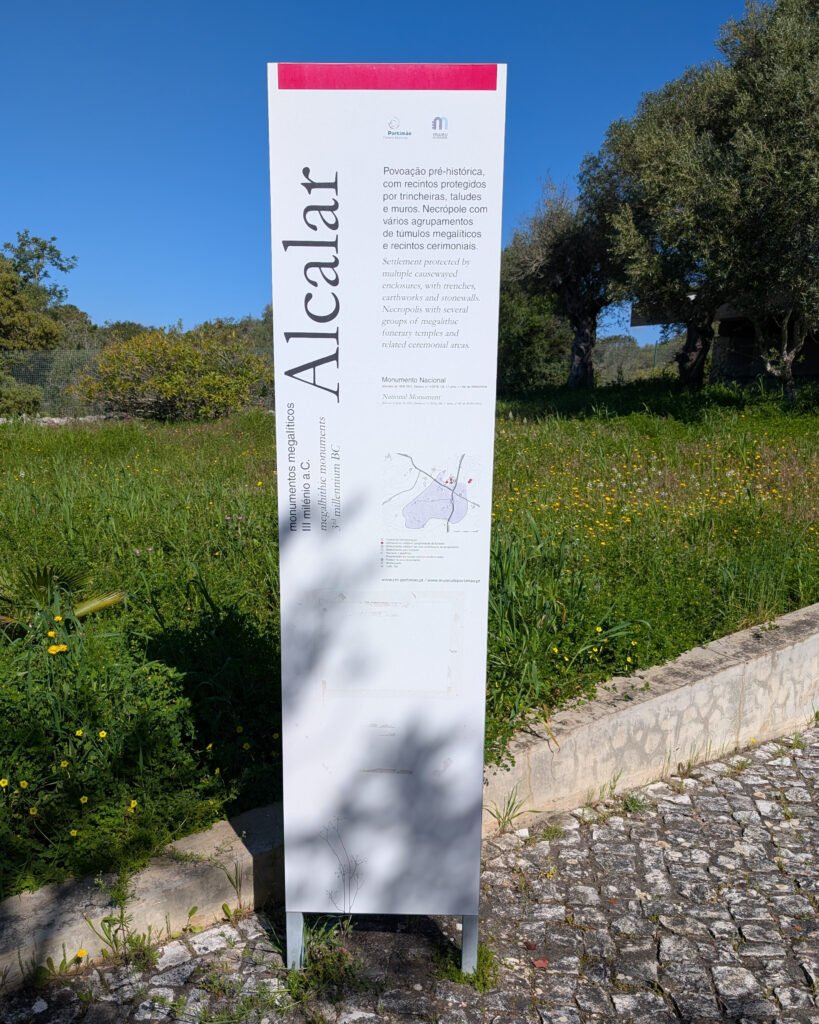
At the entrance, there are some informative signs. Further, smaller signs are near each monument.
Links
- Article (in English) from Wikipedia
- Entry (in English) in the Megalithic Portal
- Website (in Portuguese) from the Museu de Portimão
- Video (in Portuguese) from the Museu de Portimão (This is shown with English subtitles at the monument)
- Video (in Portuguese) from Sul Informação
- Article (in Portuguese) from National Geographic Portugal
- Description (in Portuguese) from Archaeologist’s Portal of Directorate-General of Cultural Heritage
- visitable sites: Alcalar 7, Alcalar 9
- other sites: Alcalar Povoado, Alcalar 1, Alcalar 2, Alcalar 3, Alcalar 4, Alcalar 5, Alcalar 6, Alcalar 8, Alcalar 10, Alcalar 11, Alcalar 12, Alcalar 13, Alcalar 14, Alcalar 15, Alcalar 16
- Designation (in Portuguese) as a National Monument by the Directorate-General of Cultural Heritage
- Detailed information (in Portuguese) in the database of the Directorate-General of Cultural Heritage
- Photos and description of artefacts (in Portuguese) in the RAIZ database of Museus & Monumentos de Portugal
- Under “Filtrar,” enter “Alcalar” into “Origem Historial” and click “pesquisar” at the bottom)
Nearby
The hipogeum (artificial cave) of Monte Canelas is very close by. The Portimão Museum (about 12km to the South) has some excellent information about Alcalar as well as other aspects of the prehistory of the area.
Sources
Morán, Elena, and Rui Parreira. Alcalar 7: Estudo E Reabilitição de Um Monumento Megalítico. Lisboa, Instituto Português do Património Arquitectónico e Arqueológico, Dec. 2004.
Morán, Elena. “Principais Monumentos E Expressões Artísticas Pré-Históricas Na Região Do Algarve.” Super Interessante História: Portugal Pré-Histórico, no. 22, 2025, pp. 164–181.
Morán, Elena, and Rui Parreira. “Alcalar: Um Projecto Para O Conhecimento, Salvaguarda E Promoção de Uma Paisagem Cultural No Algarve.” Al-Madan, vol. 11o, no. 16, Dec. 2008, pp. 106–114. https://www.academia.edu/27183259/Alcalar_un_projecto_para_o_conhecimento_salvaguarda_e_promo%C3%A7%C3%A3o_de_uma_paisagem_cultural_no_Algarve.
Parreira, Rui, and Elena Morán. Alcalar Megalithic Monuments: Guide. IPPAR/DE. 2000. Brochure.