
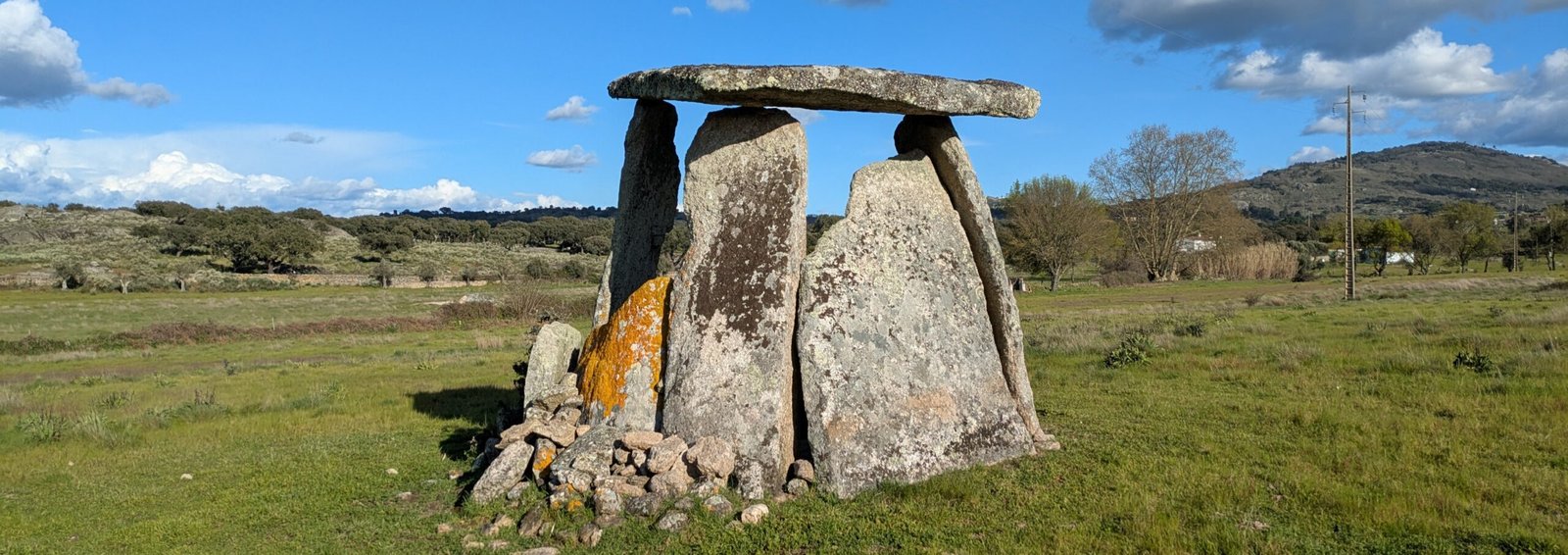
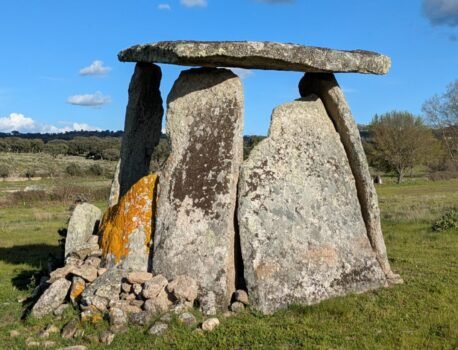
The most common type of megalithic structure in Portugal are funerary structures. These are typically tombs made of large stone slabs: these are called “dolmens” or portal tombs. In Portuguese, they are typically called antas but also dólmen or orca. Other types of funerary structures include large chambered tombs (including the famous Alcalar monuments), which uses stacked stones to make a circular chamber. This style of building is also called a “tholos” (plural “tholoi” or “tholoses”). I’ve included all large stone funerary structures into this category called “Dolmens.”
-
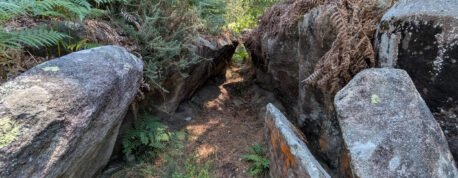
Mamoa da Eireira
An exceptionally unusual dolmen: forming a V-shape with undifferentiated corridor and chamber. Many of its upright stones have engravings and/or paintings.
-
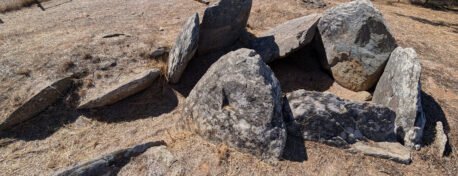
Anta do Monte dos Serôdios
A Neolithic/Chalcolithic dolmen on a hill in the Grândola municipality, Setúbel district. One of the upright slabs in the chamber is covered in cup marks.
-
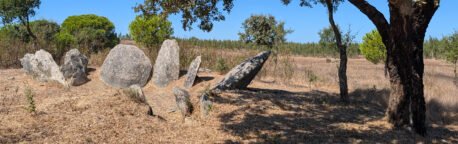
Anta da Pata do Cavalo
An enormous dolmen with a chamber at least 4m across, in Grândola (Setúbal district).
-
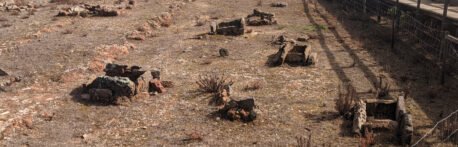
Casas Velhas
A Bronze Age graveyard with dozens of stone cists, near the town of Melides in the southern part of Setúbal district.
-
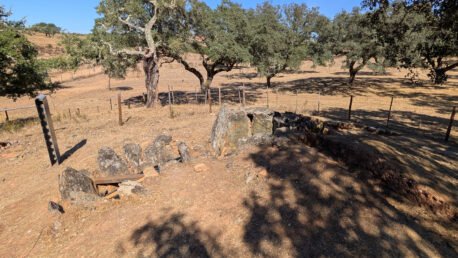
Monumento Megalítico do Lousal
An unusual dolmen in the Grândola municipality: this dolmen has two connected chambers.