
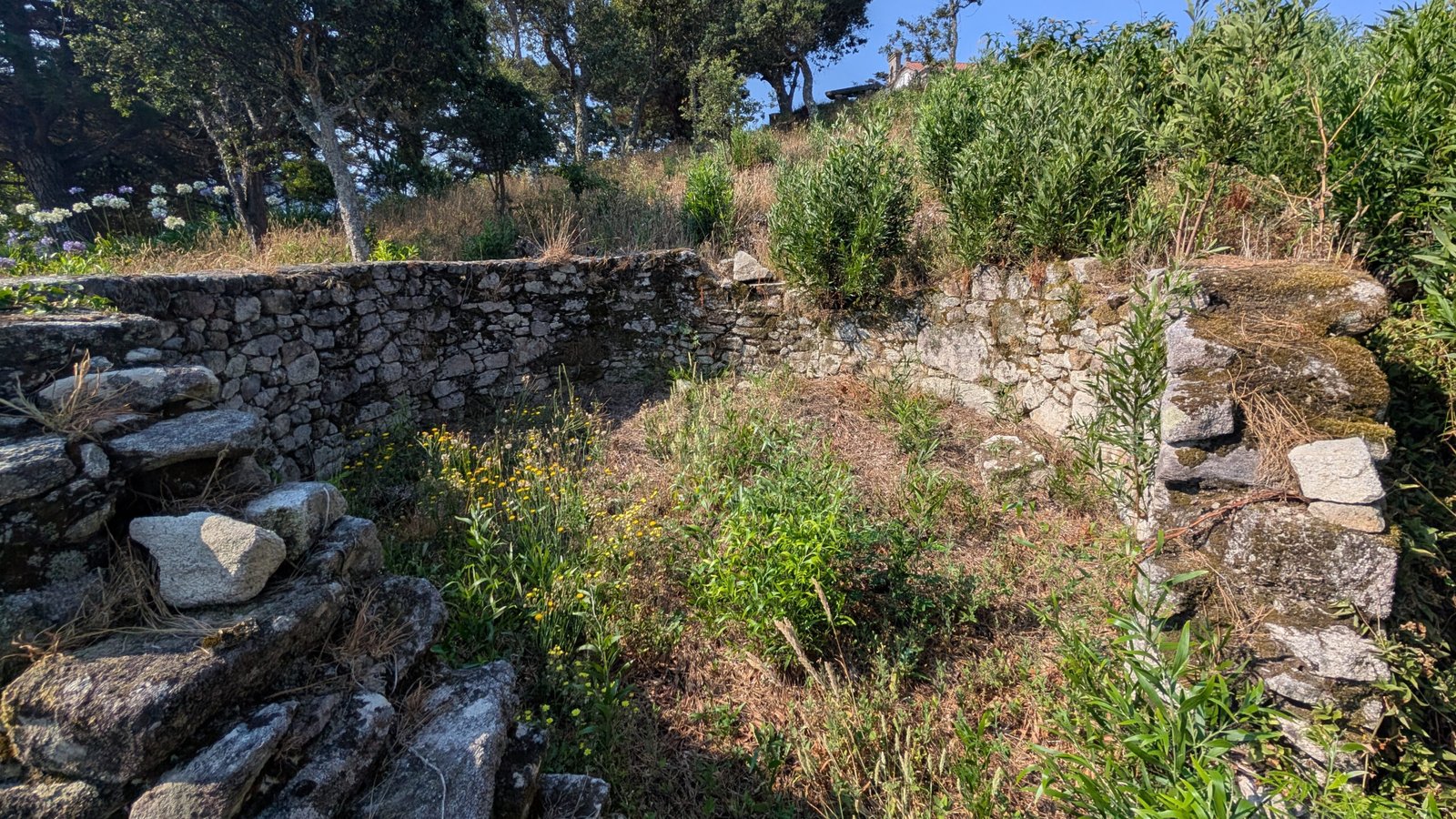

Underneath the 17th century chapel and its surrounding park lie the remains of a large fortified settlement from the time before the Romans or Christianity came to Portugal. The single rebuilt house at the entrance stands as a reminder that the modern use of the hilltop is only the latest evidence of people’s use of the hill, going back well more than two thousand years.
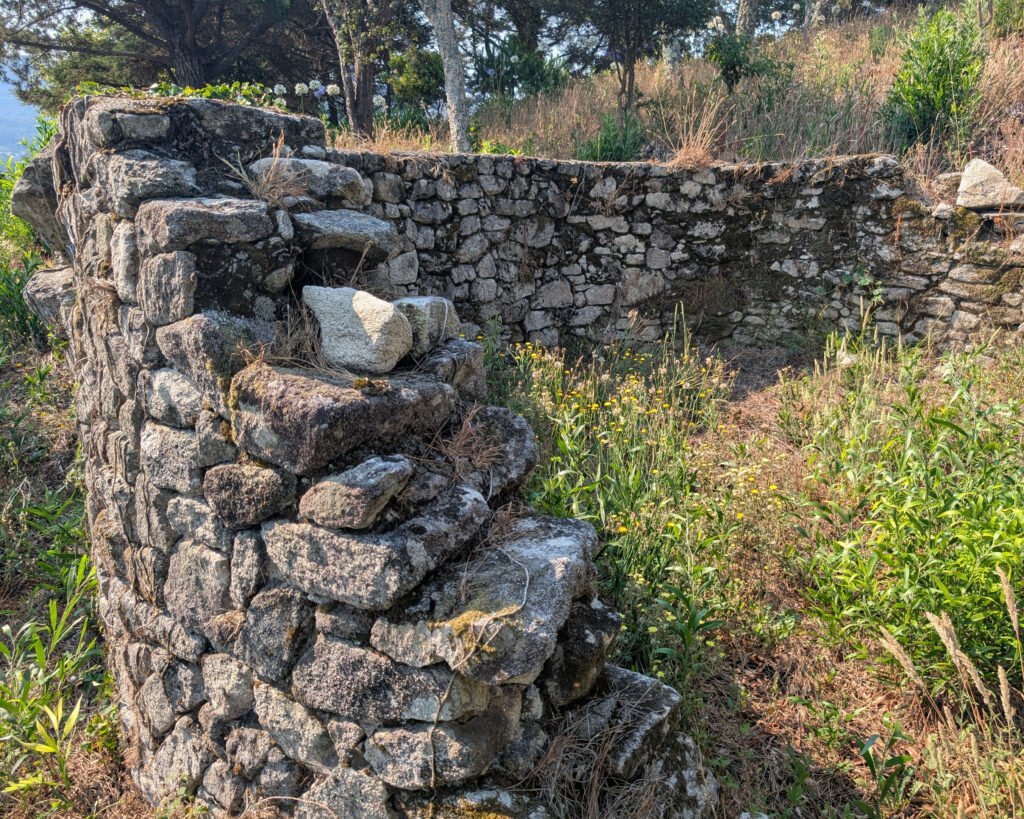
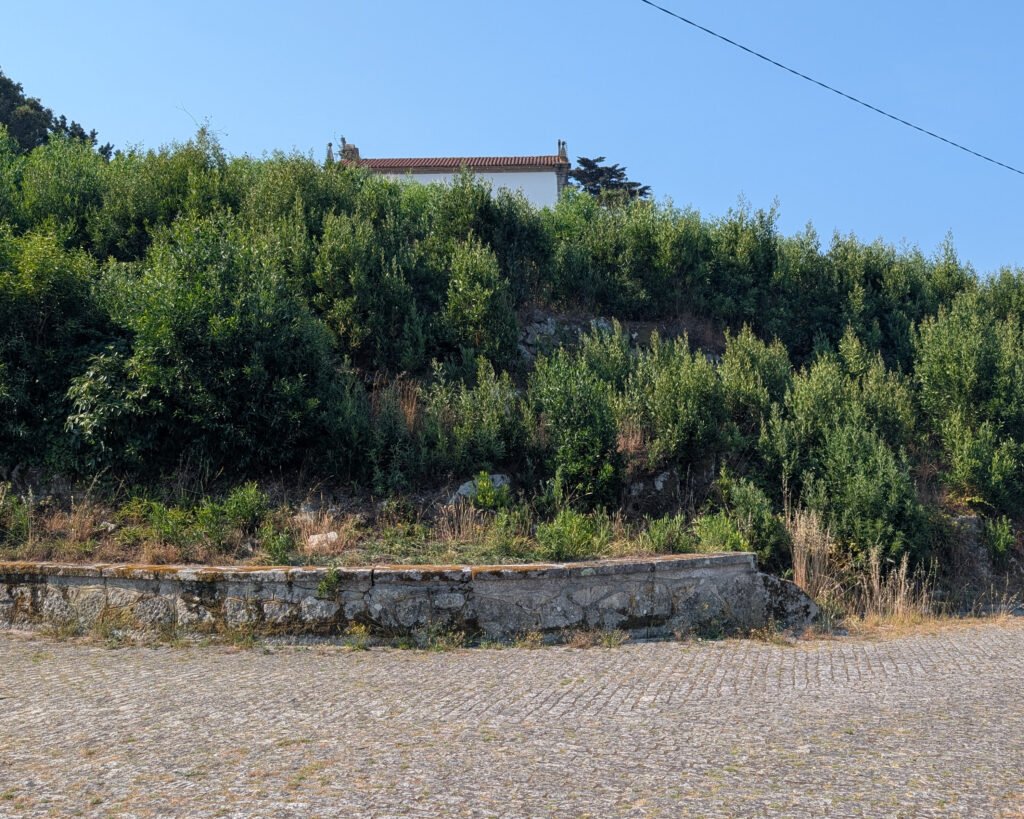
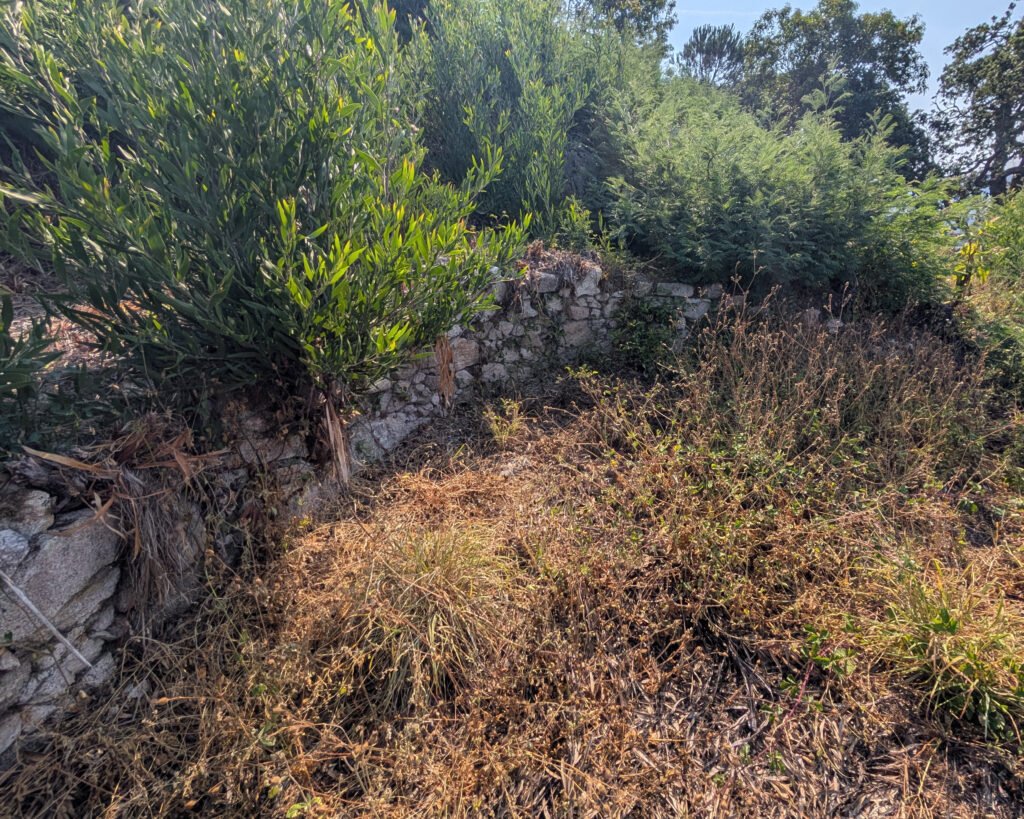
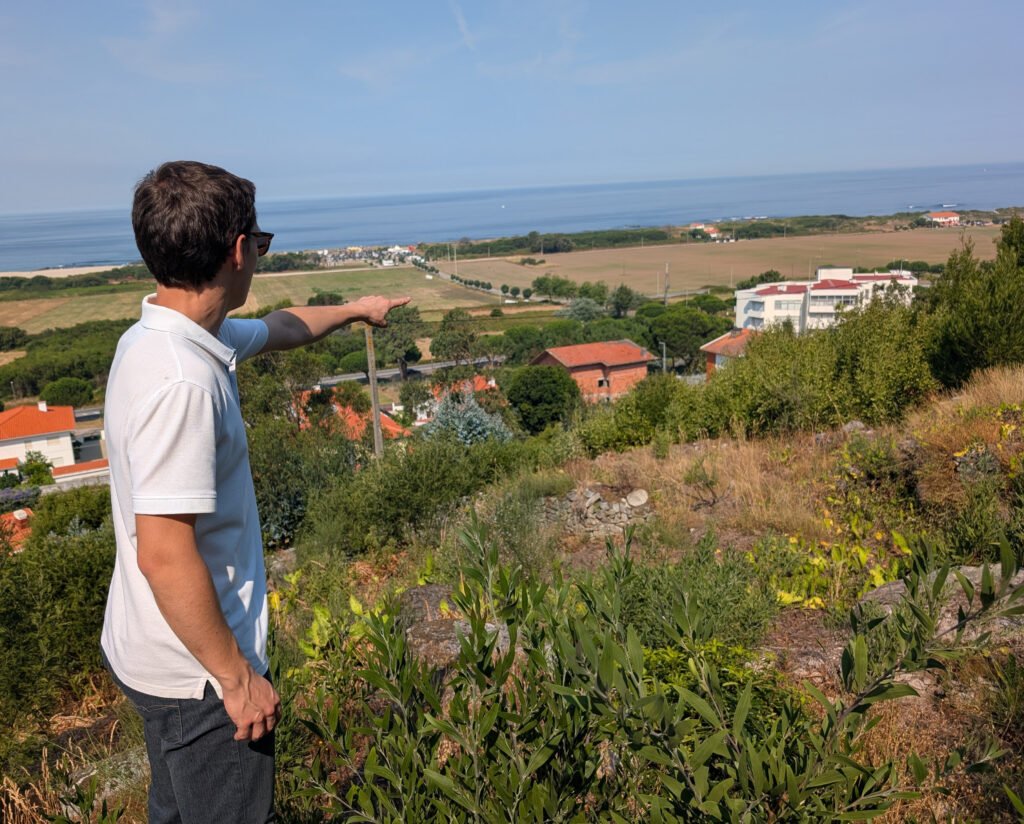
The chapel of Santo António was built on the top of the hill in 1685. In more recent times, a surrounding park & picnic grounds was constructed with various outbuildings. All this construction was on a site which had been covered in Iron Age houses and walls: the “castro” (or hillfort) of Monte de Santo António. One Iron Age house was rebuilt and stands at the entrance to the grounds.
The castro was referred to by Martins Sarmento in the 19th century, referring to ancient walls1. There were some excavations in the 20th century, but the most productive work was conducted by NAIAA (Núcleo Amador de Investigação Arqueológica de Afife) in 2016. This revealed the foundations of several houses, walls, and ceramic fragments.
Some of the ceramic fragments date to the Late Bronze Age, indicating that this hill was occupied at least as early as 1200 BC. Some of the artefacts which were found are on display in the Afife museum.
The excavated houses can be seen on the slopes of the hill around the chapel and the parklands, although they get overgrown with weeds. They are not easy to reach. There are remnants of the original walls surrounding the hill, but it is difficult to see what is original and what is modern reconstruction.
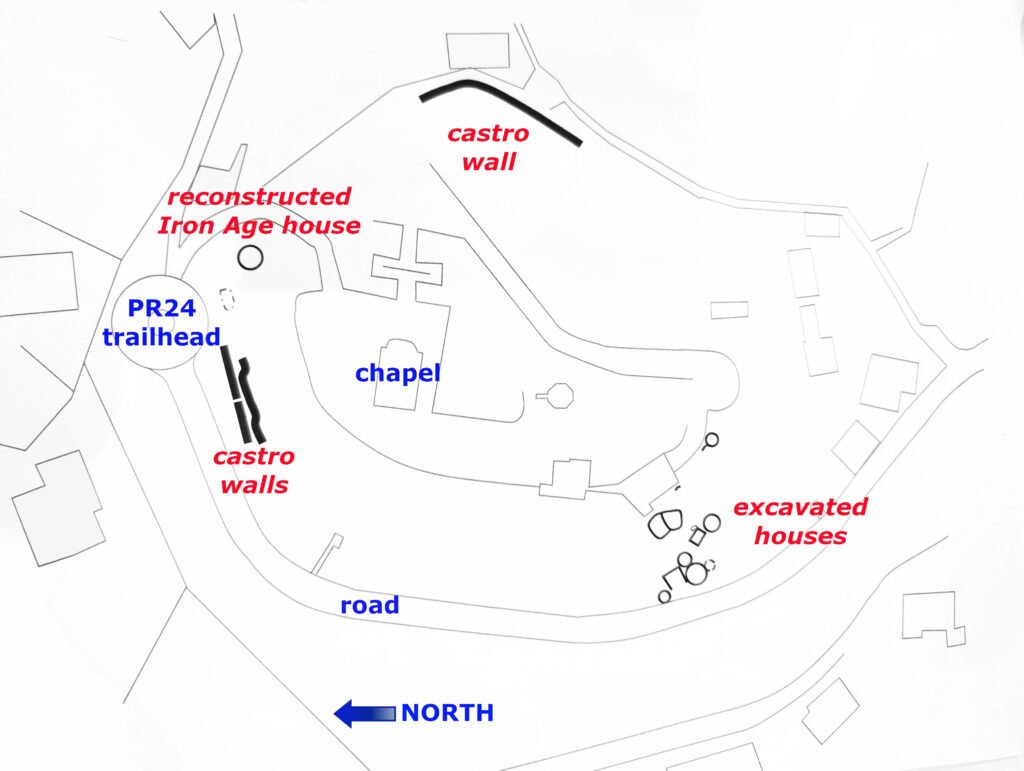
Location
The hillfort is in Portugal’s northern Minho region, in the district and municipality of Viana do Castelo. It’s in the centre of the village of Afife, covering a small hill on the edge of town, overlooking the ocean.
Coordinates: 41.781798, -8.861656 (location of the entrance to the site & beginning of PR24)
Access
It’s easy to find: the Chapel of Santo António stands above the town on the hill and can be seen all around. There are paths leading up to the chapel and to the picnic grounds and park. The unreconstructed houses of the hillfort are on the slopes around the chapel and are hard to find on your own. If you ask the staff of NAIAA through the museum, you may be able to get a guide to point out the details.
Signage
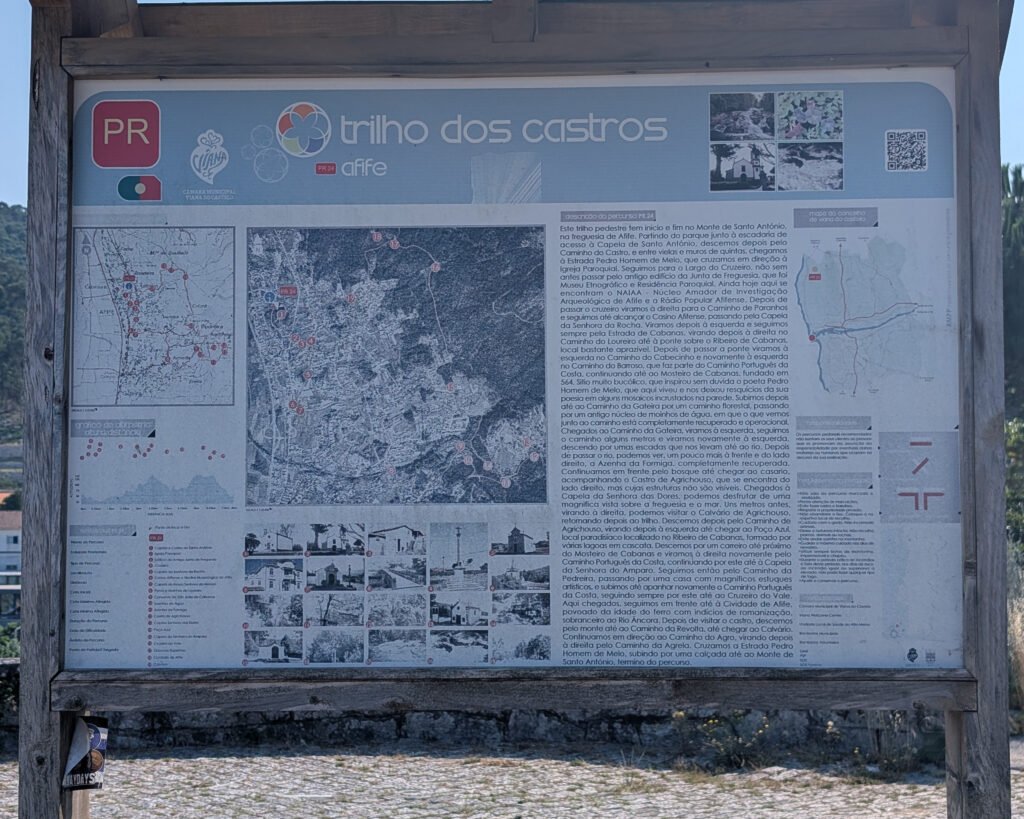
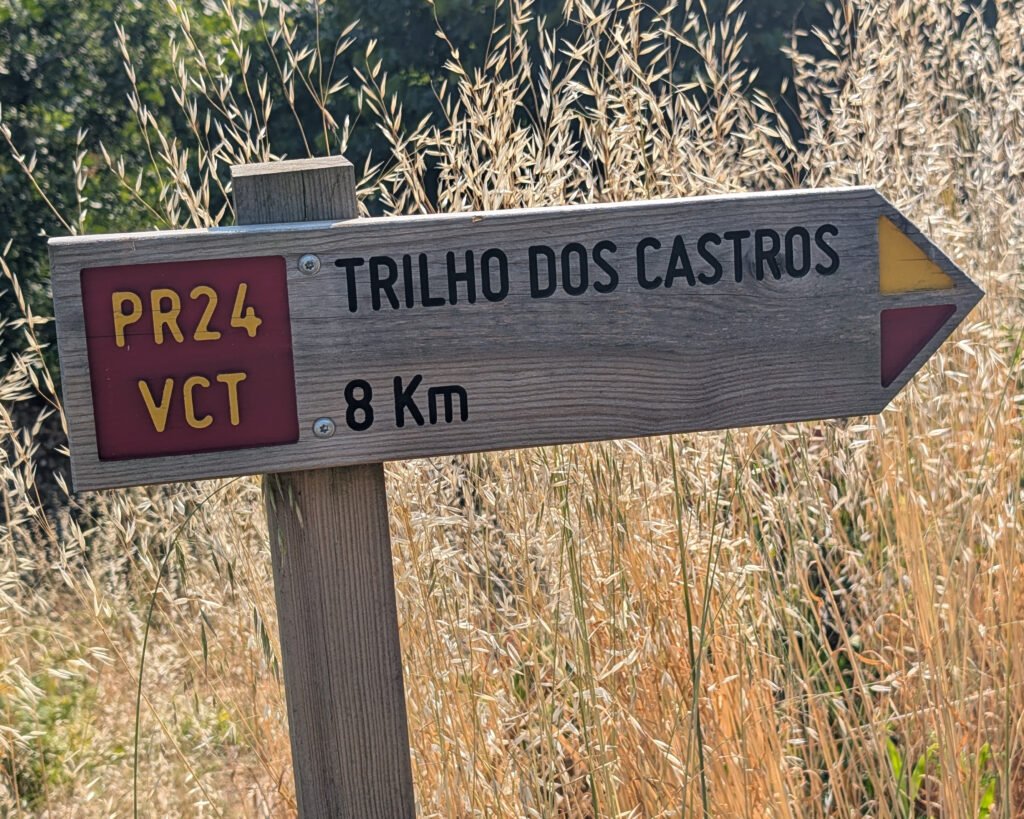
There are a few directional signs in Afife pointing out the “Mte. Sto. António” (“Monte de Santo António” or Hill of Saint Anthony). There are also trail signs for PR24, the “Trilho dos Castros” (Trail of Hillforts), which begins and ends at Santo António.
Links
- Article (in English) about the town of Afife, mentioning the Castro of Santo António, from Wikipedia (text is copied from the Parish’s History page, below)
- Identification (in Portuguese) in the “History” page of the Parish of Afife
- Hiking Trail (in Portuguese) of PR24 including the castro from Trilhos & Caminhadas
- Description (in Portuguese) from Archaeologist’s Portal of Directorate-General of Cultural Heritage
Nearby
The small archaeological museum in Afife holds several artefacts from the castro. The big Cividade de Âncora-Afife on the hills outside of Afife is excellent, and there are rock engravings next to it.
Sources
- Oliveira, Nuno & Ana S. Bettencourt. “O POVOADO PROTO-HISTÓRICO DE SANTO ANTÓNIO (AFIFE, VIANA DO CASTELO): DADOS E REFLEXÕES SOBRE AS SUAS MATERIALIDADES.” ACTAS CONGRESSO INTERNACIONAL CULTURA CASTREJA: IDENTIDADE E TRANSIÇÕES, vol. I, 2021. https://www.academia.edu/47782258/O_POVOADO_PROTO_HIST%C3%93RICO_DE_SANTO_ANT%C3%93NIO_AFIFE_VIANA_DO_CASTELO_DADOS_E_REFLEX%C3%95ES_SOBRE_AS_SUAS_MATERIALIDADES ↩︎