

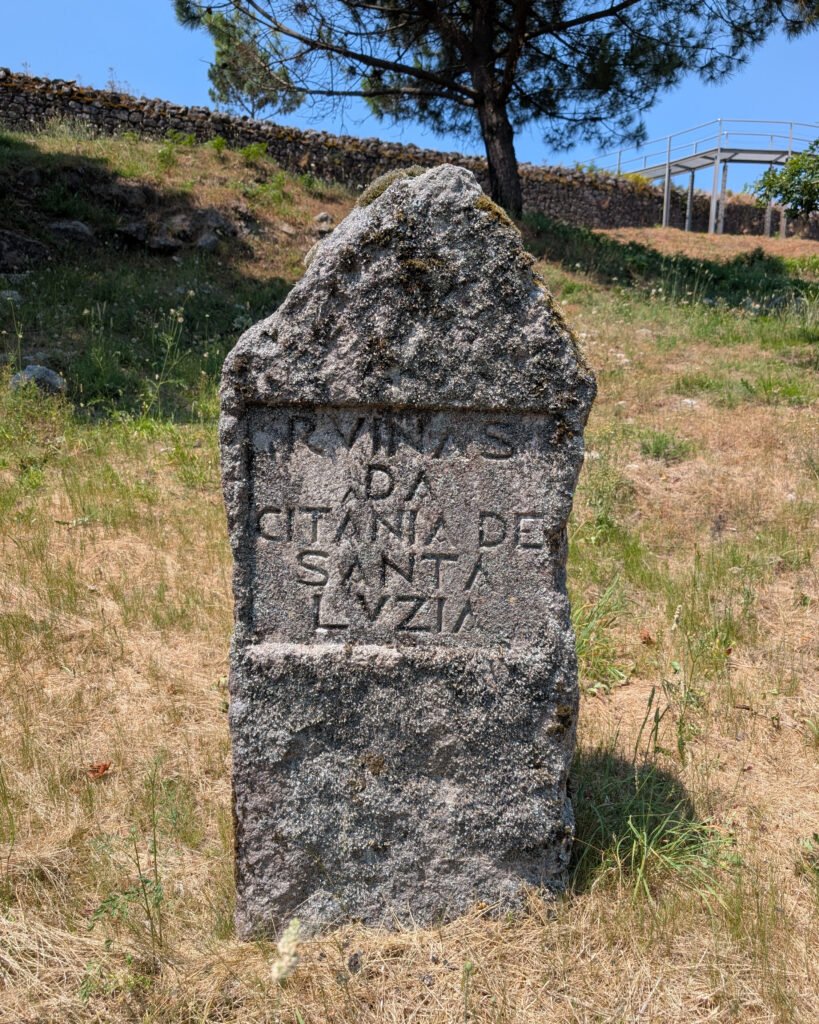
Also known as: (Ruinas da) Cidade Velha de Santa Luzia, Povoada foritificado de Santa Luzia
English name: Hillfort, or (Ruins of) the Old City, or Fortified settlement of Santa Luzia
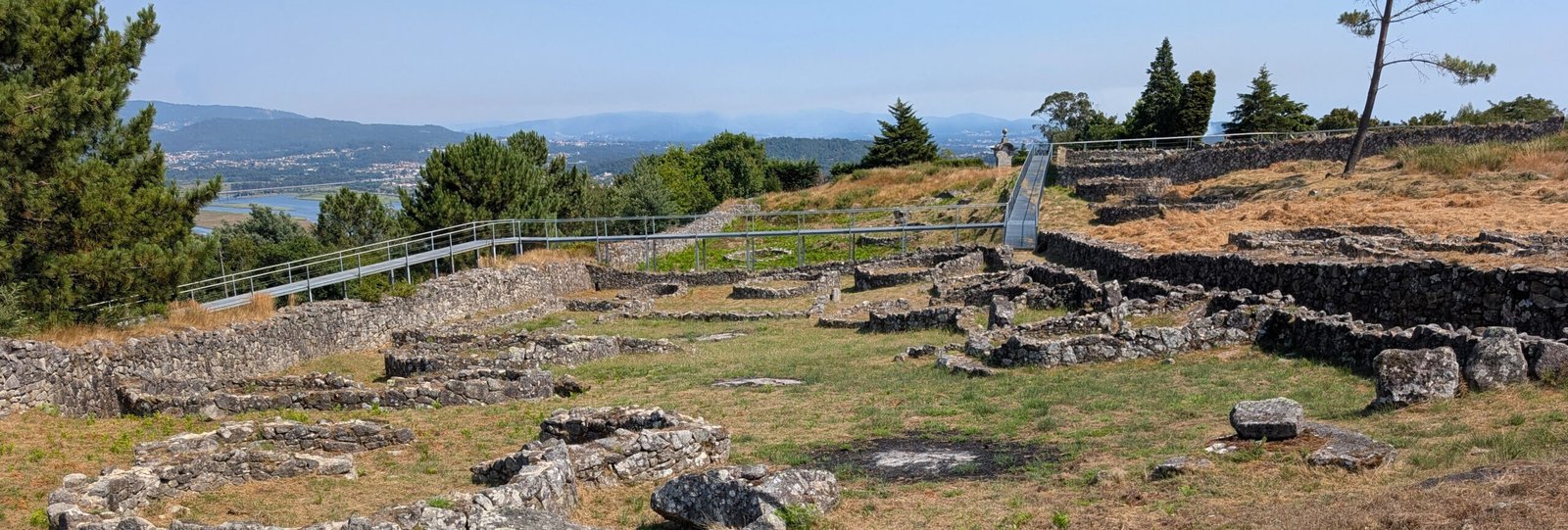
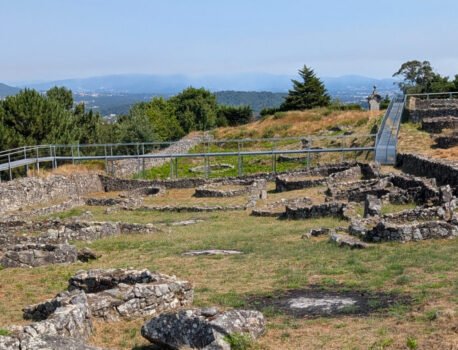
Walk around the hilltop, and admire the views off to the River Lima and the Atlantic Ocean. People admired the views, as well as the strategic location, thousands of years ago when they built this settlement. It was also appreciated by the Romans when they invaded. The remnants of the homes and walls from those periods can still be seen and admired for their layout and construction.
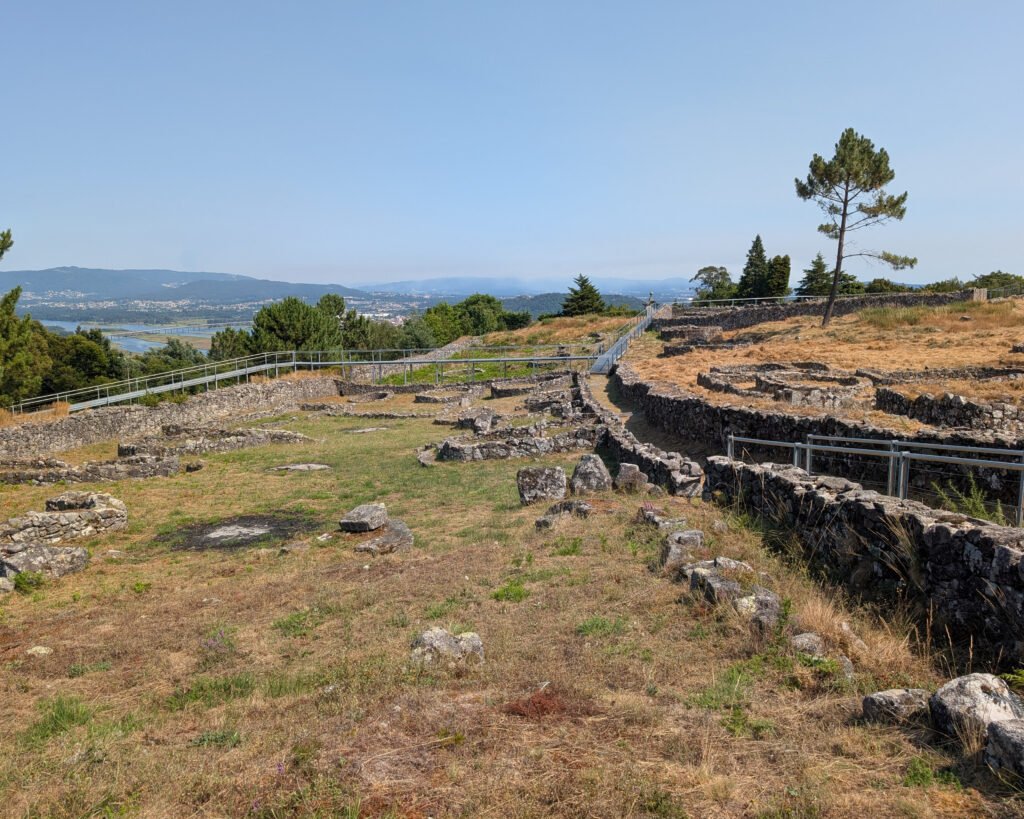
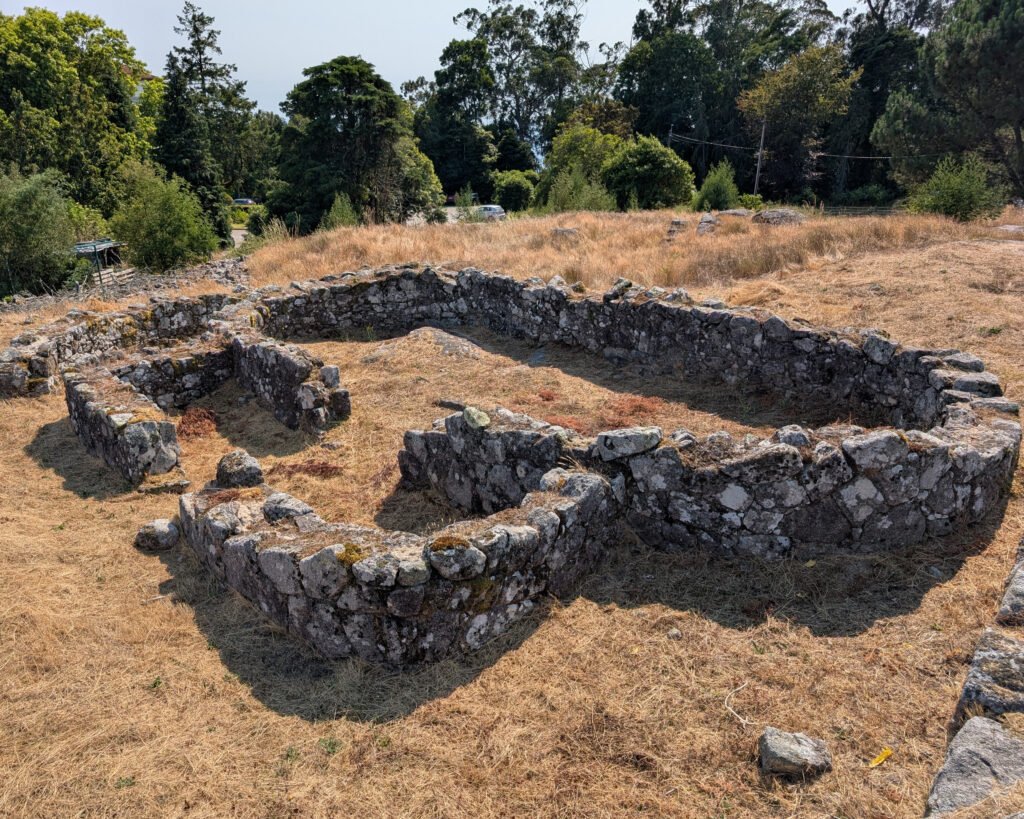
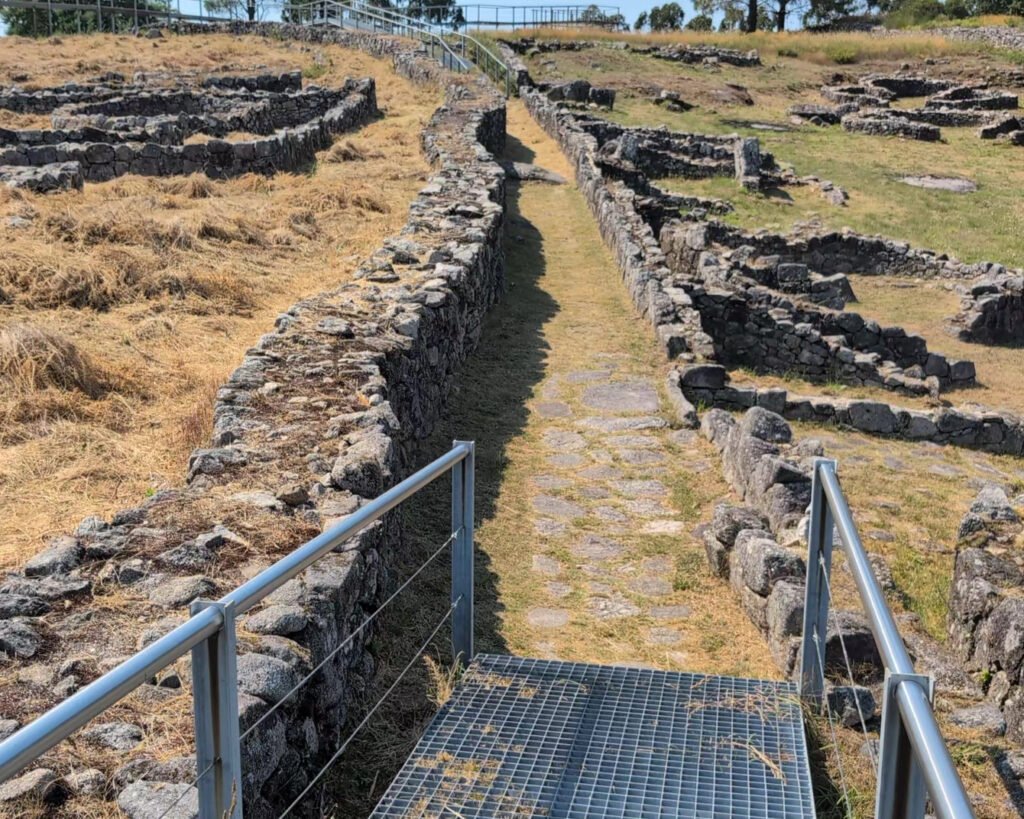
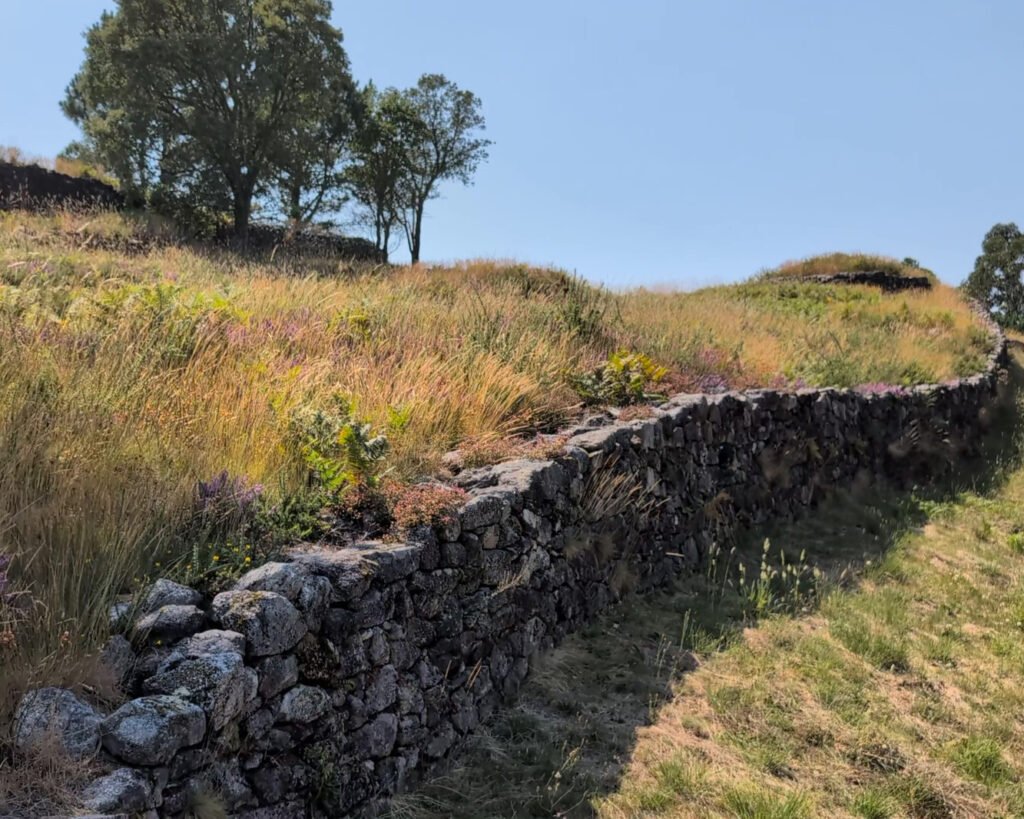
A “Citânia” is a large “castro,” or hillfort (also called a “fortified settlement”). There are many castros and citânias throughout northern Portugal, dating to the Iron Age (roughly 1,000 BC) and often used through the Roman occupation into the years AD.
The site (also called the “Ruins of Santa Luzia” or the “Santa Luzia Old City”) was known as early as the seventeenth century. The earliest archaeological excavations were done in 1876 by Possidónio da Silva, but the whole urban structure was only revealed in 1902 by excavations led by Albano Belino. Further excavations and other archaeological work have been carried out through the years, up into the present century. Only about a third of the citânia’s total area has been excavated: large sections were destroyed during the construction of the Hotel of Santa Luzia, the church, and the access roads of the area1.
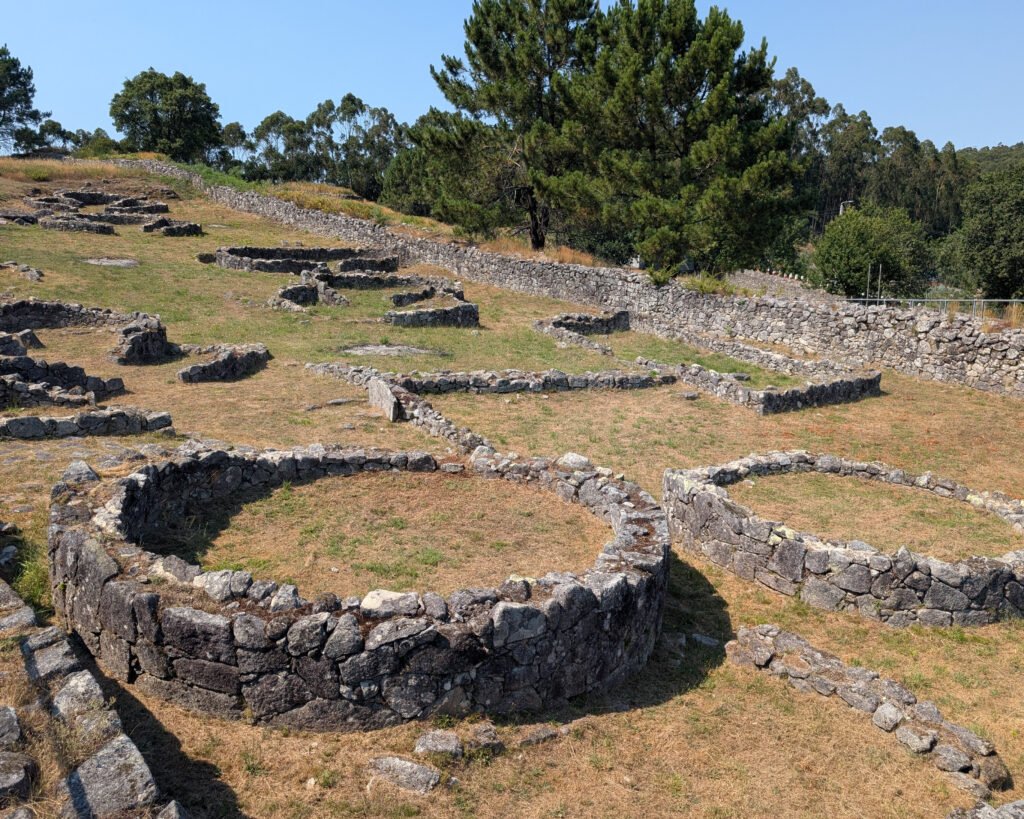
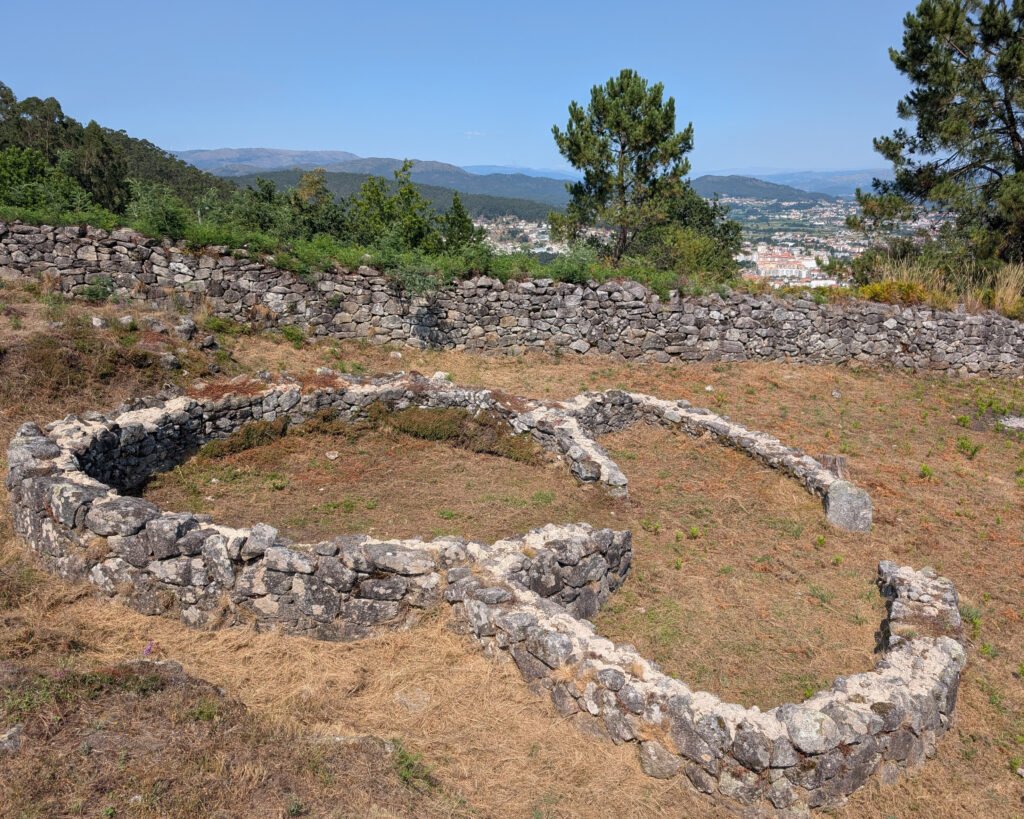
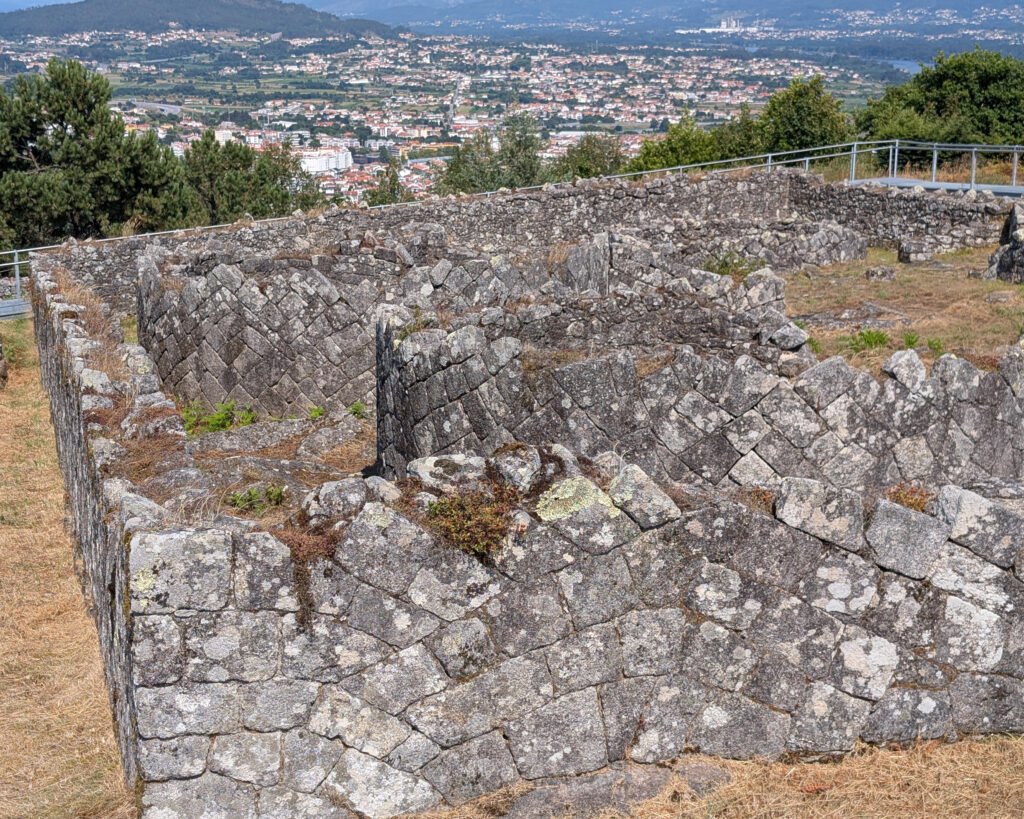
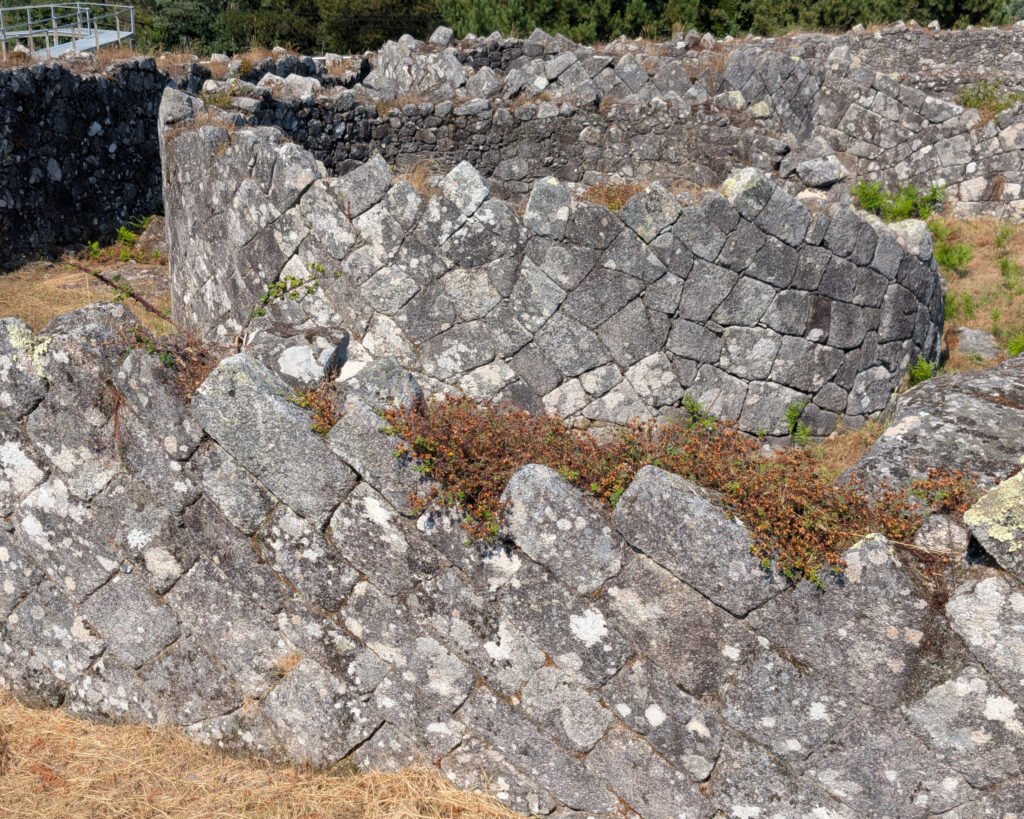
There are several rings of walls defending the central houses, with thicker and taller walls along the more gently sloping approaches, along with protective towers or bastions. Inside the walls, the foundations of around 70 houses can be seen. Most are circular, often with a partially enclosed verandah or atrium, which is typical of Iron Age settlements. Some are elliptical or rectangular, indicating that the site was occupied and adapted during the Roman period. Most houses are in clusters, with walls or roads between groups.
The central area shows a distinctive construction style: walls are built in a kind of spiral or helix arrangement of stones, and most of the stones are carefully and closely fitted together. This “cyclopean” or “polygonal” construction was a style that spread from Greece and may have had its final use here in the Iberian Peninsula.
Location
This hillfort is in the Minho region, in the district and municipality of Viana do Castelo. It’s on the hill (Monte de Santa Luzia) just above Viana do Castelo, behind the church, the Sanctuary of the Sacred Heart of Jesus (Santuário do Sagrado Coração de Jesus).
Access
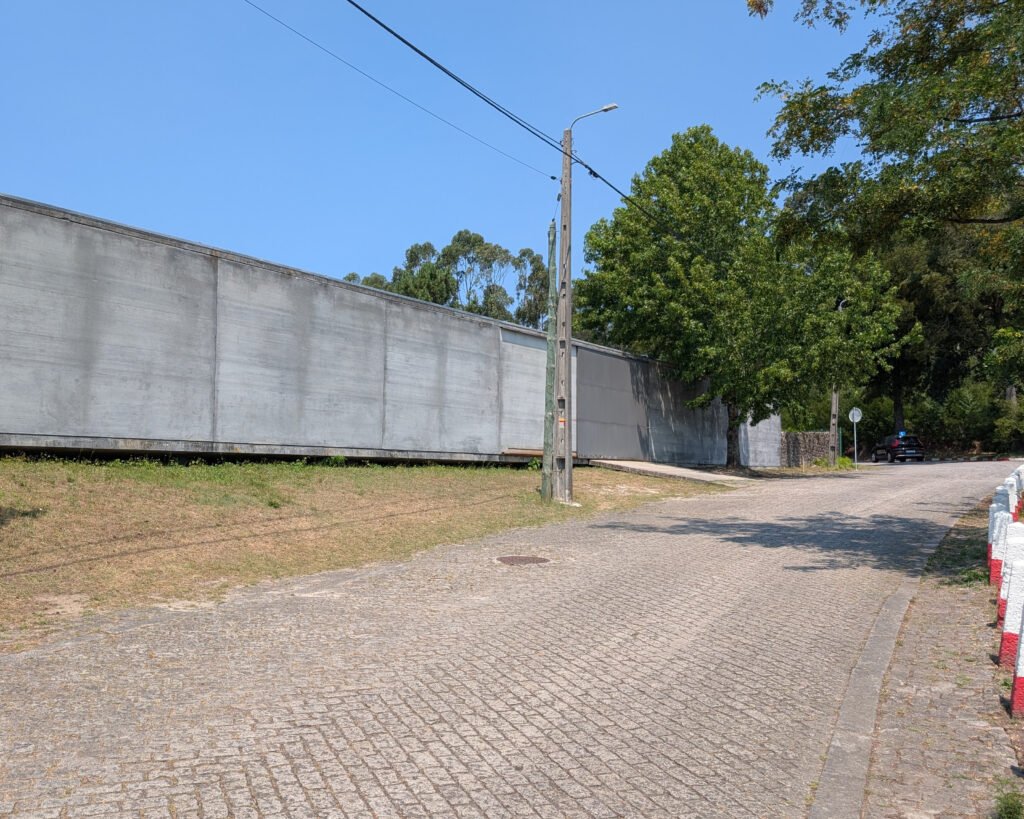
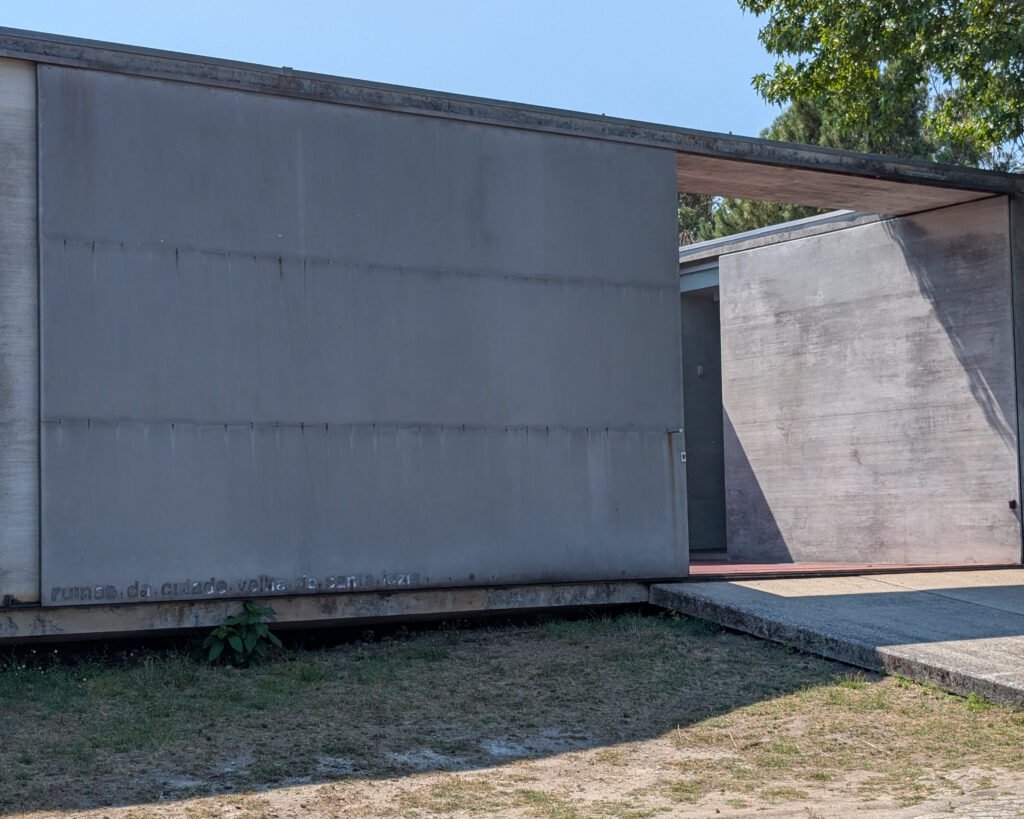
Access to the site is managed, so there is an admission fee and opening hours. Details are posted on the government’s Cultura Portugal website. General admission is €2, and entry is from 10:00-13:00 and 14:30-18:00 Tuesdays-Sundays. (14:00-17:00 in winter, and closed on major public holidays. Details here.)
There are wooden and metal walkways through the site, so it’s fairly easy to see the site.
Signage
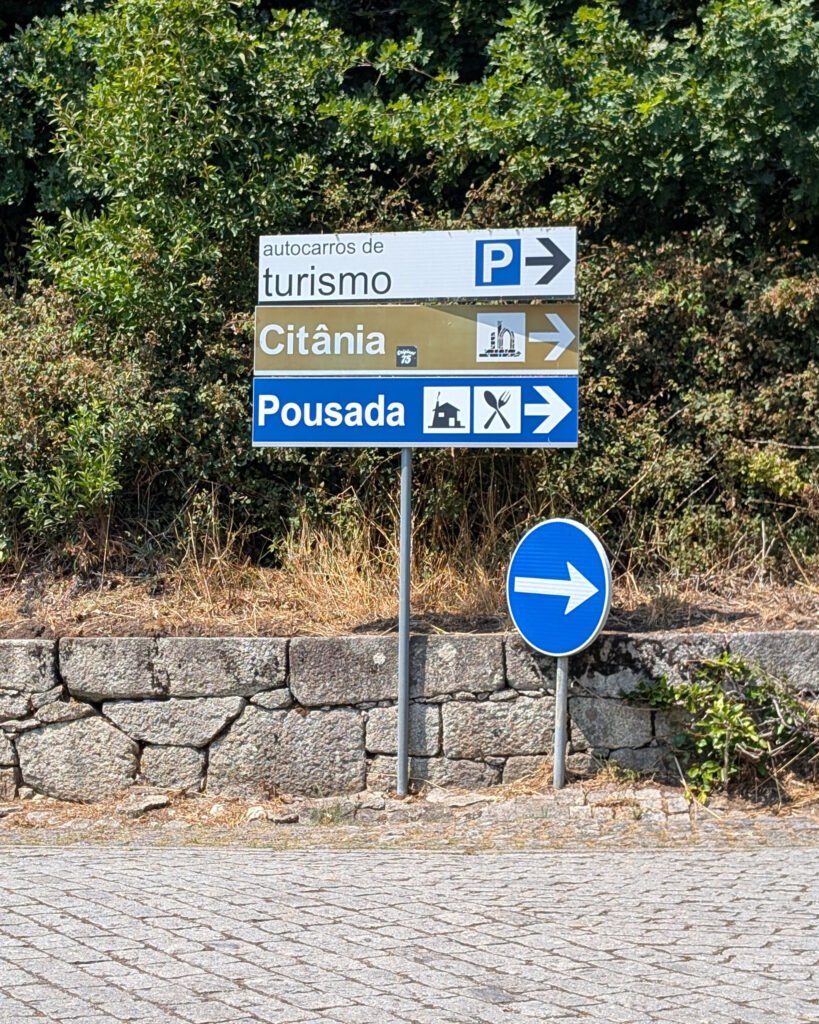
There are few signs directing you to the Citânia, but if you head up to the Monte de Santa Luzia where the big church/sanctuary is located, and go behind it towards the Pousada of Viana do Castelo, the Citânia is just behind that.
Links
- Website (in Portuguese) from Cultura Portugal
- Article (in English) from Wikipedia
- Entry (in English) in the Megalithic Portal
- Documentary (in Portugal) from AltoMinho 4D
- Information (in Portuguese) of Alto Minho’s “Rota dos Castros” (with a downloadable PDF) that includes the Citânia de Santa Luzia
- Description (in Portuguese) from Geoparque of Viana do Castelo
- Description (in Portuguese) from Archaeologist’s Portal of Directorate-General of Cultural Heritage
- Designation (in Portuguese) as a National Monument by the Directorate-General of Cultural Heritage
- Detailed information (in Portuguese) in the database of the Directorate-General of Cultural Heritage
Nearby
There are many Iron Age castros and other sites in the region. The excellent archaeological museum in Viana do Castelo, the Casa dos Nichos, has much information, and you can also get maps and an Archaeology Guide of Viana do Castelo from the Viana Welcome Centre (turismo) near the museum.
A few nearby sites: There are many Bronze Age rock engravings an an Iron Age salt pans just a few kilometers up the coast in Carreço. Slightly further along in Afife, there is the impressive Cidade de Afife (“Cidade” is similar to “Citânia”), as well as some rock engravings. There are also Neolithic megaliths in the Afife/Âncora area, particularly the Mamoa da Eireira and the Dólmen de Barrosa.
Sources
- “Citânia de Santa Luzia” (Guide brochure), IPPAR: Institute Português do Património Arquitectónico, 2001, Lisboa ↩︎