
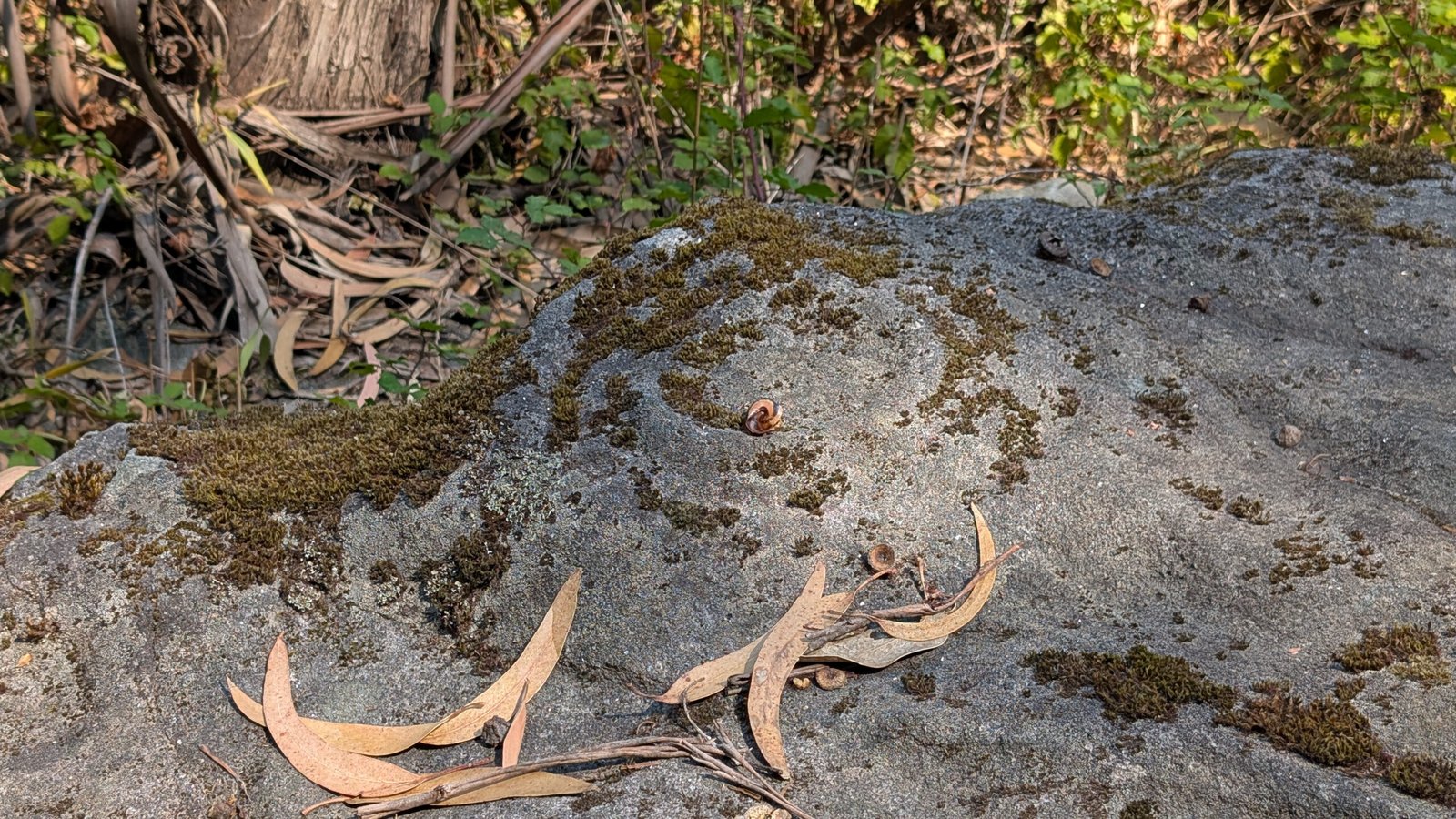

Also known as: Gravuras Rupestres da Matança, Gravuras Rupestres de Suvidade English name: Rock Engravings of Afife
Along the wide trail, pilgrims walk determinedly along the Caminho de Santiago. Few pay attention to the stones beside the trail. These stones have lain here for millions of years, and for many thousands of years they held their own attraction to people seeking to engage in spirituality or self-expression. Carved into their surfaces are designs made by human beings thousands of years ago.
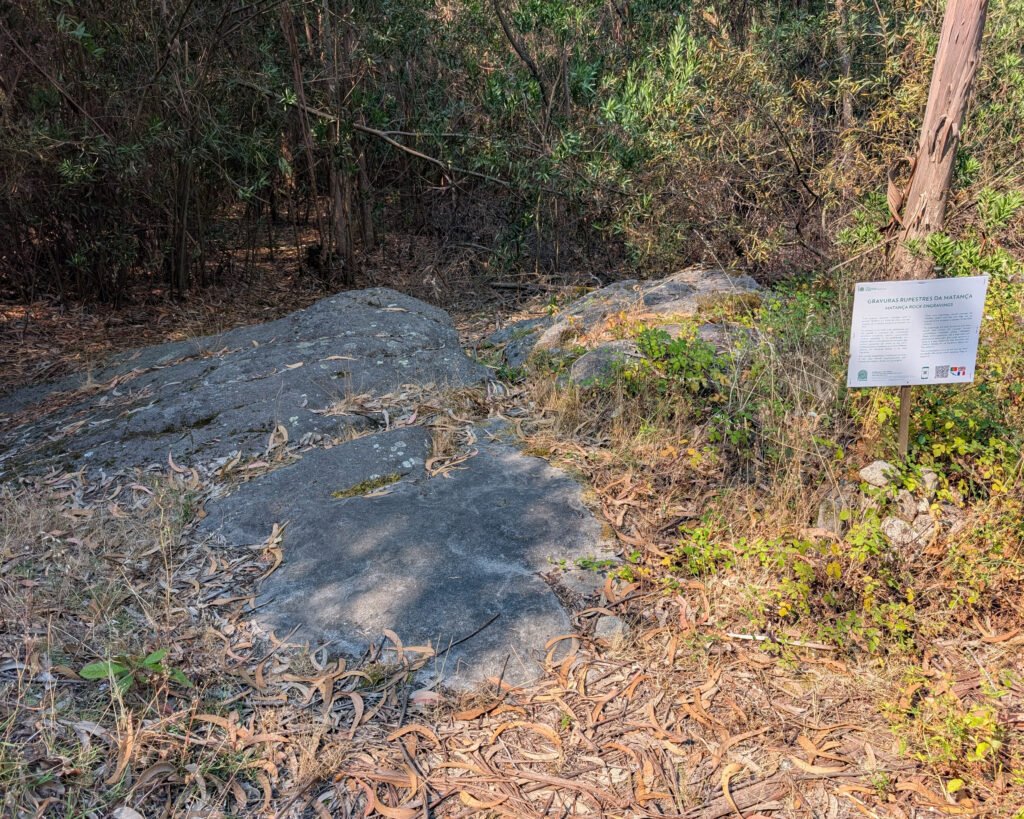
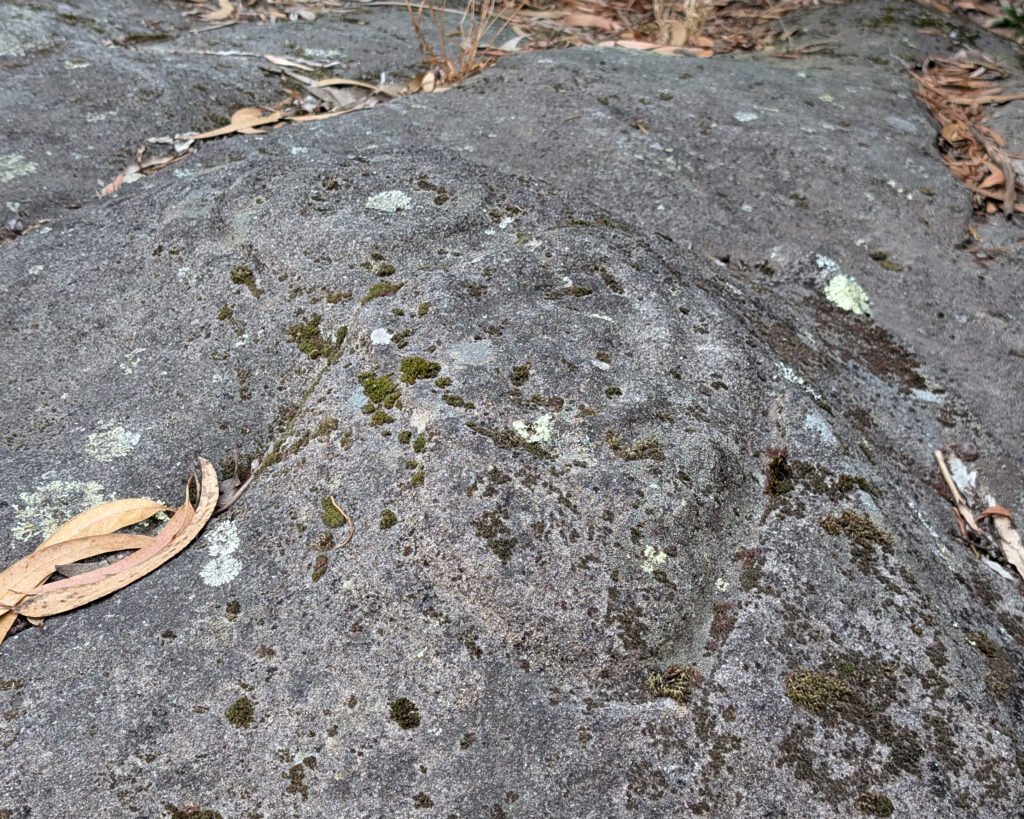
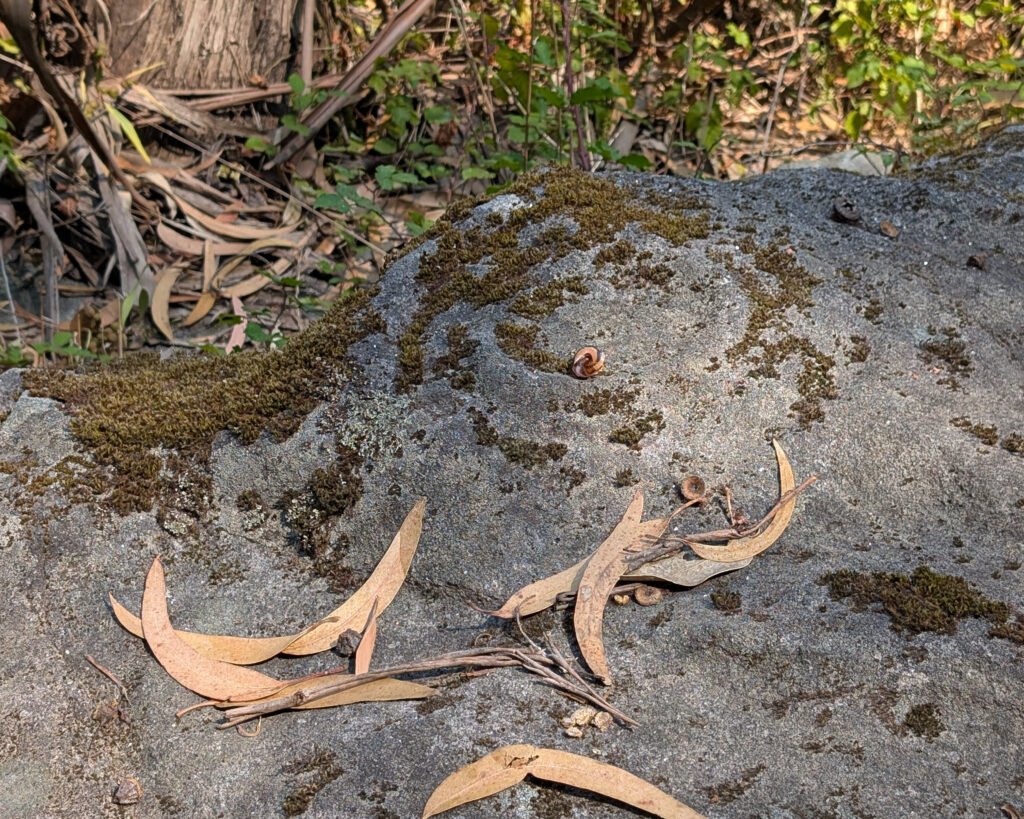
In this granite rock, about 6m by 5m, three panels of engravings can be faintly seen. (The ideal time is in the early morning or late evening, when the sun is low, or at night with a torch.) These engravings were first identified by archaeologists in 2006, and were studied in detail in 20131.
Most of the designs are concentric circles, with one panel showing what seems to be an animal, possibly a deer or horse.
Most of the designs are within the scope of the Atlantic Art of Northwest Iberia. The figurative animal is dated to the Bronze or Iron Age. The earliest engravings could date back to the Neolithic, possibly related to the nearby Mamoa de Eireira, while the most recent could be related to the nearby Cividade de Afife/Âncora.
My photographs do not reveal the engravings well! Please look at the photos in the research paper by Ana S. Bettencourt, linked at the bottom of this page. Those are much more revealing!
Location
This group of engraved stones is in Portugal’s northern Minho region, in the district and municipality of Viana do Castelo. They are in the parish of Afife, in the mountains just above the town of Afife. They are right beside the mountain road that is part of the Caminho de Santiago as well as PR24, the “Trilho dos Castros.”
Coordinates: 41.785665, -8.852336
Access
It’s possible to get to the site by car, or by hiking. The site is located along PR24, the “Trilho dos Castros,” on a section that is also part of the Caminho de Santiago.
Signage
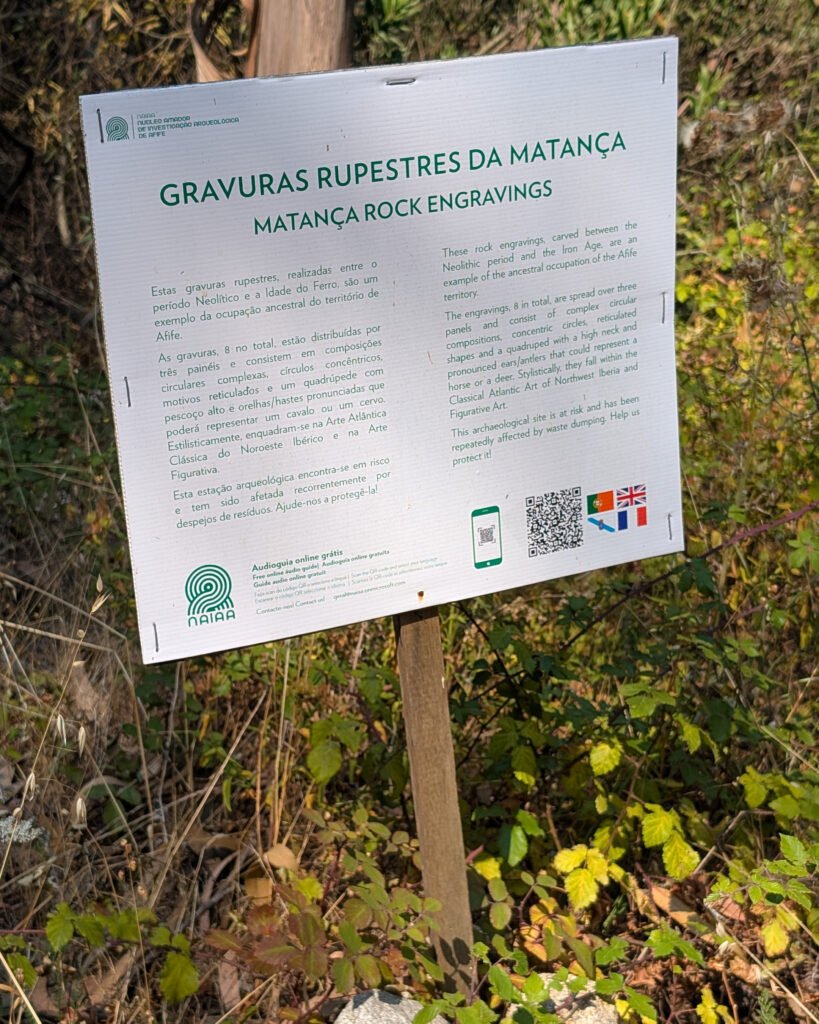
There are no signs directing you to the location. Some signs direct you to the Cividade de Afife-Âncora, which has its entrance right next to the stone engravings. The Afife Amateur Archaeological Research Association (NAIAA) has posted a sign next to the carved stones.
Links
- Description (in Portuguese or English) from Geoparque Litoral de Viana de Castelo
- Audio guide (in Portuguese or English) from Afife Amateur Archaeological Research Association (NAIAA)
- Description and photos (in Galician) from the Megaliticia blog
- Description (in Portuguese) of PR24, the “Trilho dos Castros,” with a downloadable PDF map.
- Information (in Portuguese) about the “Rota da Arte Rupestre e do Megalitismo” from AltoMinho (including a downloadable PDF)
Nearby
The Cividade de Afife-Âncora is just up the hill from the carvings. There is also the remains of an Iron Age castro on the Monte de Santo António in Afife, as well as an excellent archaeological museum. The Neolithic Mamoa de Eireira is to the north of Afife, on the way towards Âncora.
Sources
- Bettencourt, Ana M.S. “Gravuras Rupestres Da Suvidade Ou Matança (Viana Do Castelo).” Relatório Técnico-Científico Dos Trabalhos Arqueológicos Desenvolvidos Em 2013, Universidade do Minho, 2021, https://www.academia.edu/92151598/BETTENCOURT_A_M_S_2021_Gravuras_rupestres_da_Suvidade_Matan%C3%A7a_Viana_do_Castelo_Relat%C3%B3rio_t%C3%A9cnico_cient%C3%ADfico_dos_trabalhos_arqueol%C3%B3gicos_desenvolvidos_em_2013. Accessed 10 July 2026. ↩︎