
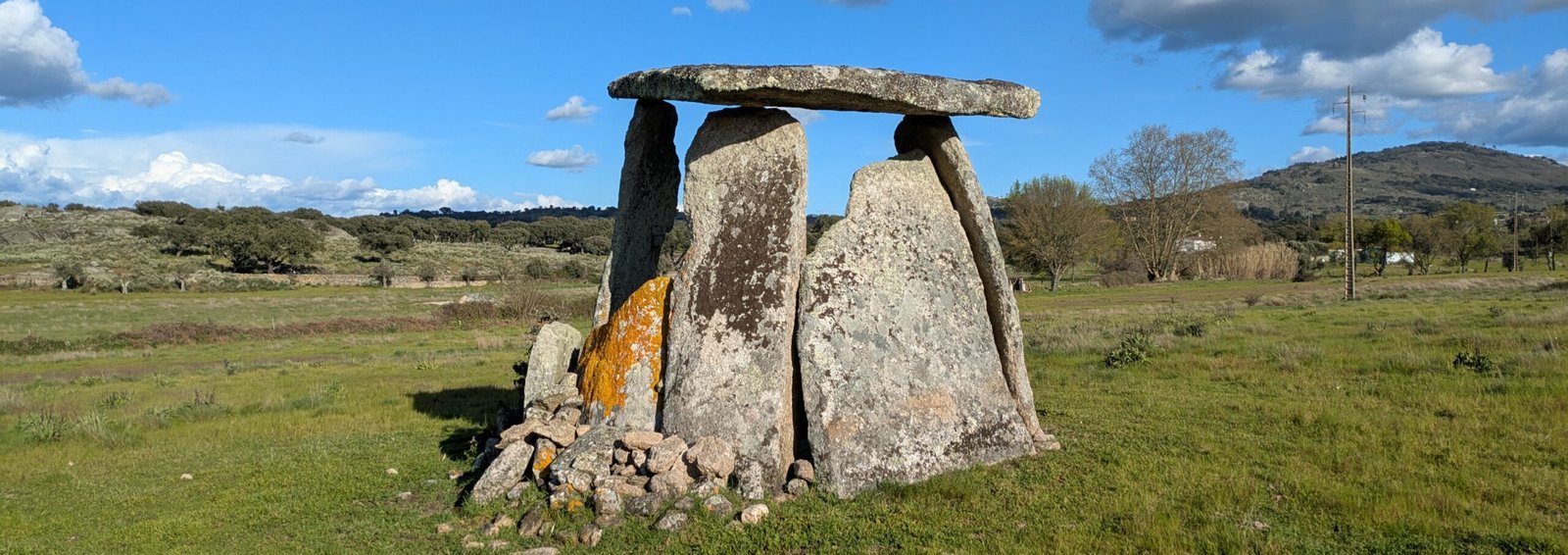
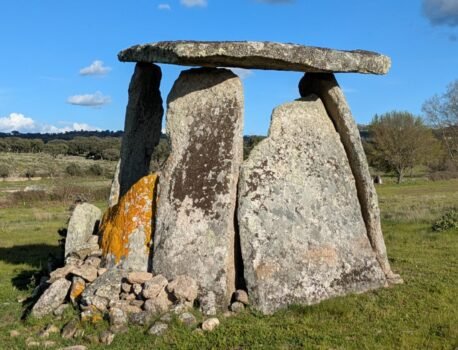
The most common type of megalithic structure in Portugal are funerary structures. These are typically tombs made of large stone slabs: these are called “dolmens” or portal tombs. In Portuguese, they are typically called antas but also dólmen or orca. Other types of funerary structures include large chambered tombs (including the famous Alcalar monuments), which uses stacked stones to make a circular chamber. This style of building is also called a “tholos” (plural “tholoi” or “tholoses”). I’ve included all large stone funerary structures into this category called “Dolmens.”
-

Praia das Maçãs Prehistoric Monument
Portuguese: Monumento pré-histórico da Praia das Maçãs Also known as: Tholos do Outeiro das Mós, or Tholos da Praia das Maçãs In the Neolithic era, about 4,000BC, an artificial cave was dug on this site. It had a corridor and central burial chamber with side niches. Later, a large tholos was built. The site was…
-
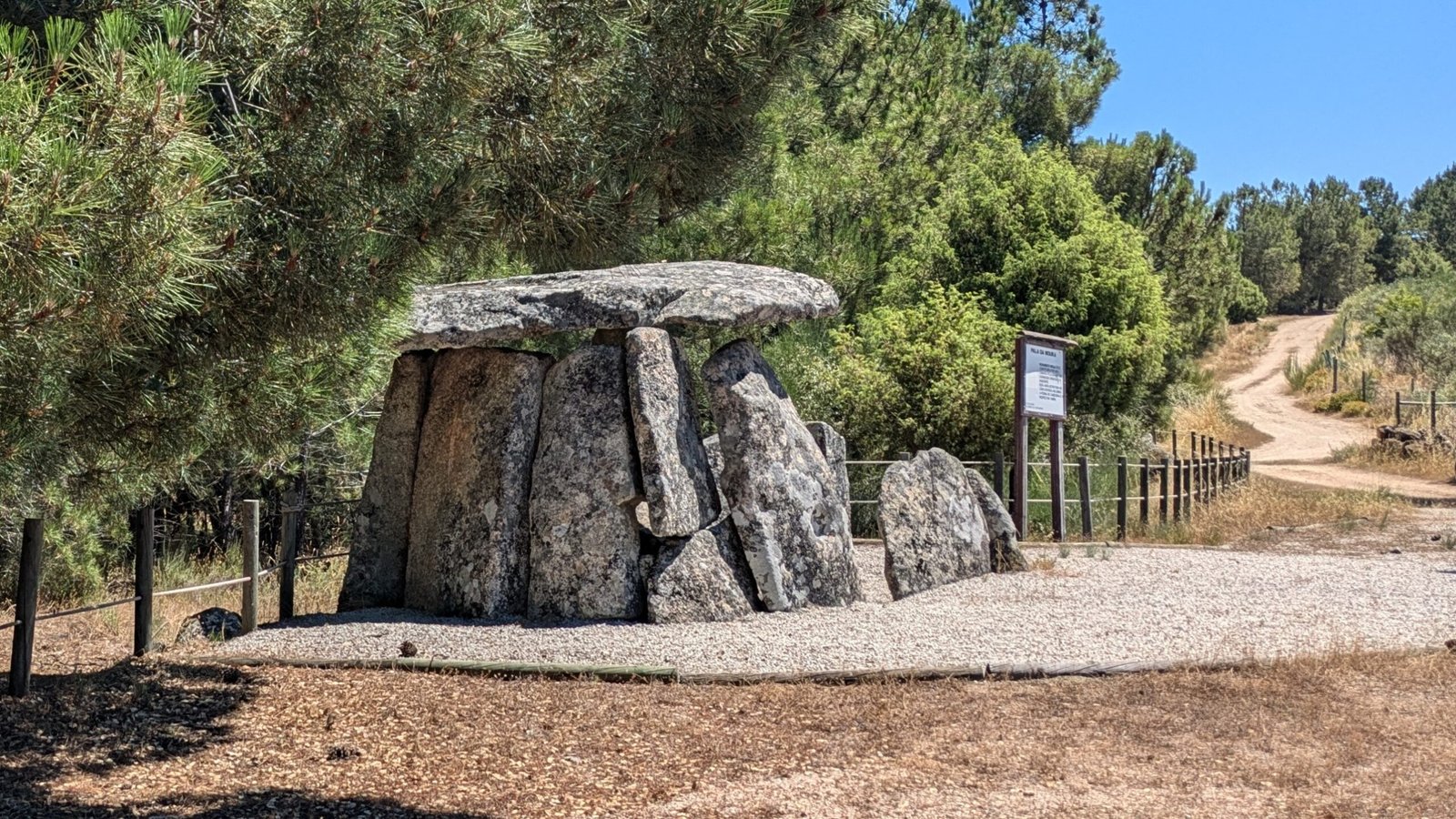
Pala da Moura
Also known as: Anta de Vilarinho da Castanheira Picnic tables invite you to sit, rest, and refresh yourself. The pine trees sway and whisper softly in the breeze. Meanwhile, the ancient stone construction reminds you that people were here thousands of years ago, making their own special place. Look closely: what secrets might it hold?…
-
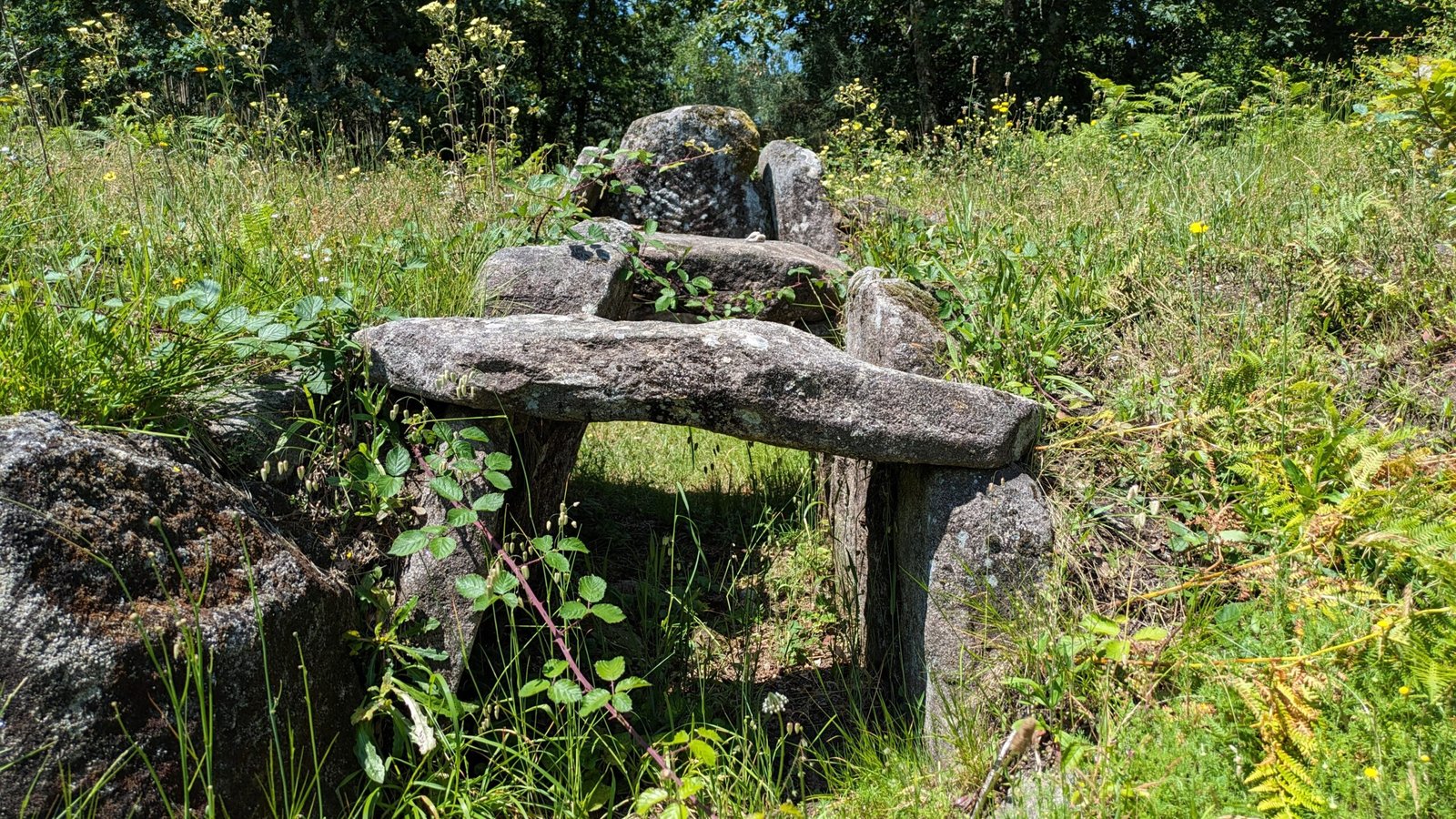
Necrópole Megalítica de Chão Redondo
ALSO IDENTIFIED AS: Dólmen 2 (or Anta 2) de Chão Redondo, or Monumentos Megalíticos do Chão de Redondo From a distance, it doesn’t seem very extraordinary. There’s a remnant of the large mound of stone and earth which originally covered the prehistoric tomb. The tomb itself looks fairly typical of an average-sized neo-chalcolithic chamber tomb.…
-

Anta da Comenda Grande
Also known as: Anta da Herdade das Comendas It’s not a famous site, or one particularly noteworthy for archaeological artefacts. The farmer’s fence keeps you from walking in and around the stones. It’s easy to overlook while rushing down the road. But, if you take the time to stop and walk along the edge of…
-
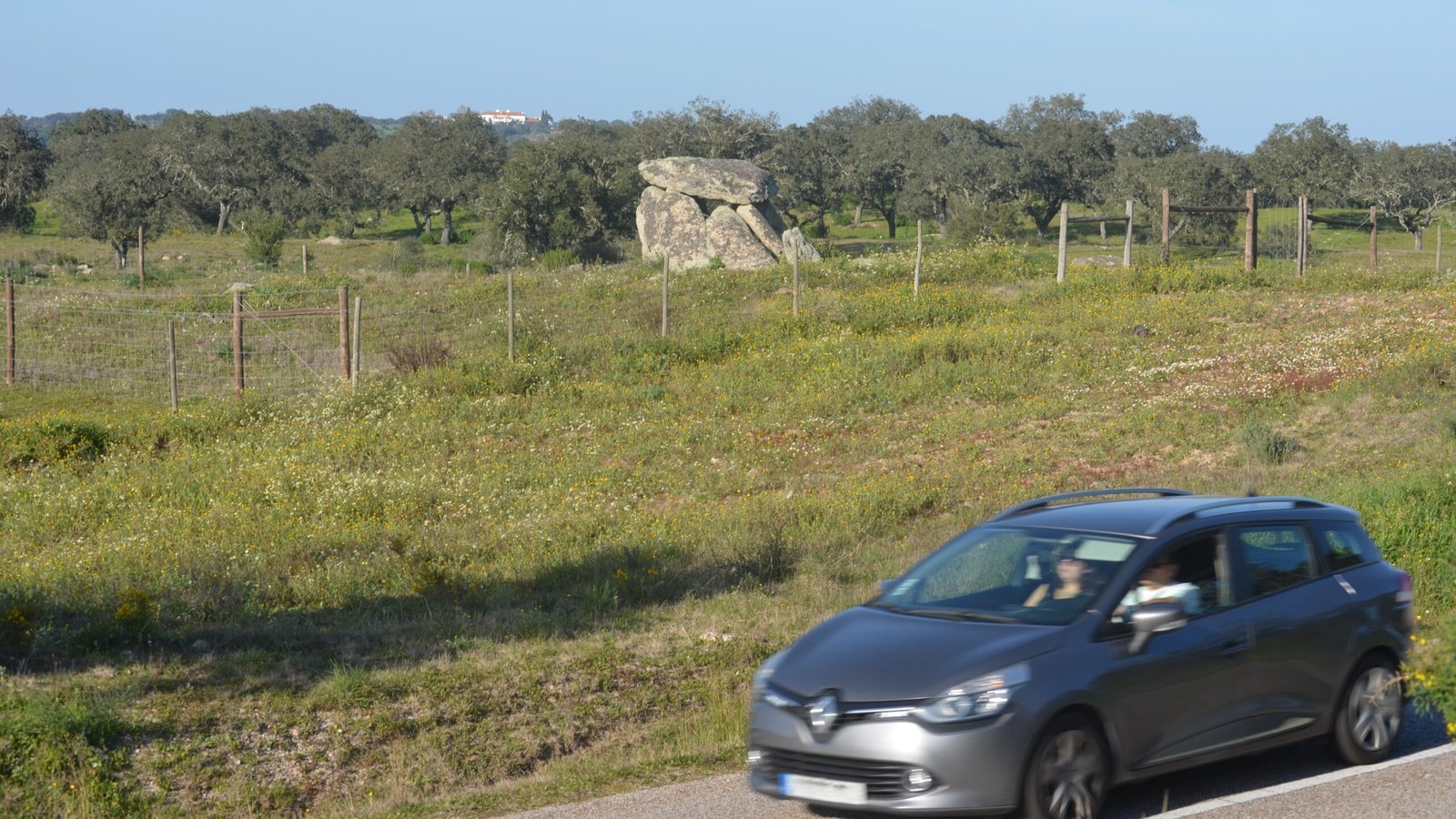
Antas do Herdade de Água Doce
Also known as: Anta de Vale Beiró & Antas (Grande & Pequeno) de Caminho da Fanica Driving along the N2, Portugal’s iconic “National Road #2,” you experience the richness of the country’s geography and history. Driving along the long stretches of Alentejo countryside, you might be tempted to speed up and get to the next…