
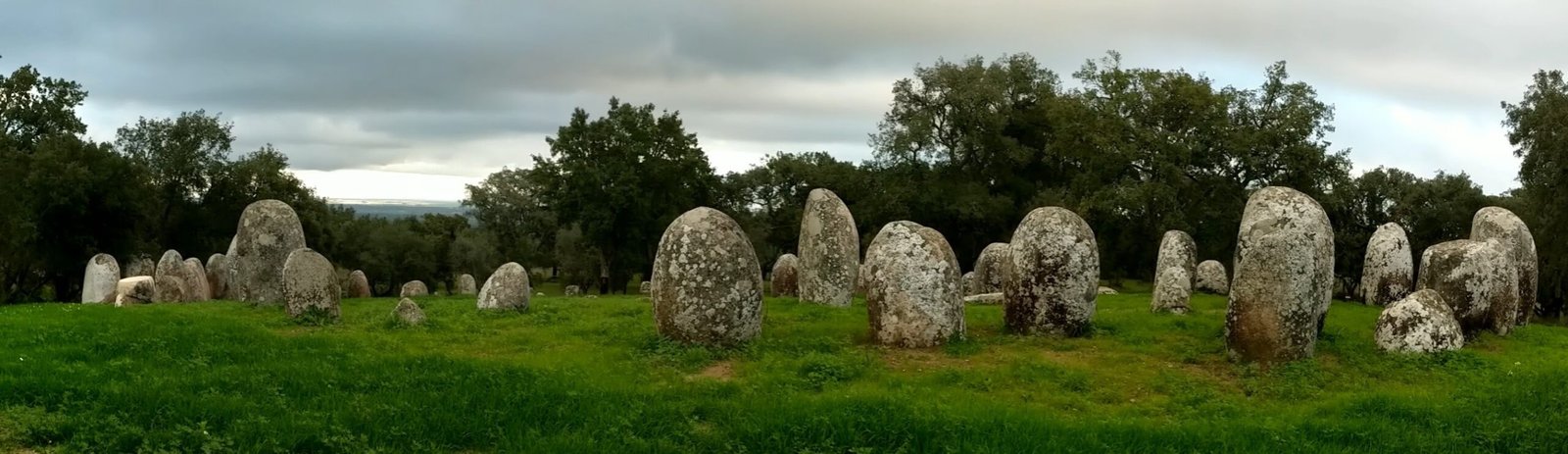
A group of standing stones, or menhirs, is generally referred to as a “cromlech.” In Portuguese, they are called cromeleques or sometimes recintos megalíticos (or “megalithic enclosure”). In Portugal, these are usually arranged in an ellipse or a horseshoe shape. The orientation is often related to astronomical events: often sunrise at the solstices.
-
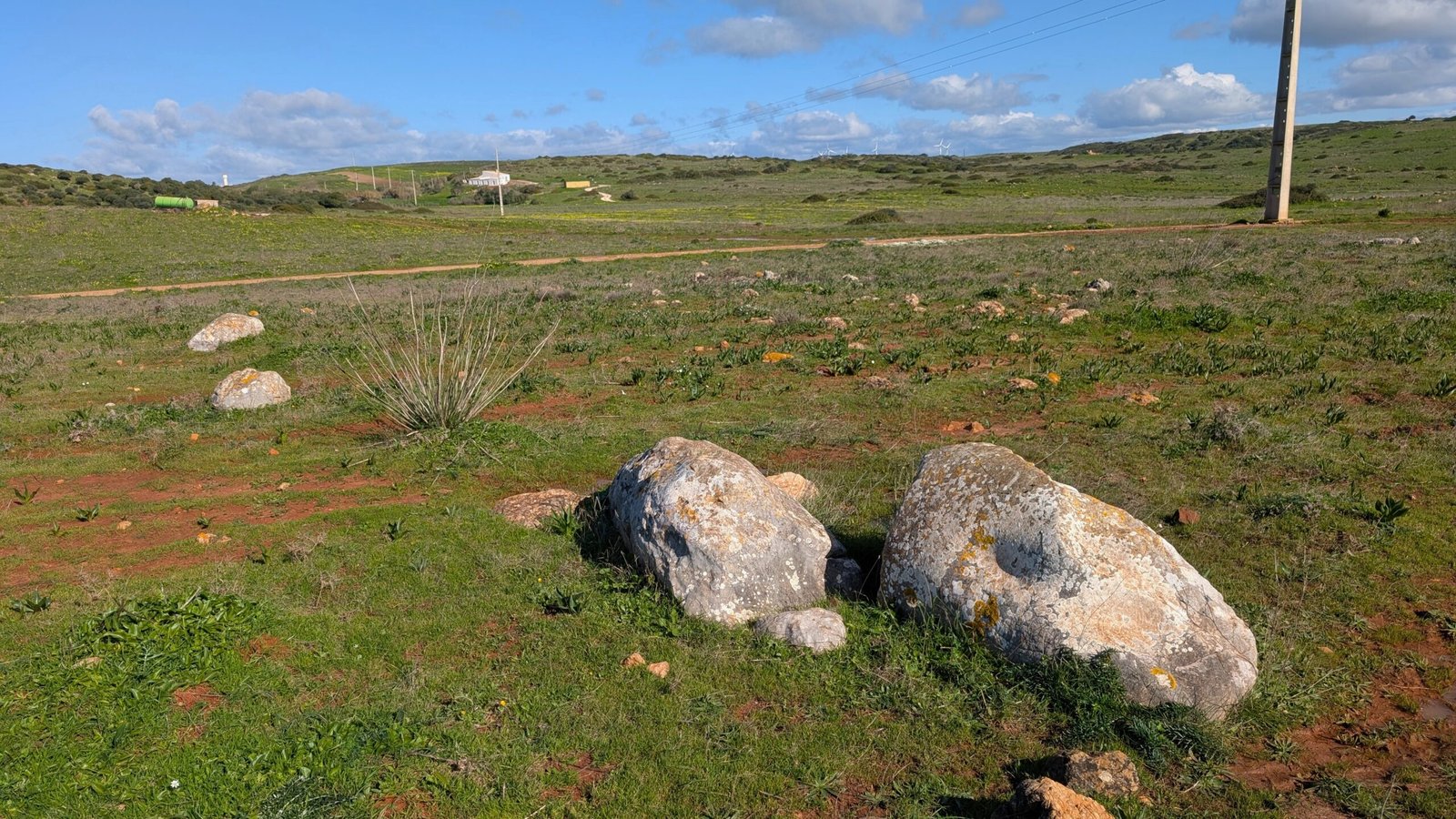
Cromeleques de Amantes
Two groups: Cromeleque de Amantes 1, Cromeleque de Amantes 2 (also known as Menires de Amantes 2) Walking around the field, several large stones stand out. They’re toppled over and broken, but their smoothed cylindrical shape belies their origins: these are shaped stones, made into menires (Portuguese spelling), or standing stones, thousands of years ago.…
-
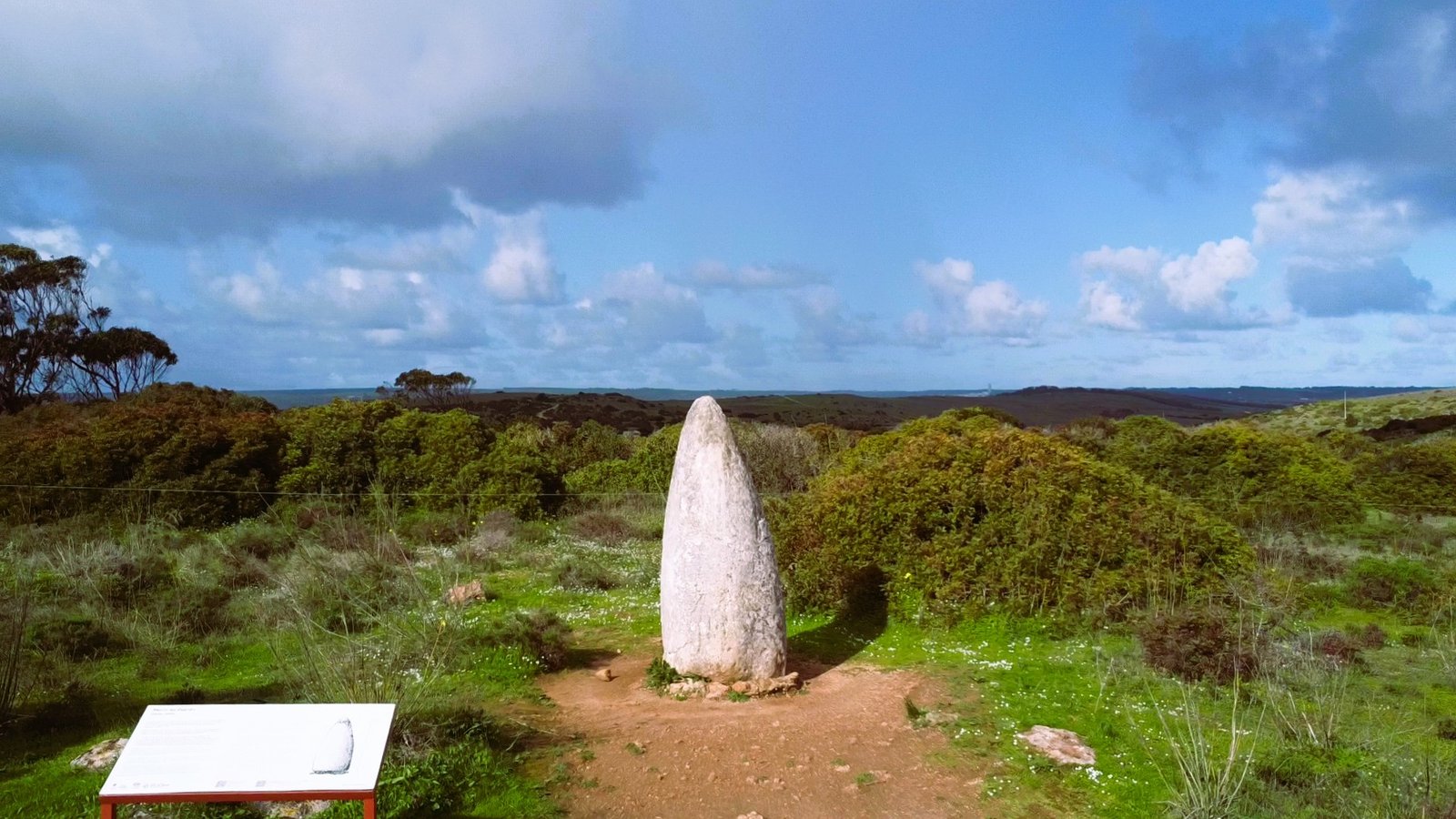
Menires do Padrão
Standing sentinel above the fields around Sagres and Vila do Bispo, the conical menir (the common English term is “menhir“) seems the solitary example of prehistoric megalithic construction in the area. But look more closely in the area, and you will find remnants of its original neighbours. Look around again and imagine the area dotted…
-
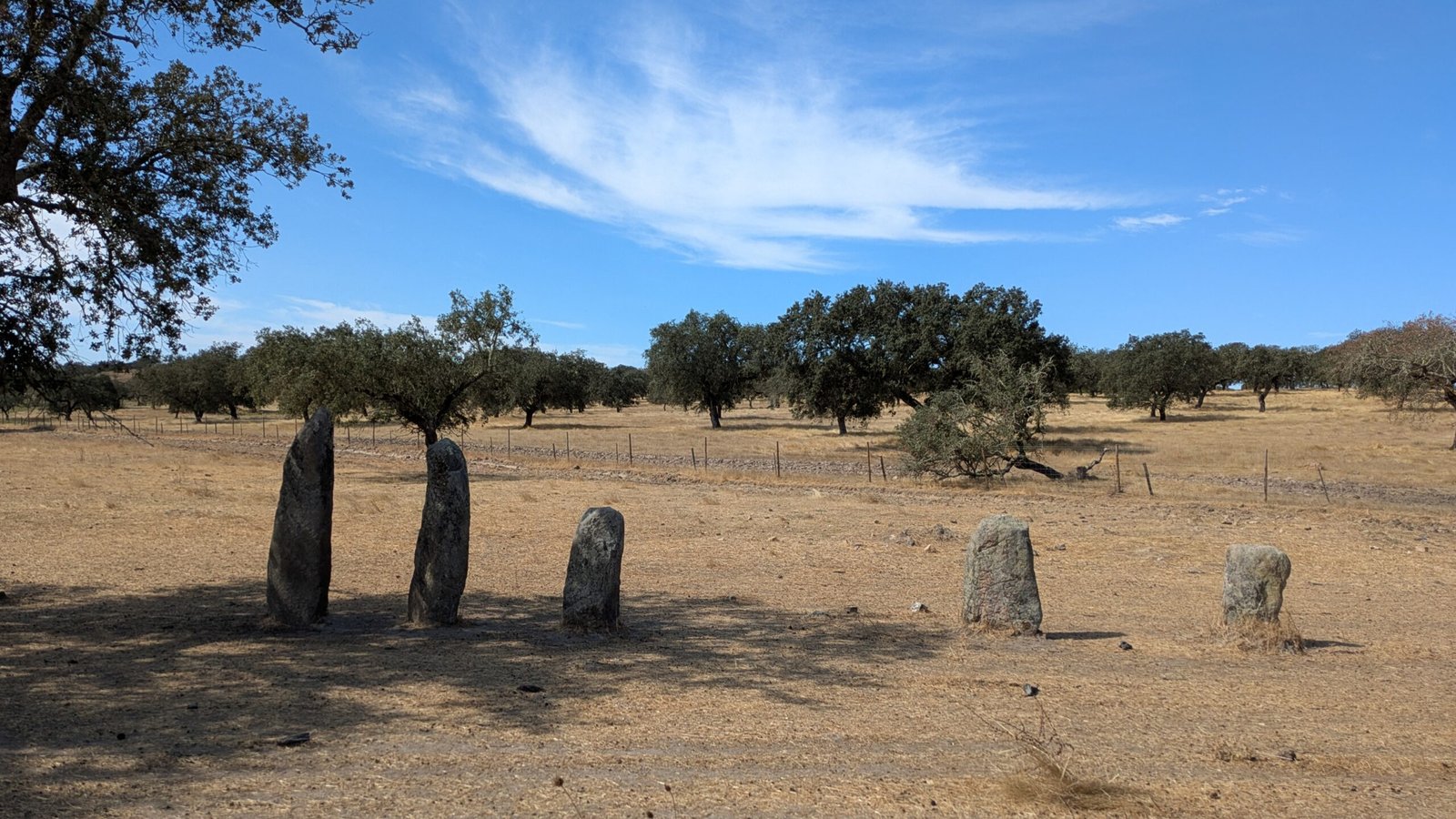
Conjunto Megalítico do Monte de Têra
Also known as: Alinhamento da Têra, Alinhamento do Monte de Têra Standing tall with flocks of sheep to keep them company, the stone pillars line up from East to West. There are gaps in their formation revealing the loss of some of their number over the thousands of years they have stood here. The five…
-
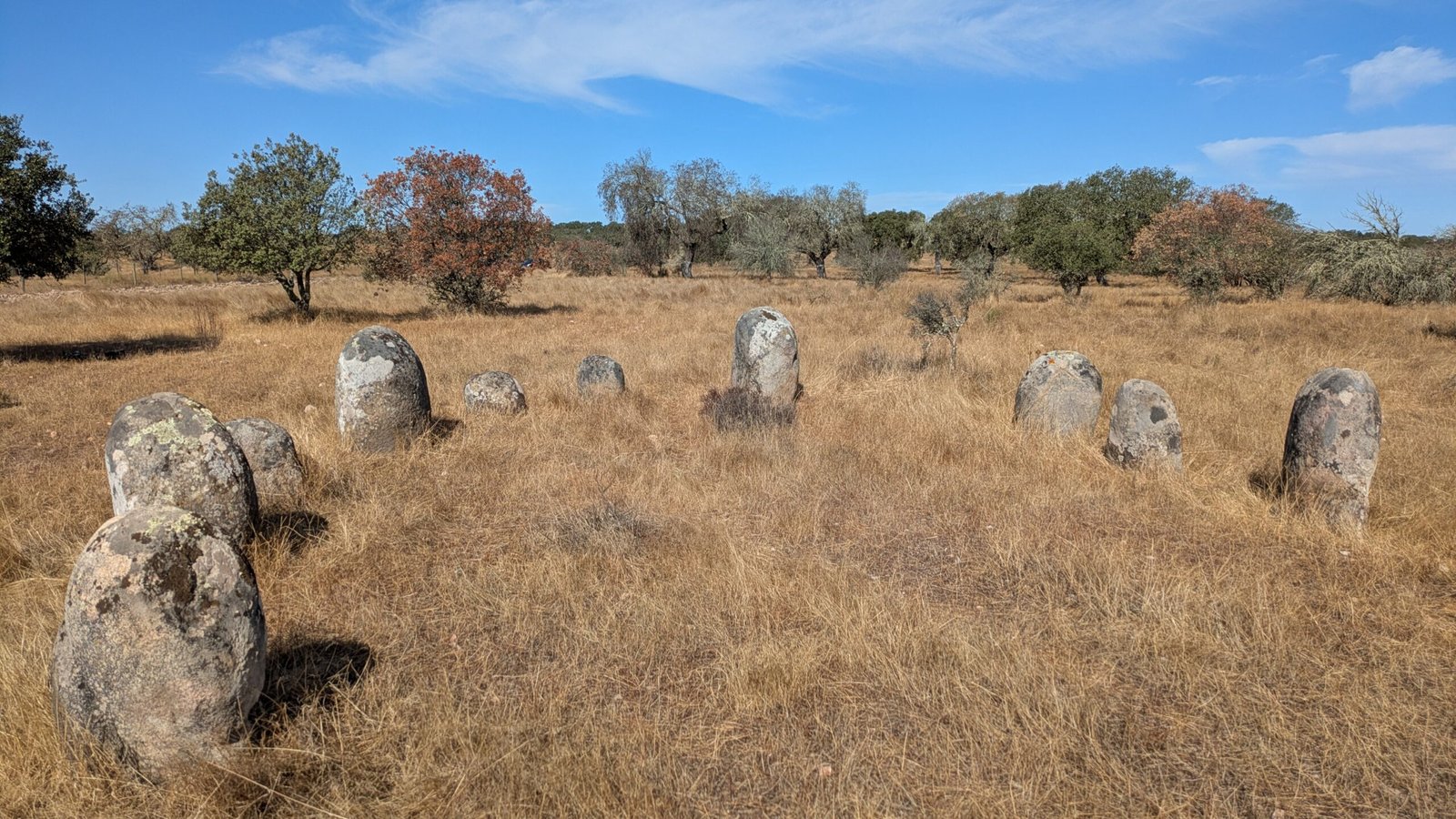
Cromeleque de Vale d’El Rei
Also known as: Cromeleque do Monte da Têra, Cromeleque do Monte das Figueiras, Recinto Megalítico de Vale d’El Rei Walking among these perfectly arranged stones on an Alentejo hilltop, you can almost feel the ancientness of the land. These stones were placed here six or seven thousand years ago, and likely were being used and…
-
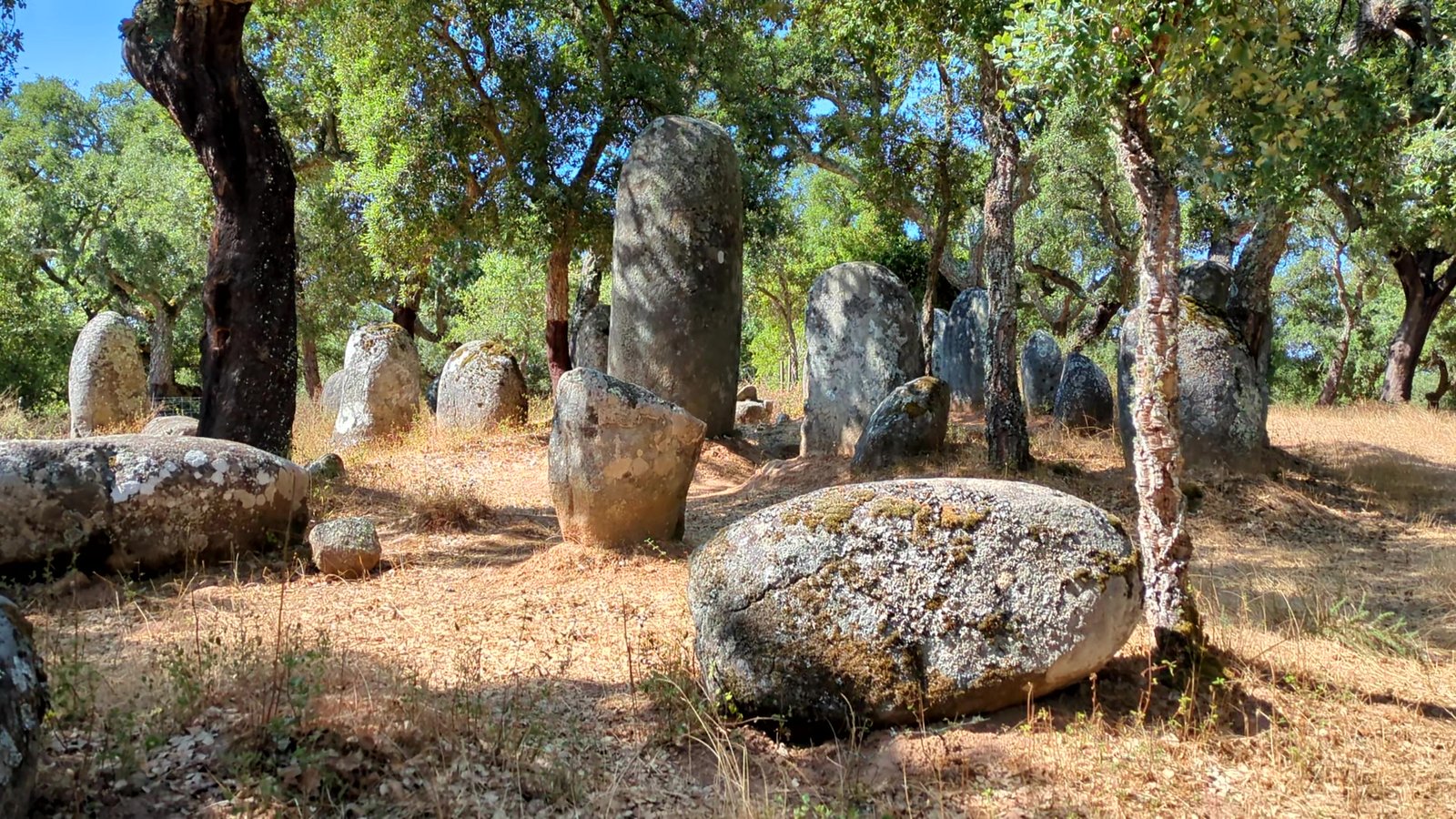
Cromeleque da Portela de Mogos
Also known as: Cromeleque da Portela de Modos Walk up the small hill, through the Alentejo cork oak forest. The wind blows through the trees, rustling the leaves. Up ahead, stand a group of still grey shapes. These stones have stood here for millennia, both upright and laying down. Once again they stand tall, dwarfed…