
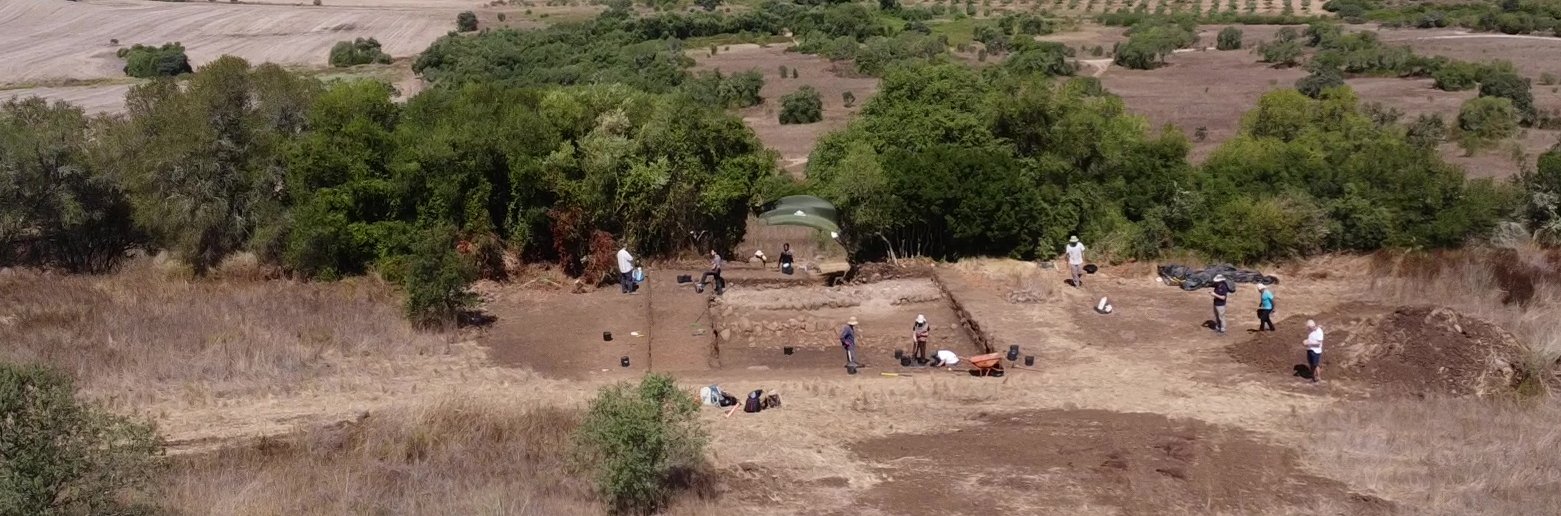
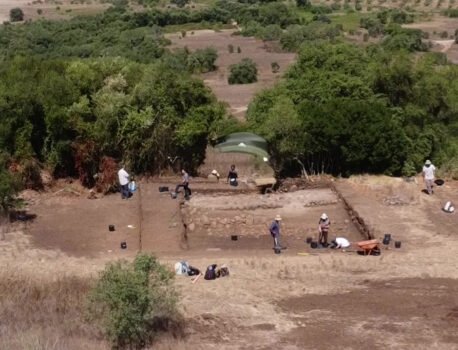

The long, low hill stretches across the Alentejo countryside. At the edge of the hill, along the northern treeline, you can hear the sound of shovels and picks. The archaeological team is digging, trying to learn the details of this place. The only evidence of what was once an enormous settlement are the stones and fired ceramic they have uncovered.
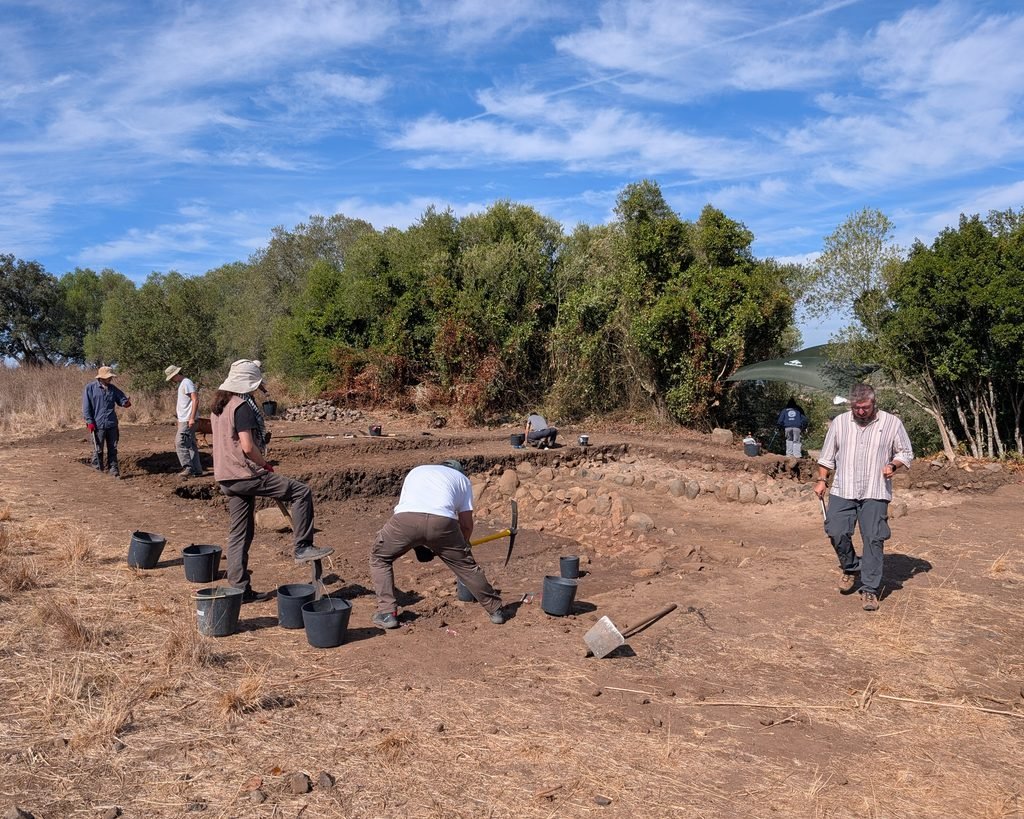
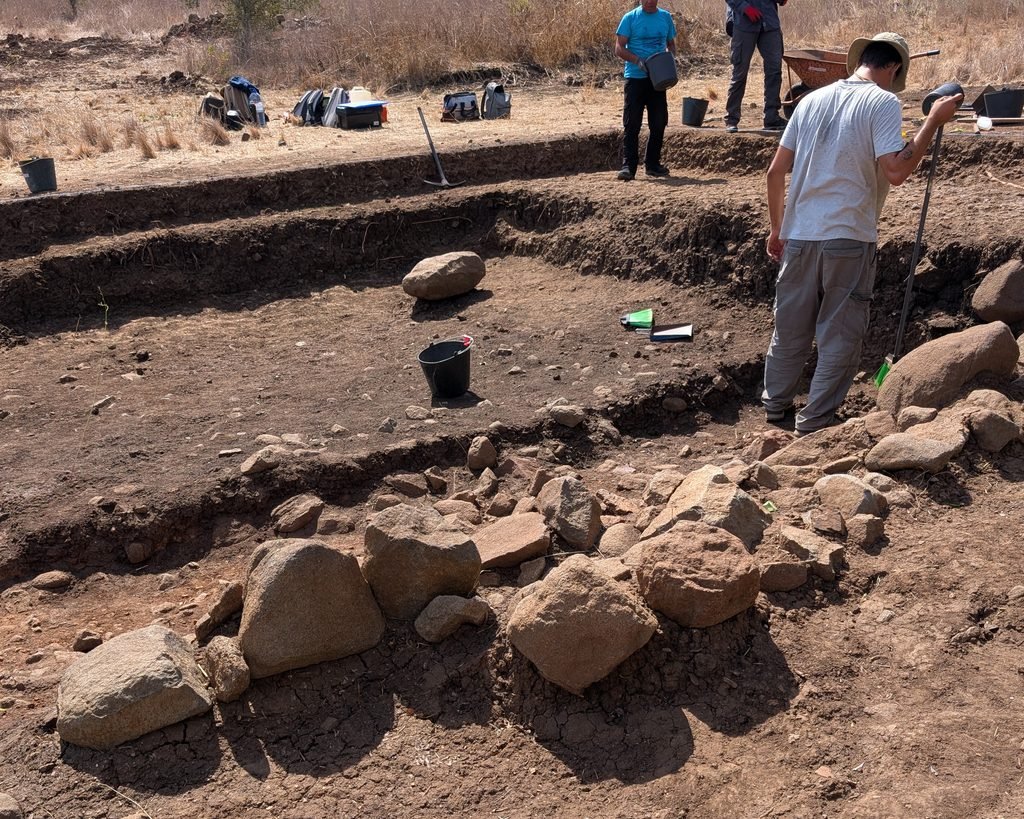
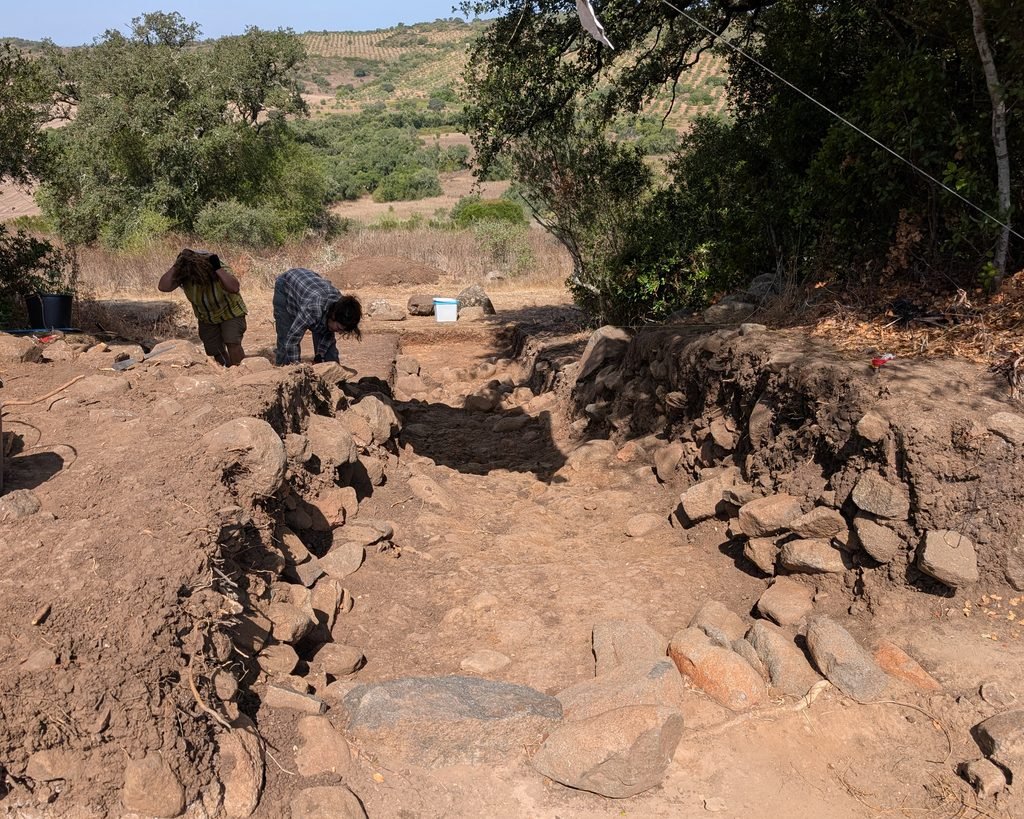
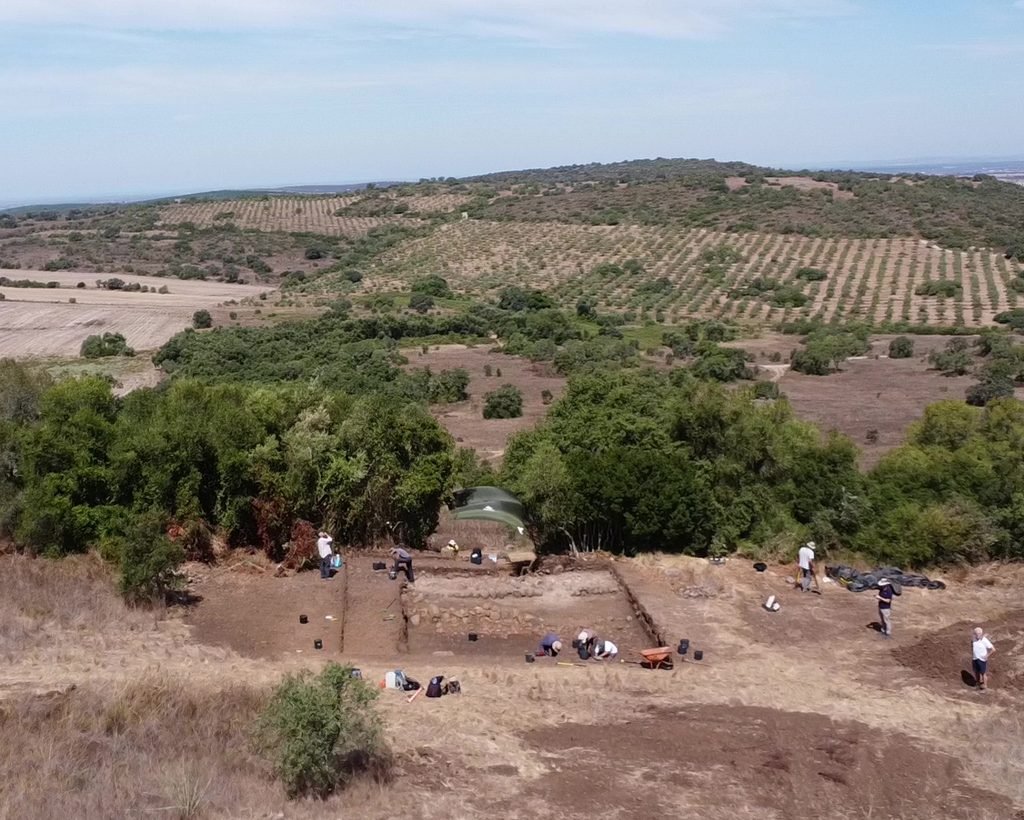
This is an active archaeological excavation site, which has not yet been set up for public viewing. The team has Open Days and welcomes visitors to come when the dig is ongoing.
This site is an enormous (17 hectares) Bronze Age settlement. It is notable for a few main reasons: it is one of the largest in the Iberian Peninsula, and the whole settlement is surrounded by walls, in some case double walls. The team has excavated a few sections of the wall, and are examining construction techniques. These walls are composite structures. The larger section shows an interesting buttressing ramp, made of fired clay. Both sections showed a ditch at the bottom, with large stones acting as reinforcements.
Early aerial photos indicated that the walls may have had two large towers at the entrance gate. LiDAR imaging shows the walls going around the whole site (about 850m long by 200+m wide) and a possible second entrance at the far end. Carbon dating place this settlement at about 1,100BC, in the Late Bronze Age. Artefacts recovered have included many fragments of ceramics, stone tools, and animal bones. A few Iron Age items have been found as well.
The site was originally identified in the 1980s, and there was an excavation campaign starting in the early 2000s. Excavations have more or less been ongoing since, with a new phase starting in 2026. It’s a welcoming dig, holding open days throughout their active excavation season. It’s an excellent place to learn about archaeology and the Bronze Age.
Location
This settlement is located on a hill in the Alentejo. It’s in the district and municipality of Beja, between the town of Beringel and the village of Mombeja.
Access
The site is on private land and is not set up for public visiting. The archaeological team offers weekday Open Days during excavation season. The next dig should be in August-September 2027. Check out their blogsite or contact them about visiting before you go.
Signage
There are no signs directing you to the site.
Links
- Article (in English) from Wikipedia
- Blogsite (in Portuguese) of the archaeological excavations from Project Outeiro do Circo
- Website (in Portuguese) of the settlement from Project Outeiro do Circo
- Description (in Portuguese) from Archaeologist’s Portal of the Directorate-General of Cultural Heritage
Nearby
The archaeological museum in Beja, Museu Rainha D. Leonor, is about 16km away. There’s also a good municipal museum in Aljustrel, about 28km away.
Sources
Almeida, Nelson J., et al. “Animal Exploitation in Southwestern Iberia at the End of the Second Millennium BCE: Insights from the Late Bronze Age of Outeiro Do Circo (Beja, Portugal)”. Complutum, vol. 34, no. 1, July 2023, pp. 57-83, https://doi.org/10.5209/cmpl.88939.
Serra, Miguel, et al. “O Bronze Final No Sul de Portugal Um Ponto de Partida Para O Estudo Do Povoado Do Outeiro Do Circ.” Vipasca Arqueologia E História, vol. 2a série, no. 2, 2007, pp. 167–170, https://www.academia.edu/6188115/O_Bronze_Final_no_Sul_de_Portugal_Um_ponto_de_partida_para_o_estudo_do_povoado_do_Outeiro_do_Circo. Accessed 5 Sept. 2026.
Serra, Miguel, and Eduardo Porfírio. “O Bronze Final Nos ‘Barros de Beja’: Novas Perspectivas de Investigação.” Actas de V Encontro de Arqueologia Do Sudoeste Peninsular, 2012, pp. 133–148, https://www.academia.edu/6188052/O_Bronze_Final_nos_Barros_de_Beja_Novas_perspetivas_de_investiga%C3%A7%C3%A3o. Accessed 5 Sept. 2026.
Serra, Miguel. “Projecto Arqueológico Outeiro Do Circo (Beja, Portugal): Educação Patrimonial e Envolvimento Comunitário.” Iberografias, vol. 43, 2022, pp. 41–58. https://www.academia.edu/83715777/Projecto_Arqueol%C3%B3gico_Outeiro_do_Circo_Beja_Portugal_educa%C3%A7%C3%A3o_patrimonial_e_envolvimento_comunit%C3%A1rio Accessed 29 Aug. 2026.
Serra, Miguel. “A Slow Awakening on the Plain: The Bronze Age in the Beja Region (South Portugal).” Between the 3rd and 2nd Millennia BC: Exploring Cultural Diversity and Change in Late Prehistoric Communities, edited by Susana Soares Lopes and Sérgio Alexandre Gomes, Archaeopress, Apr. 2021, pp. 119–132, https://www.academia.edu/46919139/A_Slow_Awakening_on_the_Plain_The_Bronze_Age_in_the_Beja_Region_South_Portugal. Accessed 5 Sept. 2026.