
English name: Rock engravings of Fornelos, Part of a group: Gravuras Rupestres de Montador, Gravuras Rupestres de Carreço
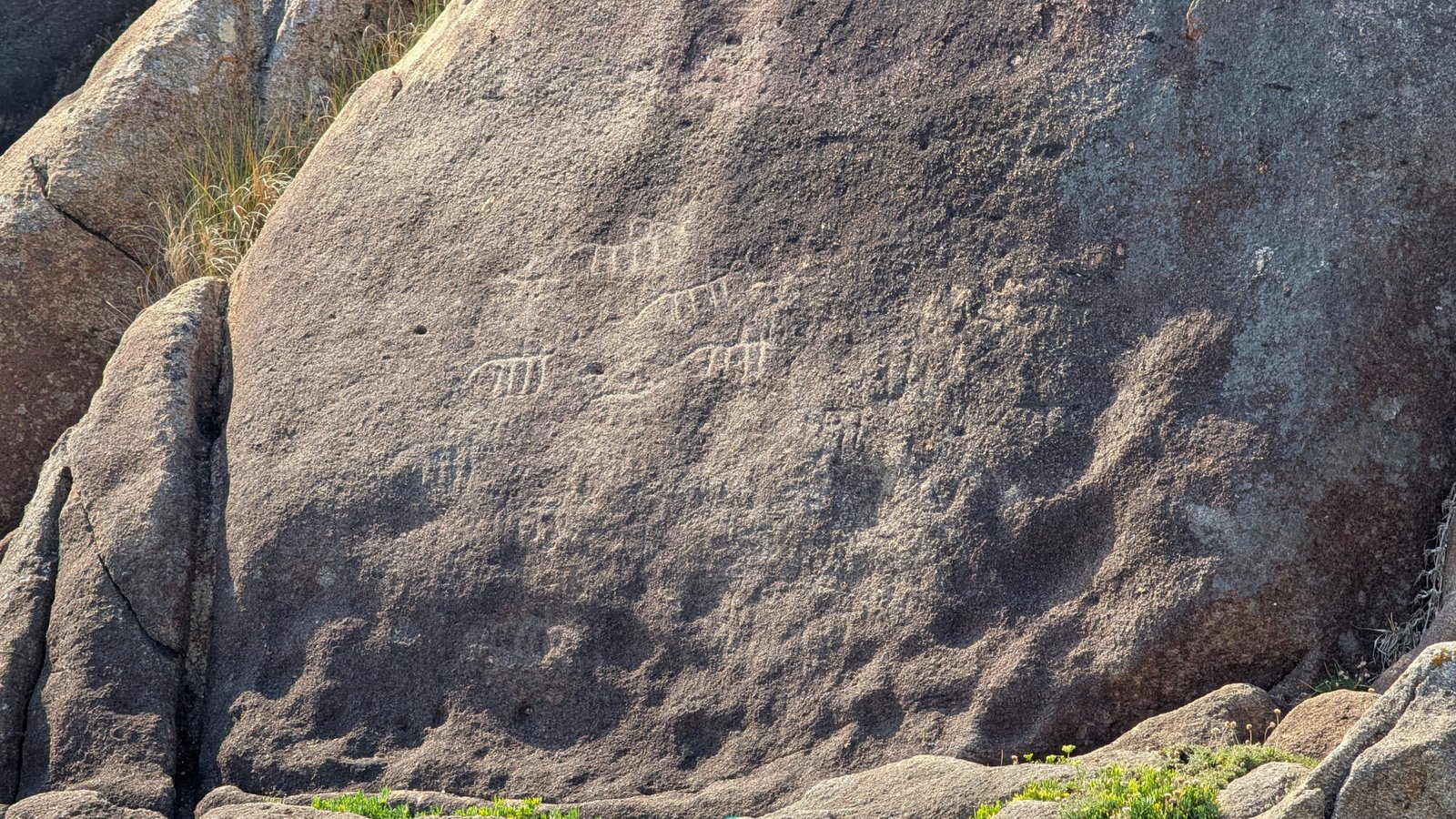
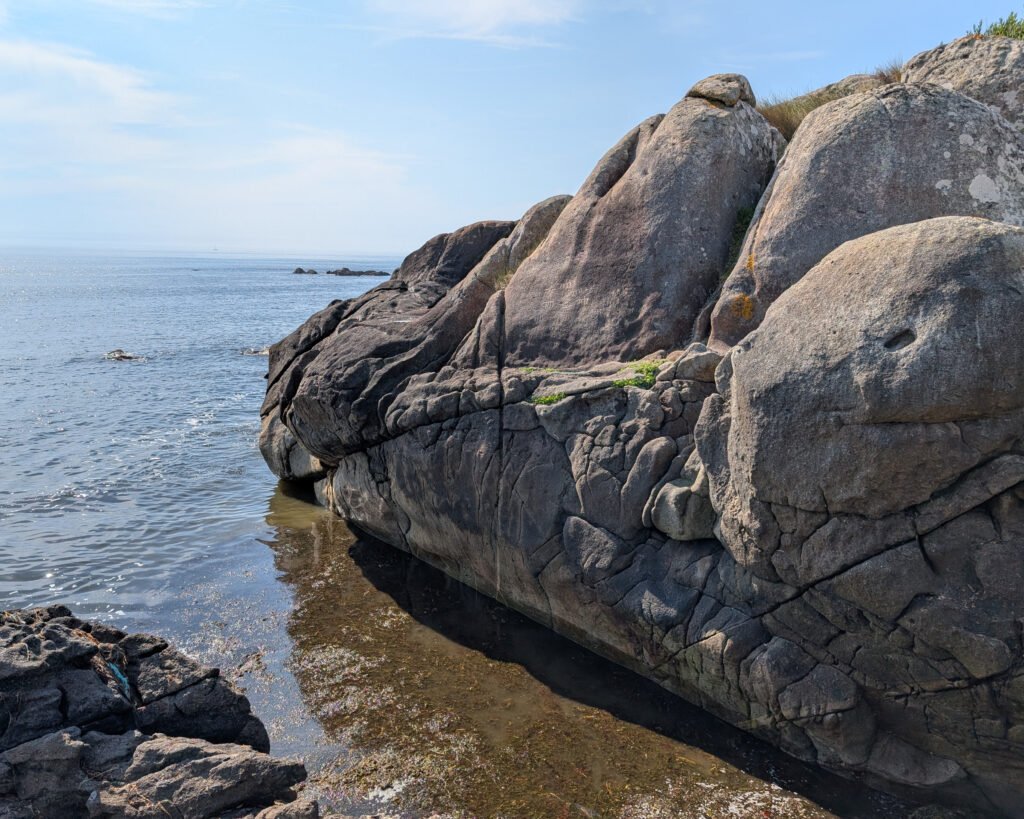
Walking along the rocks at the edge of the ocean, it’s important to pay attention to where you place your feet. But be sure to stop and look up and around. There, across a small bay, you can see designs carved into the rock thousands of years ago.
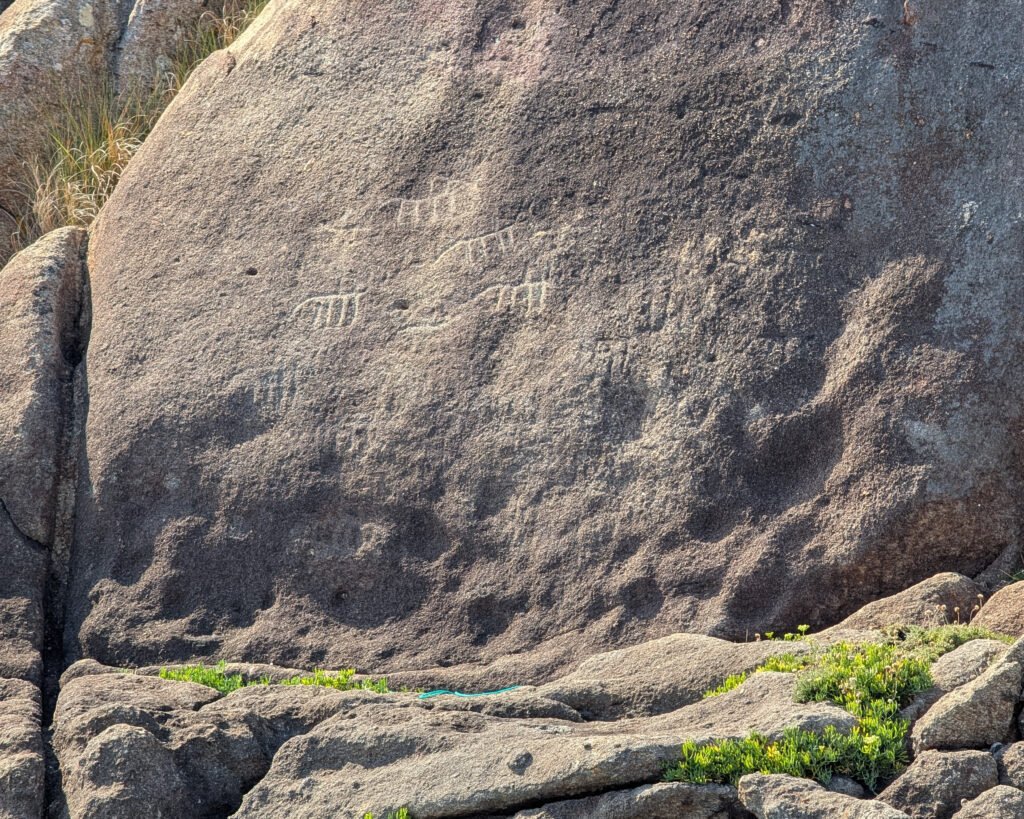
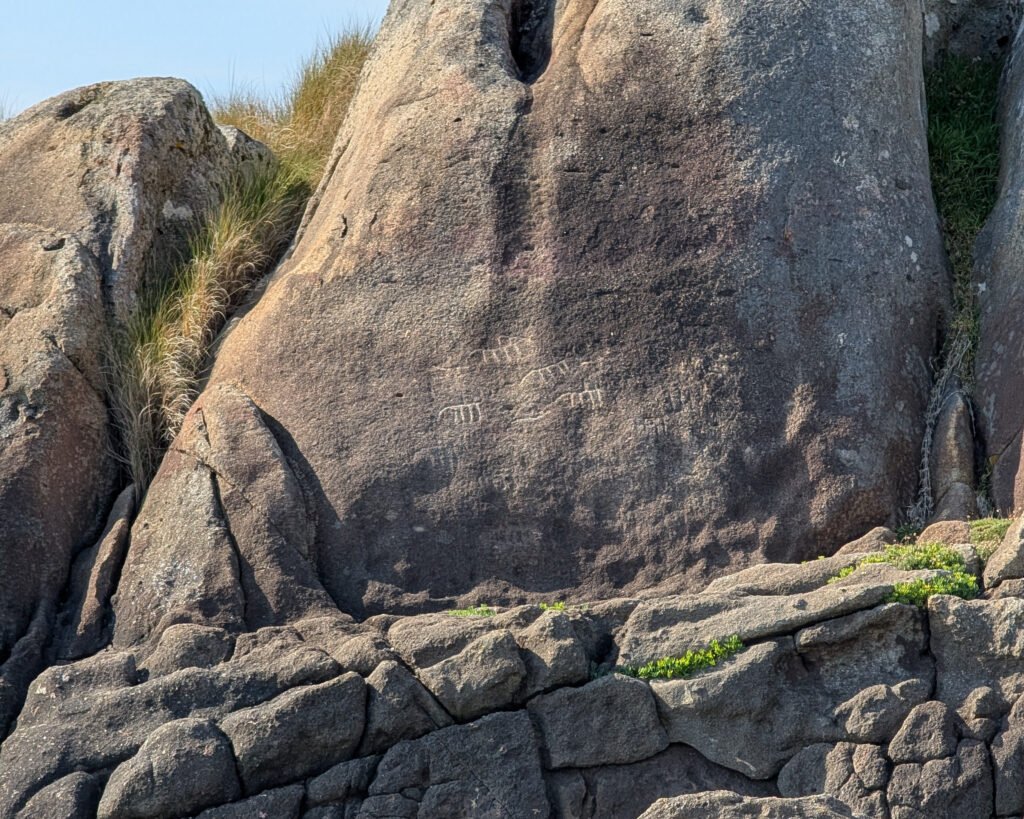
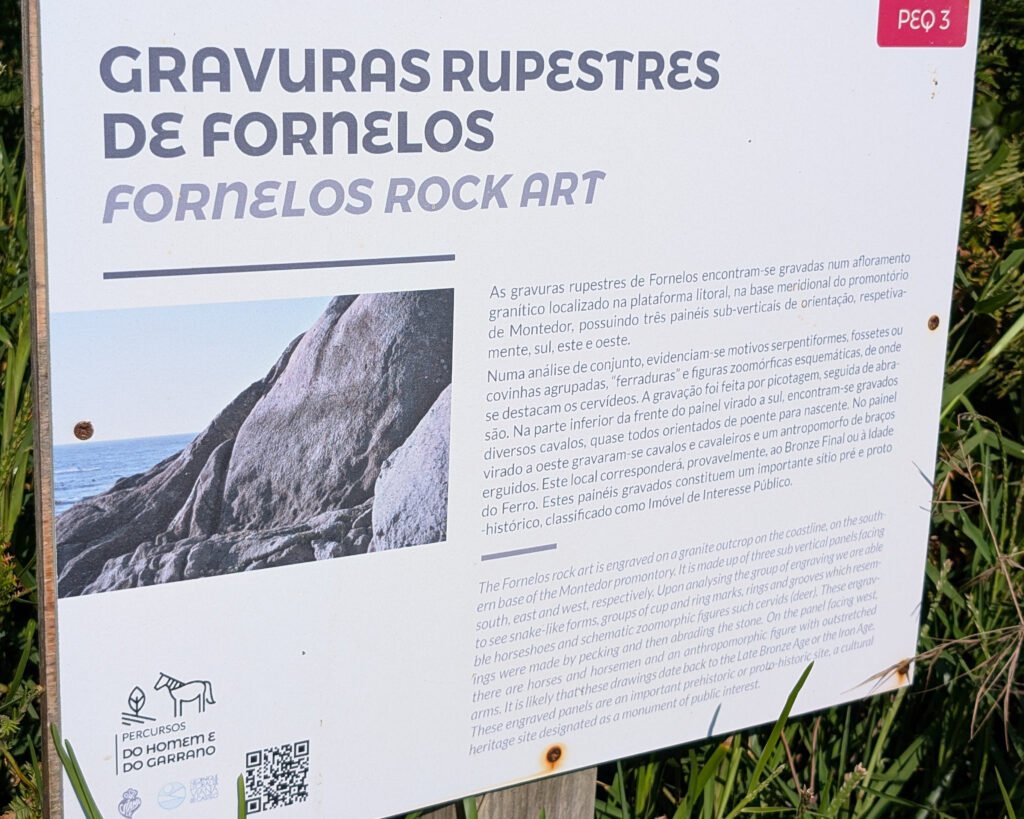
These engravings date to the Late Bronze Age or the Iron Age, sometime between 3,000 BC and 800 BC. There are a number of panels with cup marks, concentric circles, and designs of animals and even people. The most obvious engravings that are easily visible are apparently animals: possibly horses or deer.
The designs were made by pecking and engraving.
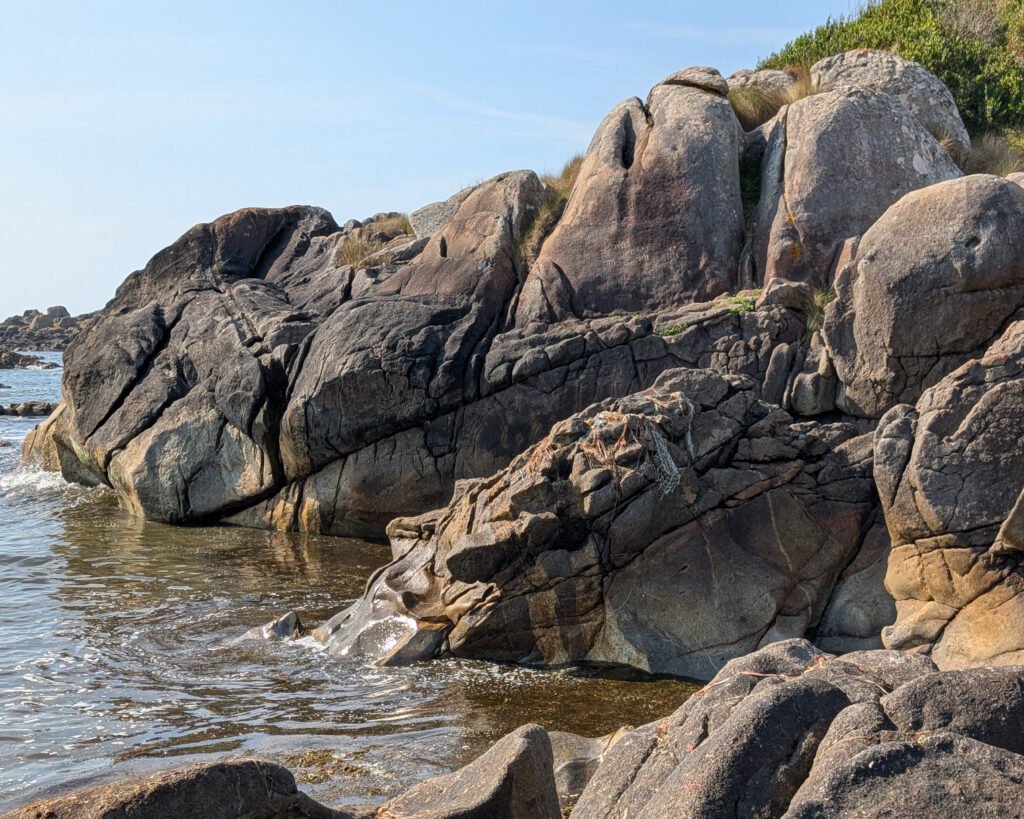
This area is also a local Natural Monument, the Montador Cliff (Alcantilado de Montador). The formation of the Montador cliffs and hill, as well as it being a “cemetery of ancient beaches,” makes this an interesting locale in geological terms.
Location
These rock carvings are in the far north of Portugal, in the Minho just south of Spain. They are in the district of Viana do Castelo, near the town of Carreço. They are located on a rock above the beach of Fornelos, north of the Carreço beach.
Coordinates: 41.746941, -8.876777 (These are coordinates to a spot on the trail where there is a sign: from here you can see the engravings.)
Access
You can drive pretty close to the site, and then walk a short way. It’s fairly easy trails to the beach, where you can see the engravings from a distance. There is a trail that goes around the headland, but I was not able to find a path leading down to the engravings. I’ve read that it is possible, but it can be treacherous!
There is a marked trail, PR7 Forte do Paço, which you follow. There is a signboard at the beginning of the trail.
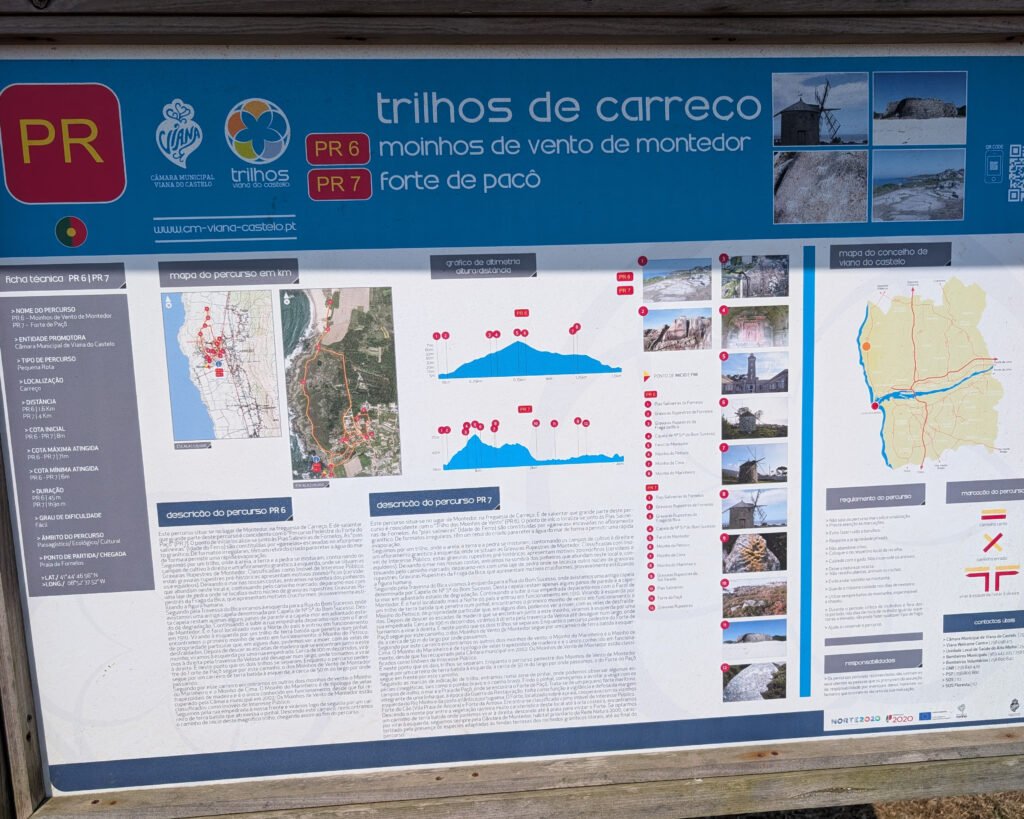
Signage
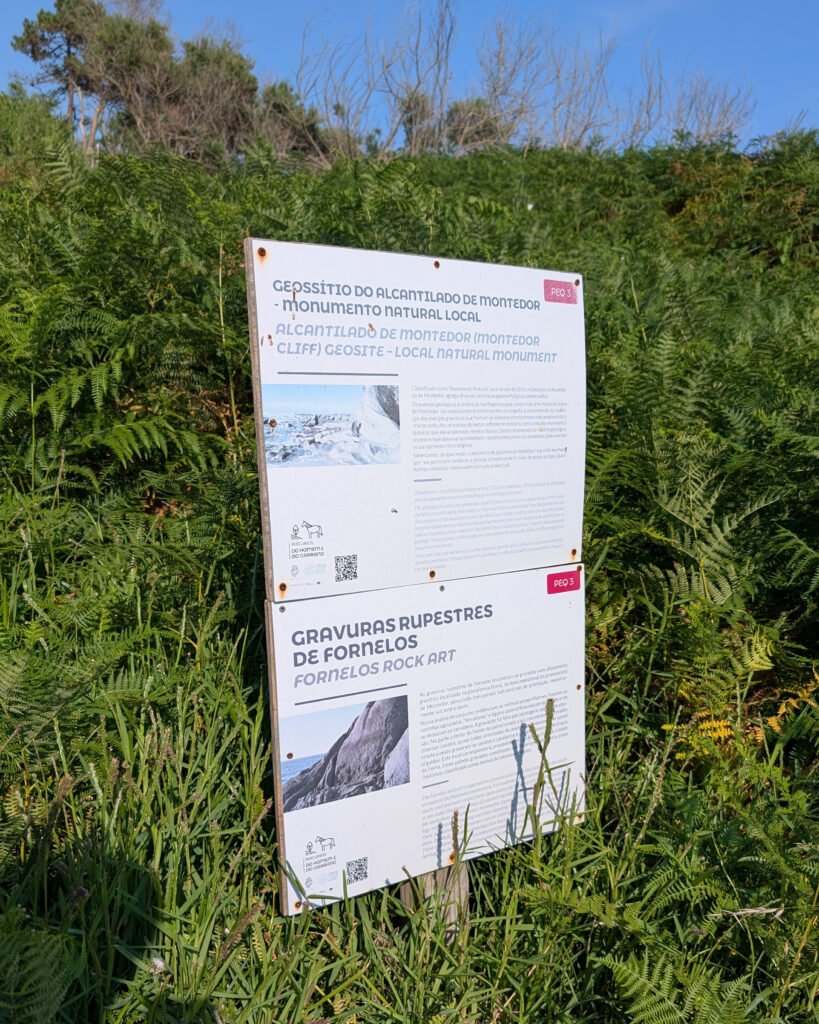
There are road signs directing cars to the Praia de Carreço. From there, head north to Fornelos. When you reach the end of the road, there is a wide, flat path (it’s a road with limited access) that heads north towards Fornelos. At the end of this road, you’ll see the Pias Salineiras (signposted), and a narrower trail continues from there. Follow that, and there will be a sign identifying the engravings of Fornelos.
Links
- Blog post (in Galician) from Megaliticia
- Information (in English) from Geoparque of Viana do Castelo
- Description of the Natural Monument (in Portuguese or English) by Geoparque Litoral de Viana do Castelo
- Information (in Portuguese) from the city of Viana do Castelo
- Information (in Portuguese & English) about the “Rota da Arte Rupestre e do Megalitismo” from AltoMinho (including a downloadable PDF)
- Blog post (in Spanish) by Jose Luis Galovart
- Description (in Portuguese) from the parish of Carreço
- Description (in Portuguese) with downloadable PDF of PR6, Forte do Paçô, from Trilhos e Caminhadas
- Description (in Portuguese) of the group from Archaeologist’s Portal of Directorate-General of Cultural Heritage
- Designation (in Portuguese) of the group as a Property of Public Interest by the Directorate-General of Cultural Heritage
- Detailed information (in Portuguese) about the group in the database of the Directorate-General of Cultural Heritage
Nearby
There are several sites in the area with rock engravings, collectively known as the Gravuras Rupestres de Montador or Gravuras Rupestres de Carreço. Very close to the Fornelos site is the Iron Age pias salineiras or salt pans.
Sources
BETTENCOURT, AMS (2017) “Gravuras Rupestres Do Noroeste Para Além Das Artes Atlânticas e Esquemática”, in Arqueologia Em Portugal – 2017. Estado Da Questão, Lisboa: AAP. https://www.academia.edu/35326589/BETTENCOURT_AMS_2017_Gravuras_rupestres_do_Noroeste_para_al%C3%A9m_das_artes_atl%C3%A2nticas_e_esquem%C3%A1tica_in_Arqueologia_em_Portugal_2017_Estado_da_Quest%C3%A3o_Lisboa_AAP
Pingback:Pias Salineiras de Fornelos - Prehistoric Portugal