
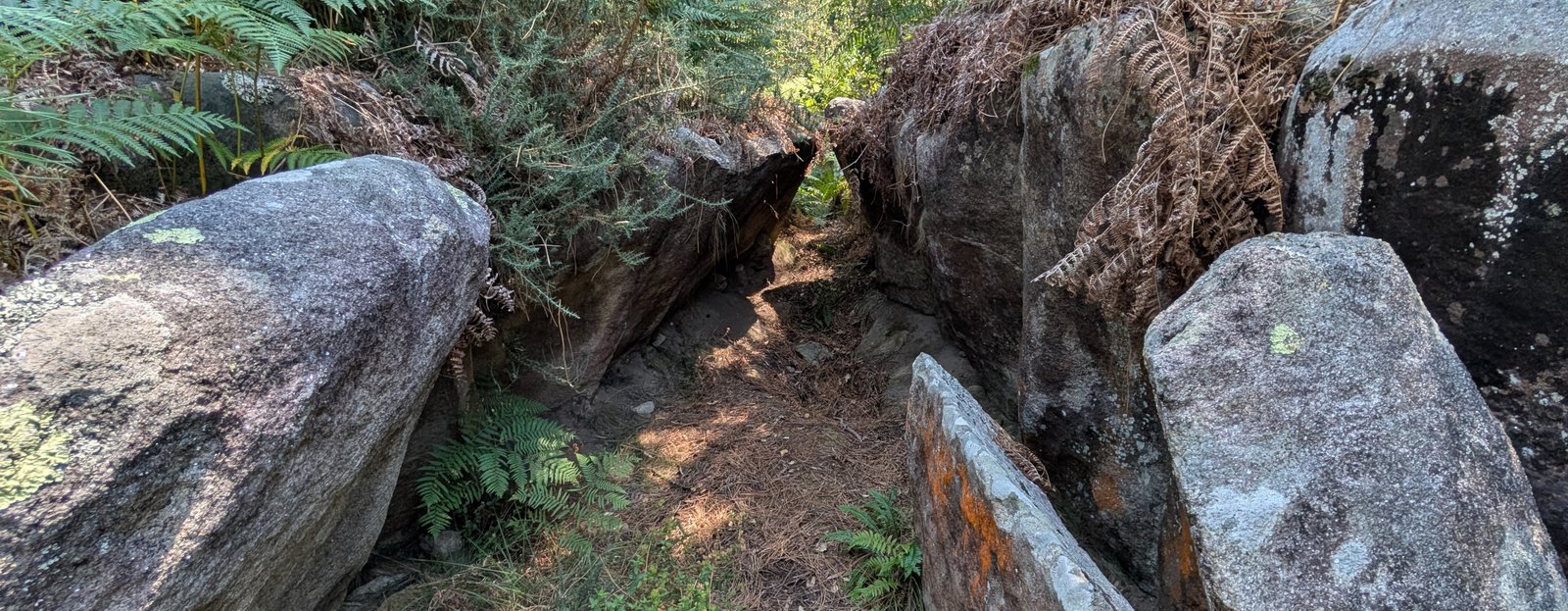
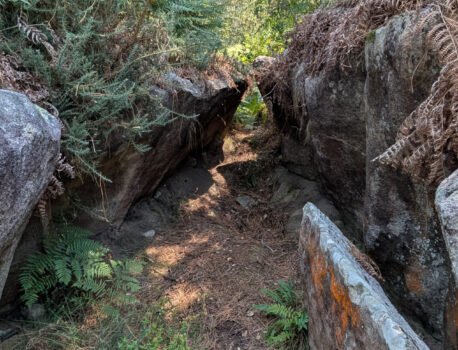

Battle your way through the bracken and brambles, and you find huge stones standing more or less upright. Squeeze your way through the gap and an incredible space opens up. Stones on either side of you angle out to make a V shape. Look closely at the slabs and you can make out engravings. This ancient monument has stood here for thousands of years …and if the underbrush isn’t cleared away, it will remain hidden for many more.
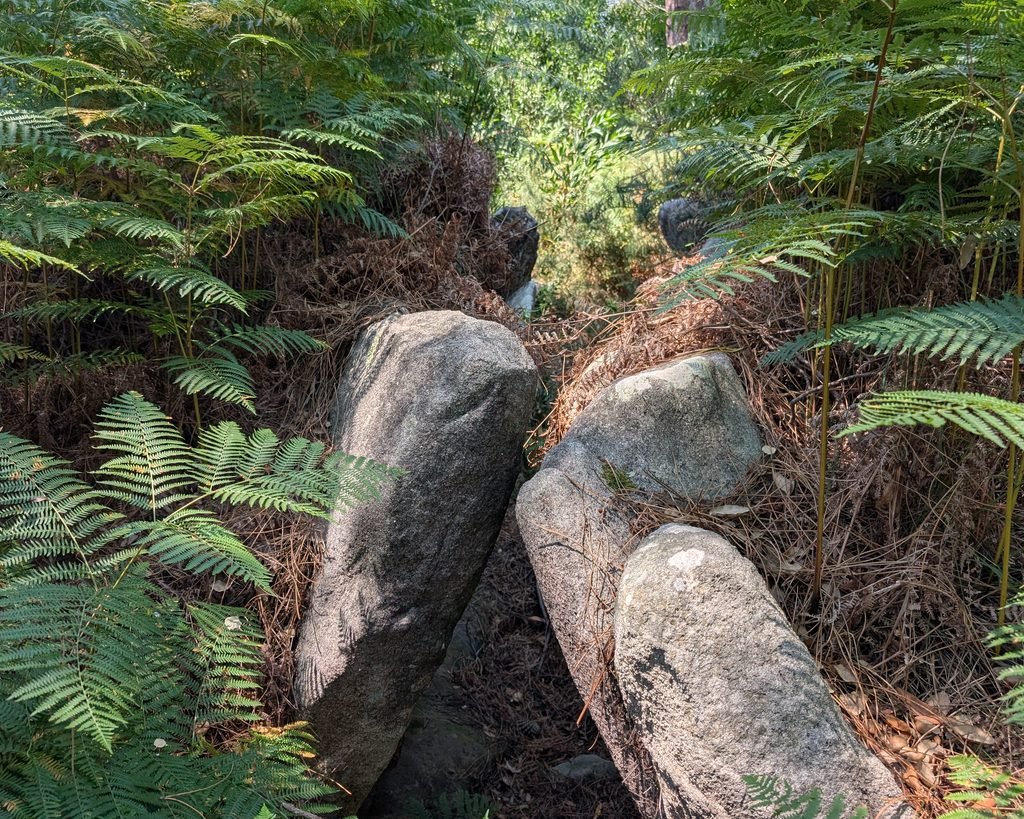
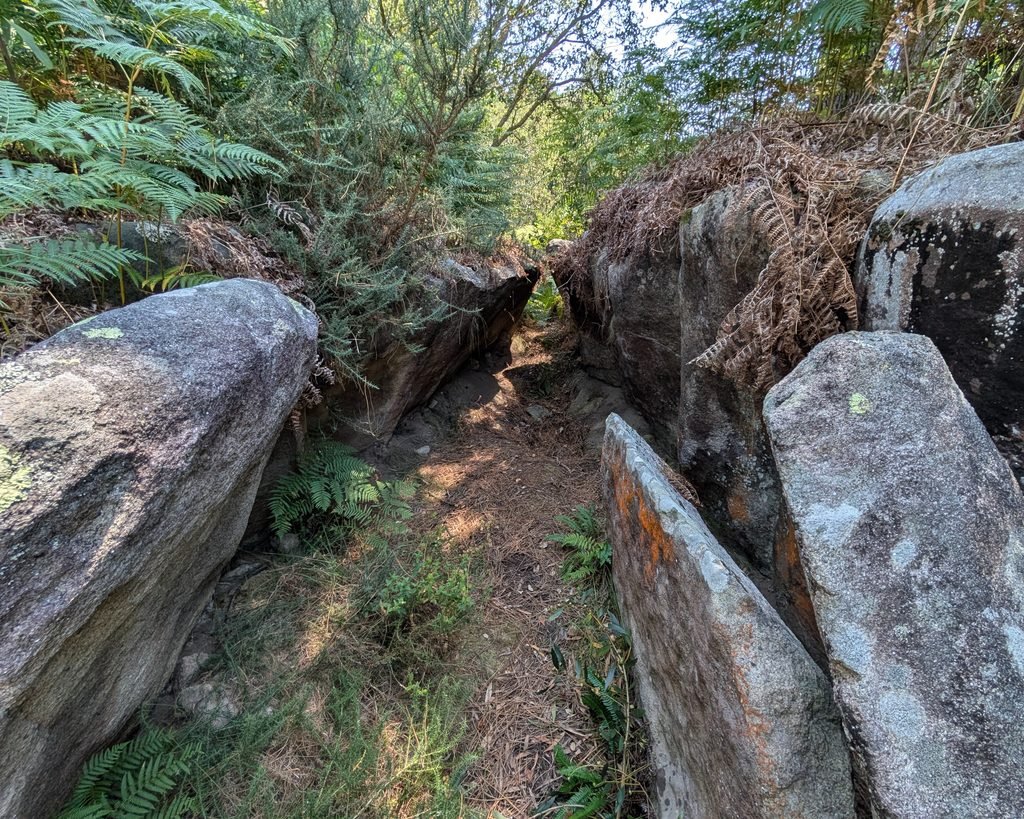
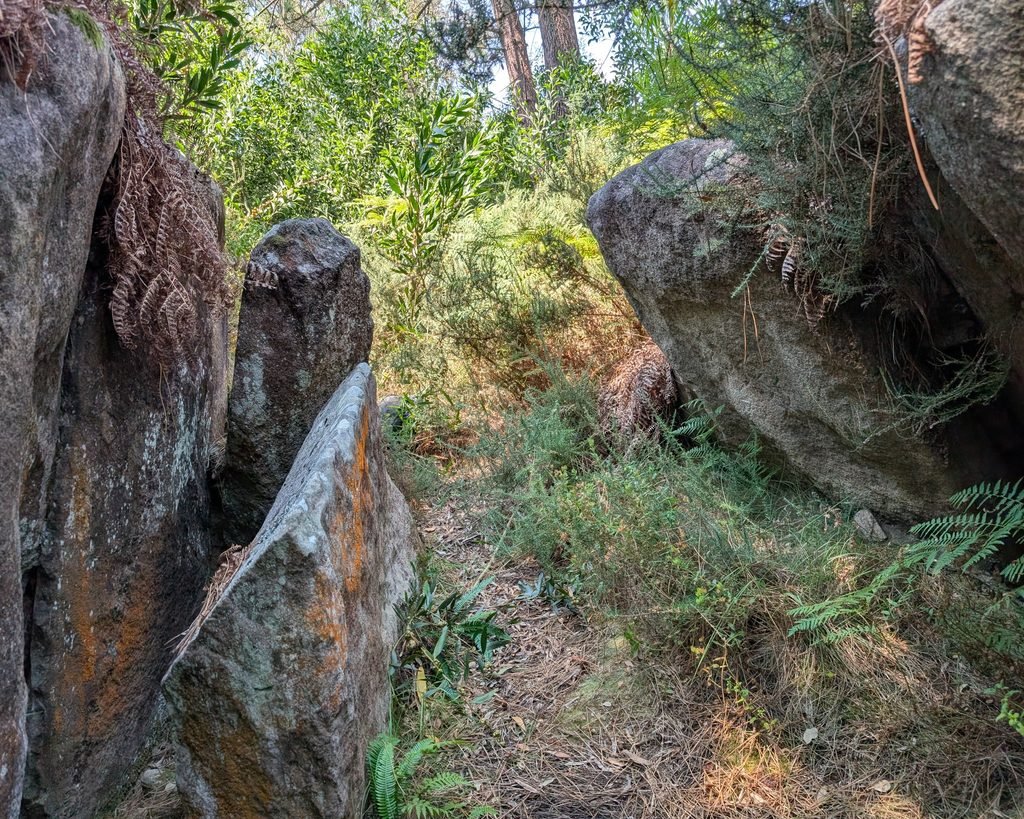
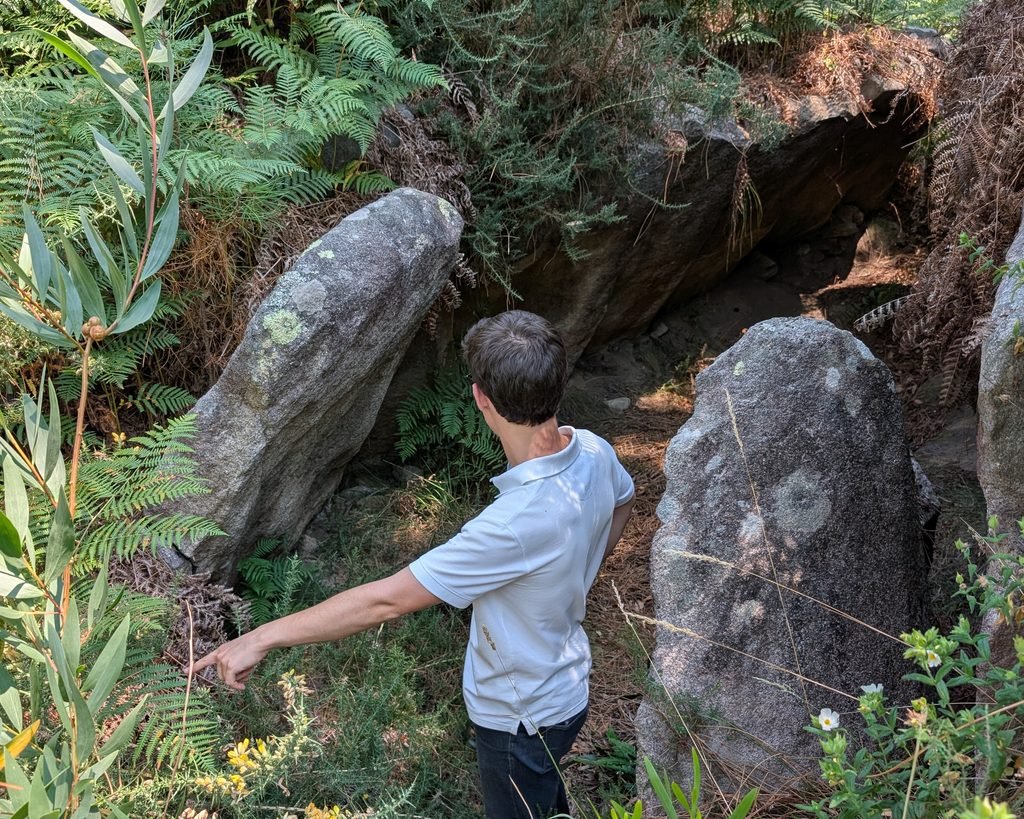
This is an unusual dolmen, with no differentiation between chamber and corridor. Its 16 orthostats (upright stones) form a V-shape oriented East-West. The orthostats nearer the entrance (considered to be the dolmen’s “corridor”) are the same height as those further back, a further undifferentiation. The uprights at the rear have been displaced. It has a large mound or “mamoa” of about 28 meters in diameter.1 (In the region many dolmens are called “mamoas” hence this dolmen being referred to as the “Mamoa de Eireira.”)
There are several orthostats that have engravings on them.2 The first one at the rear of the dolmen on the North side (#1) has some clear zigzag designs.
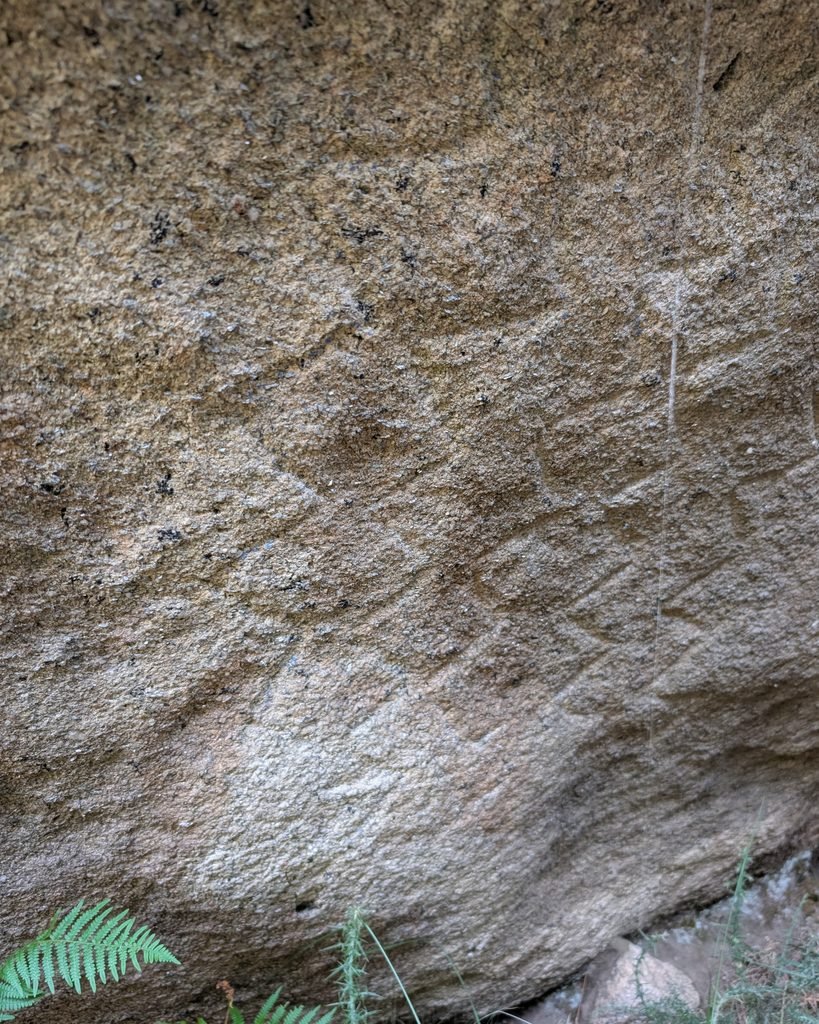
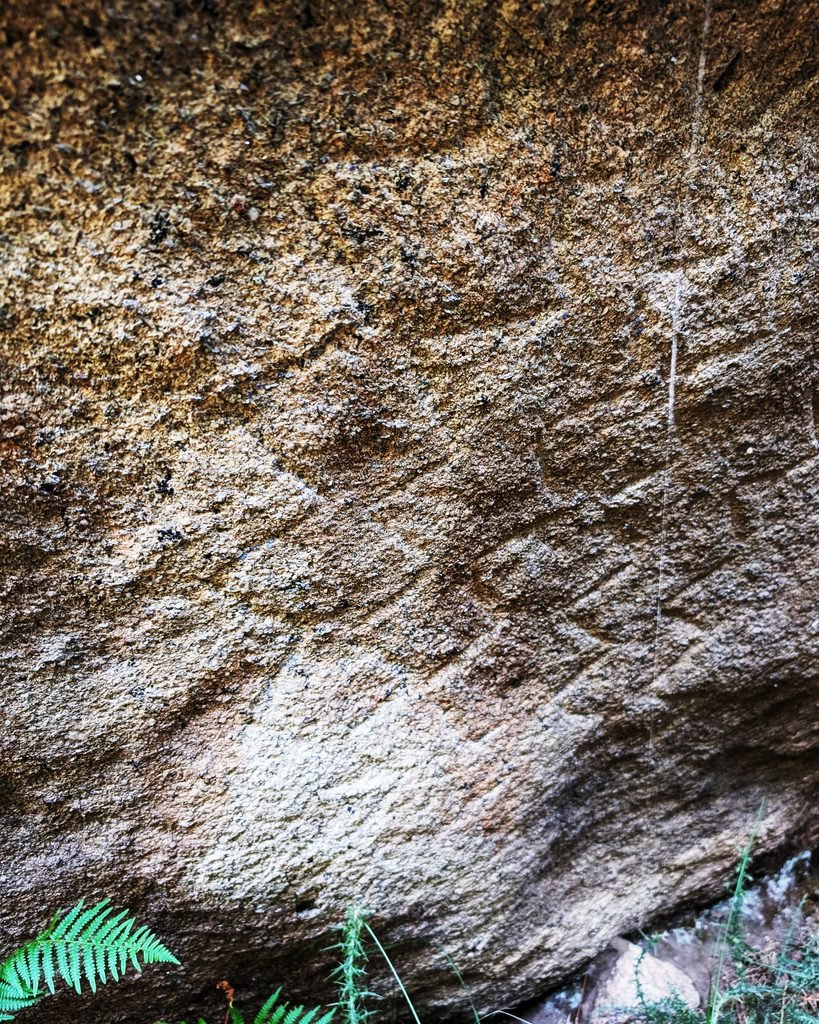
The sixth one on the same side, closer to the entrance, has some schematic anthropomorphic designs. There are various lines as well as what seems to me to be star or sun shapes, which are interpreted as hands of the figure.
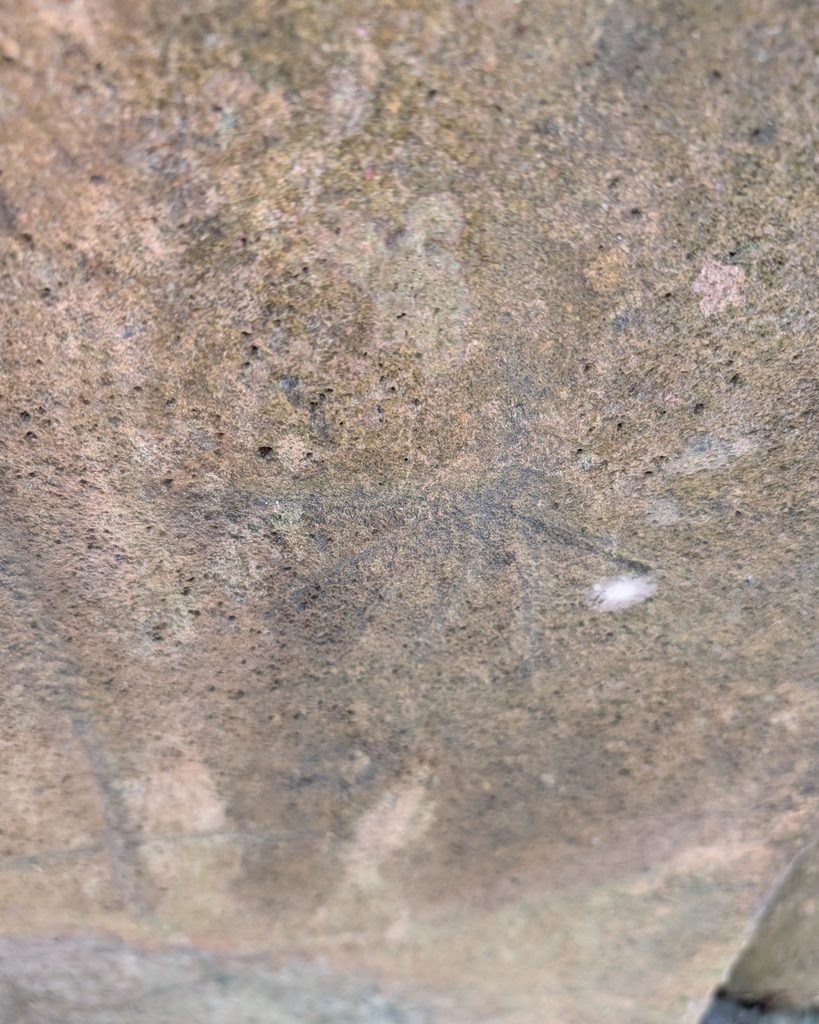
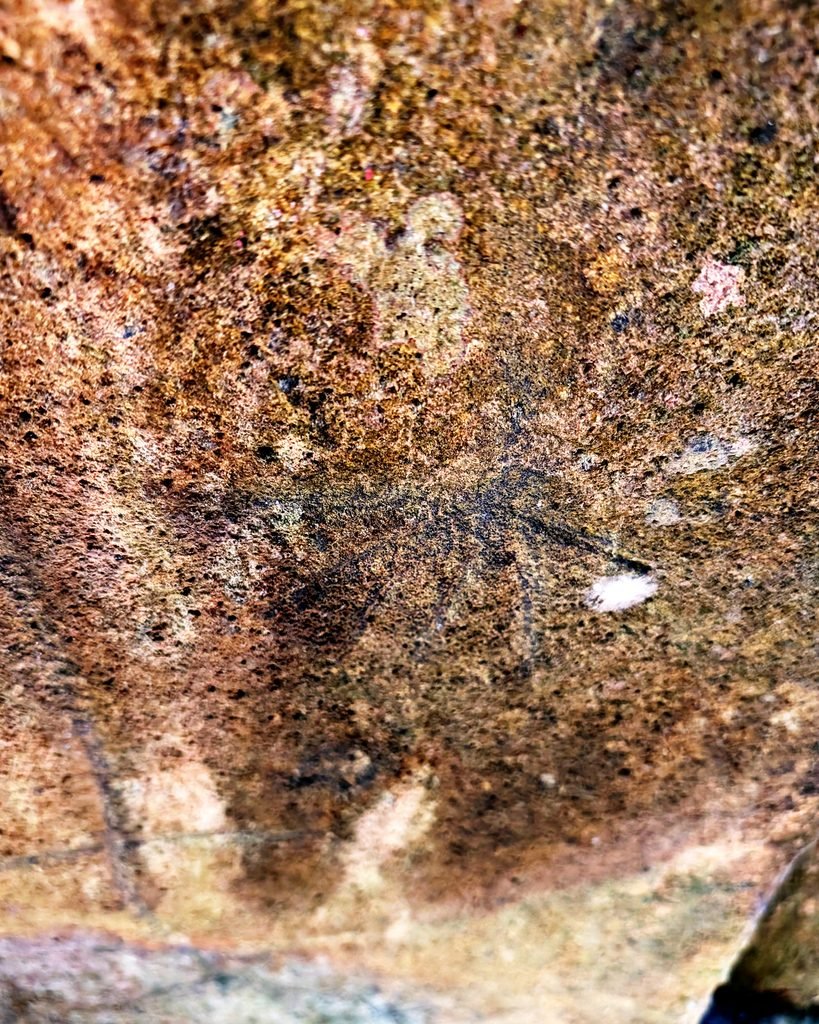
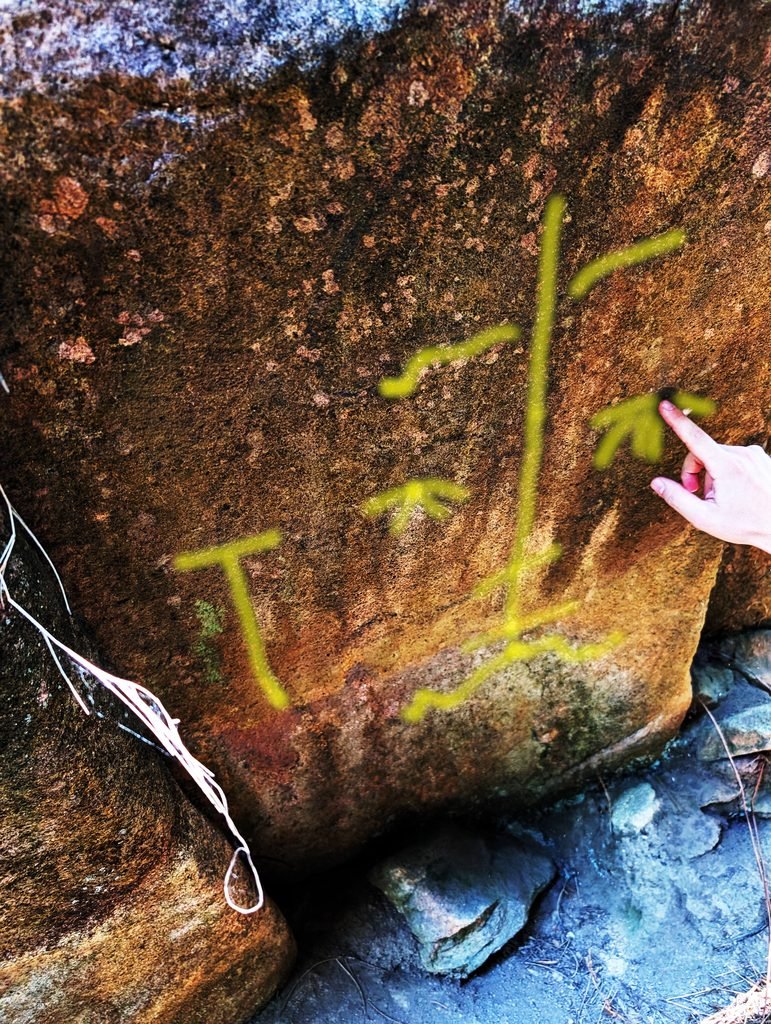
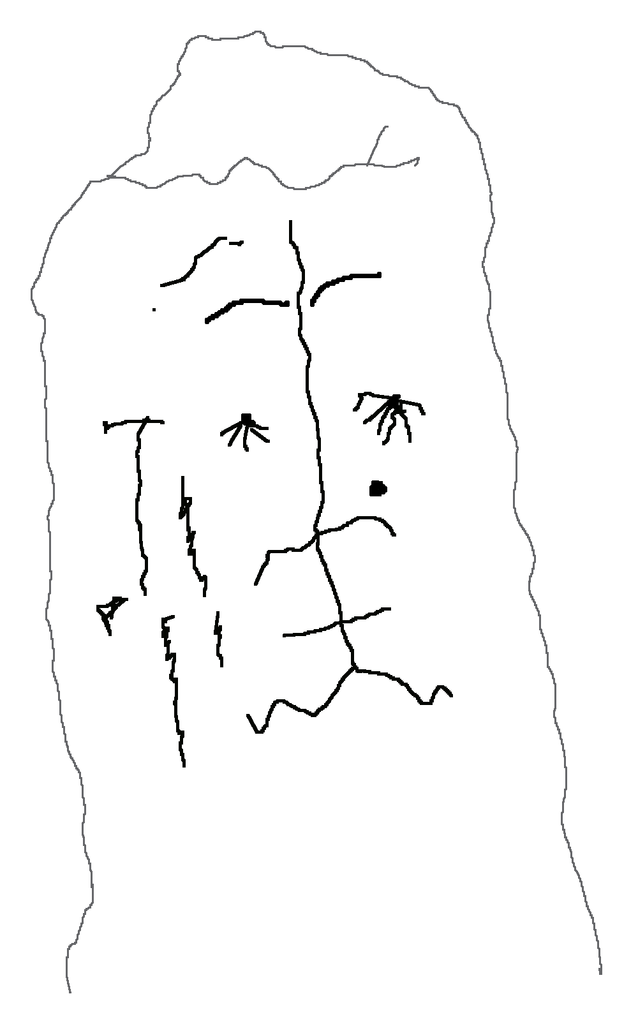
The engravings are difficult to see. There are many other designs on other orthostats. There is an excellent analysis with good photographs and drawings in Fabio Soares’ article in Al-Madan, available online.
Some stones have vestiges of paintings as well3 – I was not able to find them. There is also a painted “pillar” stone that was found in 1987 and is on display in the museum Casa dos Nichos in Viana do Castelo.
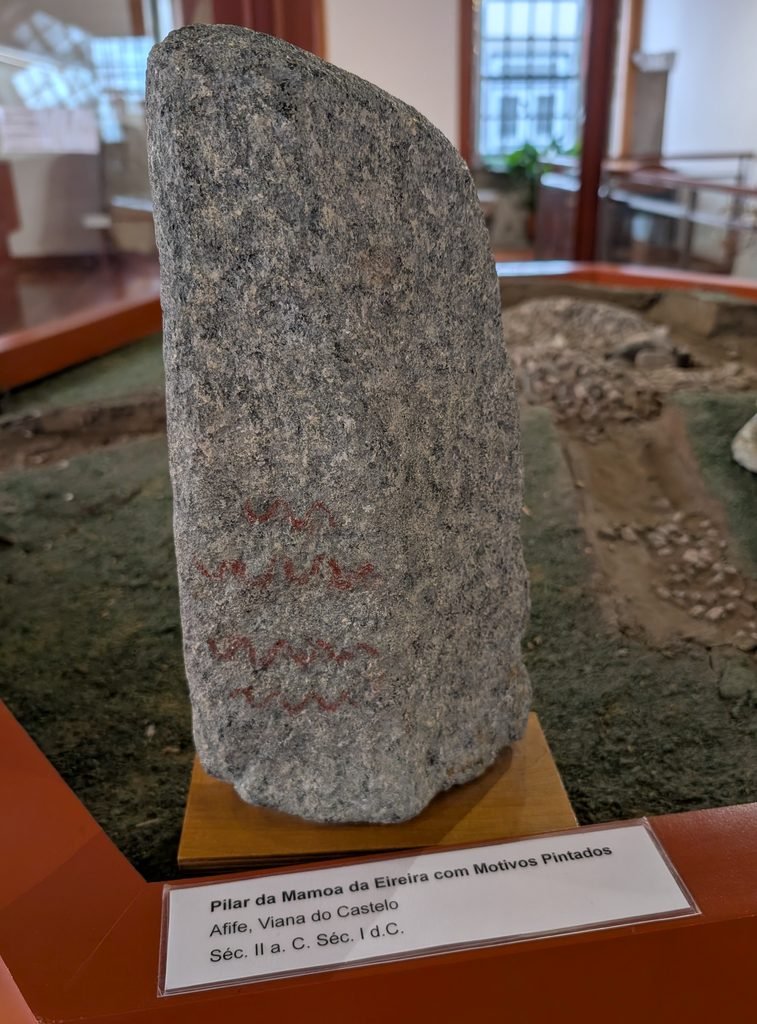
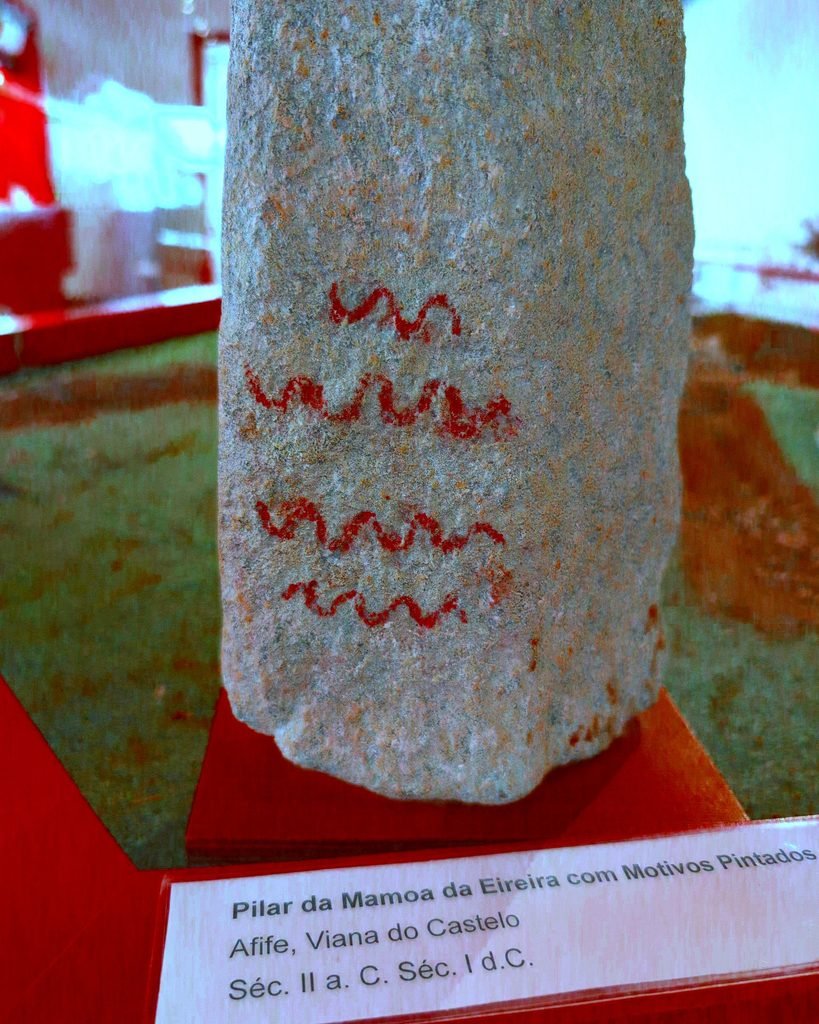
The Mamoa de Eireira was first referred to by Francisco Martins Sarmento in 1882 and then again by Emile Carailhac in 1886. The site was excavated in the 1980s by Eduardo Jorge Lopes da Silva, but the complete results were never published.4 Some cleaning work was done in 2013-14 by Fábio Soares and results were published.
There was an unusual “negative space” (a hole) in the centre of the dolmen’s “corridor”5. This was a source of many artefacts including arrowheads and other stone tools, bones, etc. It is presumed that this hole (about 2m long by about 1m across, about .4m deep) was used for an individual burial.
Based on the artefacts found and the architectural structure of the dolmen, archaeologists place the construction of the Mamoa of Eireira at Middle/Late Neolithic with reuse in the Chalcolithic.
Location
The tomb is in the northern Minho region, in the district and municipality of Viana do Castelo. It’s in the parish of Afife. It’s located on the North side of the EN13, just before the road crosses the railroad tracks and crosses from the parish of Afife into Âncora.
Coordinates: 41.7927046, -8.8670155
Access
It can be extremely difficult to reach the mamoa. The turn-off at the EN13 is not signposted and can be overgrown and hard to see. (And since it’s on a curve, it can be dangerous to stop!) The mamoa is located in a little-used rural region, and the vegetation can grow very quickly. On the day I visited, it was almost impossible to find the site (my guide, who knows the place well, passed it twice) and extremely difficult to find a path through the growth (including thorn brambles).
Signage
There are no signs directing you to the site. There is a plaque at the mamoa (which identifies it as a prehistoric burial site), but it was completely obscured by vegetation when I visited.
Links
- Article (in French) from Wikipedia
- Entry (in English) on the Megalithic Portal
- Information (in English) from Geoparque Viana do Castelo
- Information (in Galician) from Megaliticia blog
- Documentary video (in Portuguese) from Alto Minho4D, with detailed description of the engravings.
- Al-Madan magazine (in Portuguese) #24, tomo 1 has a good photograph of the anthropomorphic and sun carvings on its cover
- Video (in Portuguese) from CMIA Viana do Castelo (Centre for Monitoring and Interpretation of Environment)
- Description (in Portuguese) from Archaeologist’s Portal of Directorate-General of Cultural Heritage
Nearby
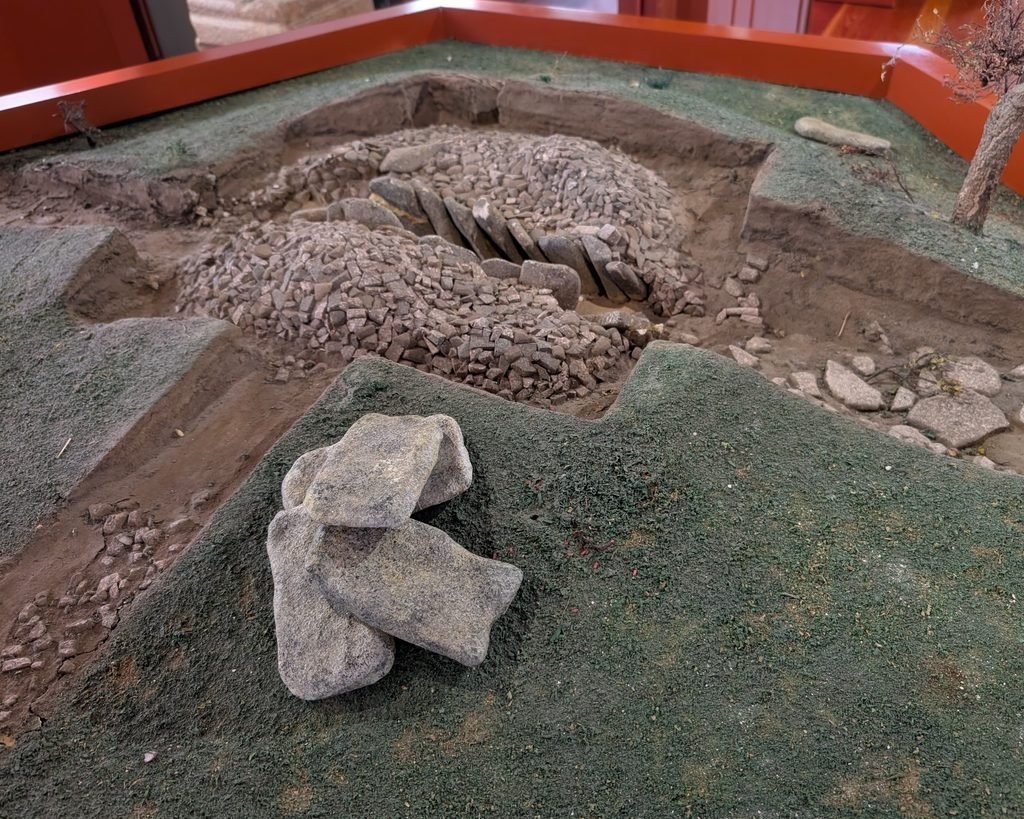
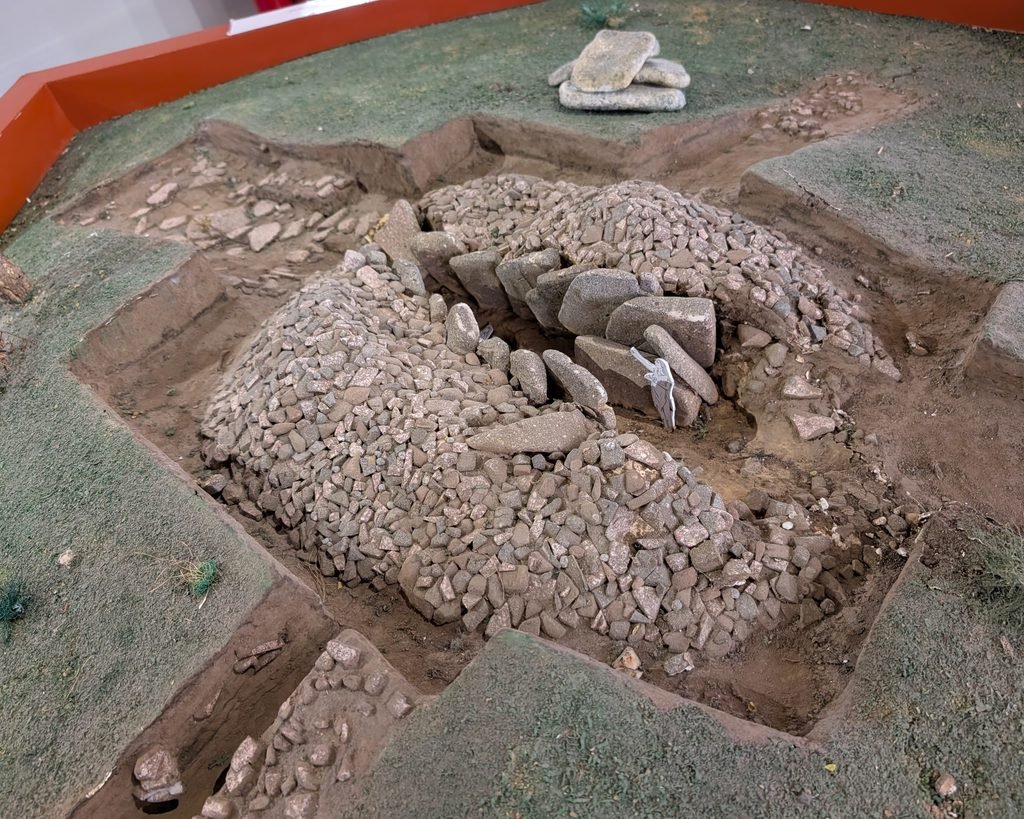
In the nearby town of Vila Praia da Âncora (“the beach town of Âncora”), it is very easy to visit the Neolithic Dólmen da Barrosa. If you travel to Viana do Castelo (about 14km to the south), the Casa dos Nichos archaeological museum has an excellent model of the Mamoa da Eireira as well as one painted stone from the monument.
Sources
- da Silva, Eduardo Jorge Lopes. “A Mamoa de Afife: Breve Sintese de 3 Campanhas de Escavação.” Trabalhos de Antropologia E Etnologia, vol. 28, no. (1–2), 1988, pp. 127–135, ojs.letras.up.pt/index.php/tae/article/download/9182/8418/0. Accessed 18 Aug. 2026. ↩︎
- da Silva, Eduardo Jorge Lopes. “Descobertas Recentes de Arte Megalítica No Norte de Portugal.” Os Cadernos Vianenses, vol. XV, 1992, pp. 31–45, www.geoparquelitoralviana.pt/explorar/descobertas-recentes-de-arte-megal%C3%ADtica-no-norte-portugal/. Accessed 18 Aug. 2026. ↩︎
- Soares, Fábio. “Os Novos Motivos De Arte Megalítica Descobertos Na Mamoa De Eireira (Afife, Viana Do Castelo).” Al-Madan, tomo 1, no. 24, Jan. 2021, pp. 10–21, https://issuu.com/almadan/docs/ao24-1. Accessed 10 July 2026. ↩︎
- Soares, Fábio. “A Mamoa De Eireira (Afife, Viana Do Castelo): Um Esboço Monográfico Preliminar.” Antrope, no. 8, July 2018, pp. 17–47, https://www.academia.edu/36890074/SOARES_F_2018_A_mamoa_de_Eireira_Afife_Viana_do_Castelo_um_esbo%C3%A7o_monogr%C3%A1fico_preliminar_Antrope_8_17_47. Accessed 9 July 2026. ↩︎
- Soares, Fábio. “A Invulgar Localização De Uma Estrutura Em Negativo Na Mamoa De Eireira (Afife, Viana Do Castelo).” De Gibraltar Aos Pirenéus: Megalitísmo, Vida E Morto Na Fachada Atlântica Peninsular, Fundação Lapa do Lobo, 2018, pp. 123–132, https://www.academia.edu/36634404/SOARES_F_2018_A_invulgar_localiza%C3%A7%C3%A3o_de_uma_estrutura_em_negativo_na_Mamoa_de_Eireira_Afife_Viana_do_Castelo_Actas_da_Confer%C3%AAncia_De_Gibraltar_aos_Piren%C3%A9us_Megalitismo_vida_e_morte_na_fachada_atl%C3%A2ntica_peninsular_Viseu_Funda%C3%A7%C3%A3o_Lapa_do_Lobo_pp_121_132. Accessed 10 July 2026. ↩︎