
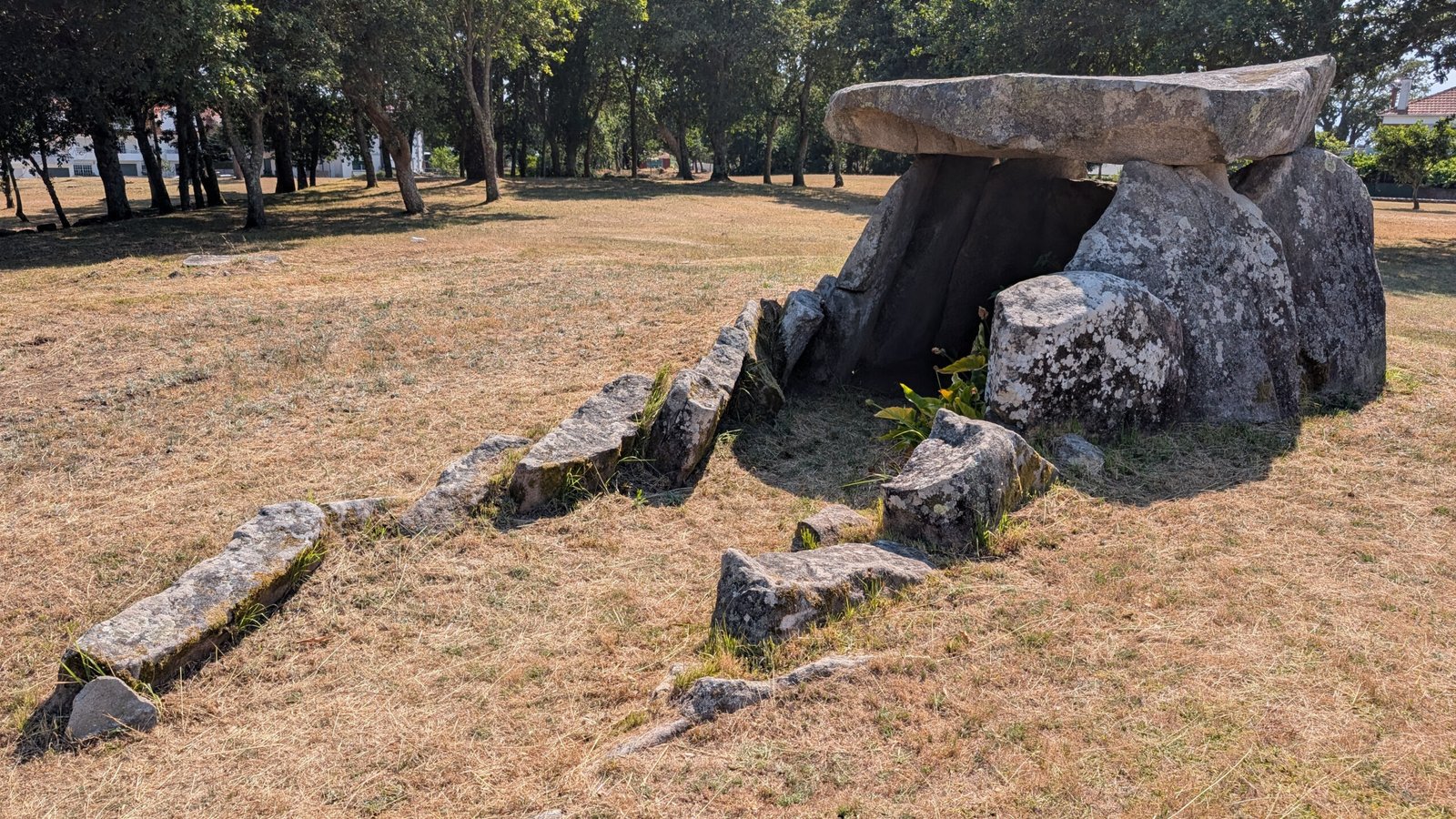

Also known as: Dólmen da Barrosa, Lapa dos Mouros
Surrounded by houses and the soft buzz of traffic, the city park is relatively quiet with some families taking advantage of the picnic tables shaded by large trees to enjoy a cool refreshment on a hot summer day. In the middle of a grassy lawn, the massive stones of an ancient dolmen rise up, standing pride of place as befitting a National Monument.
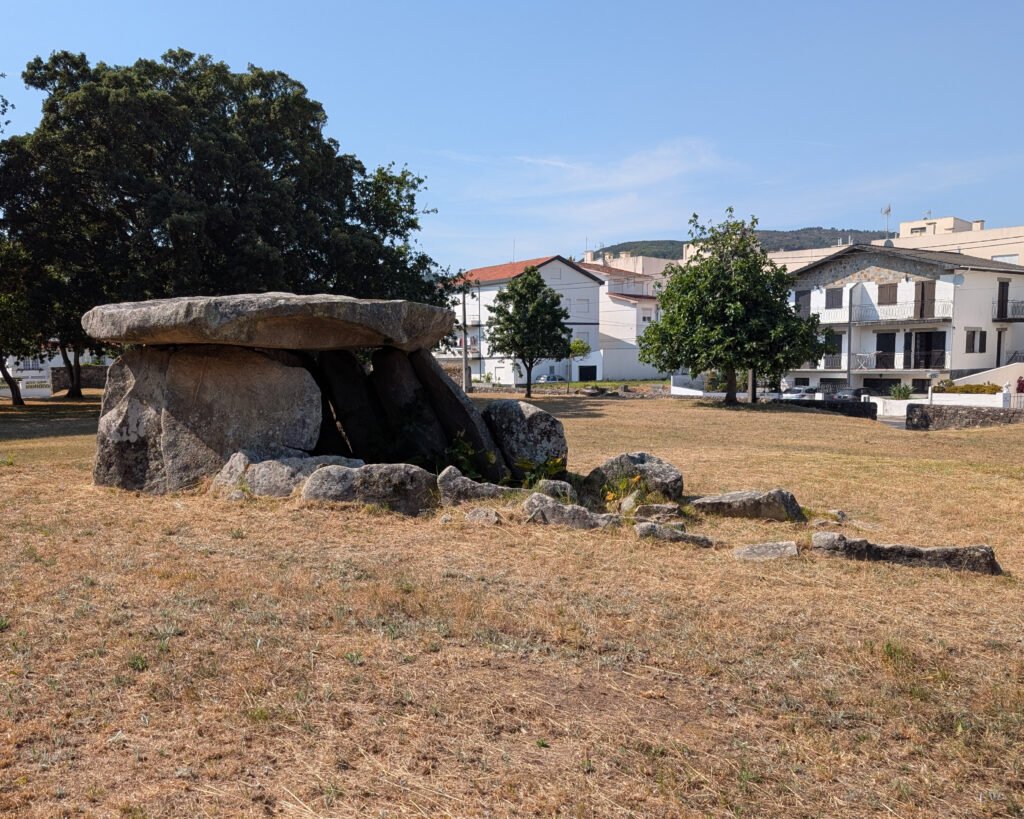
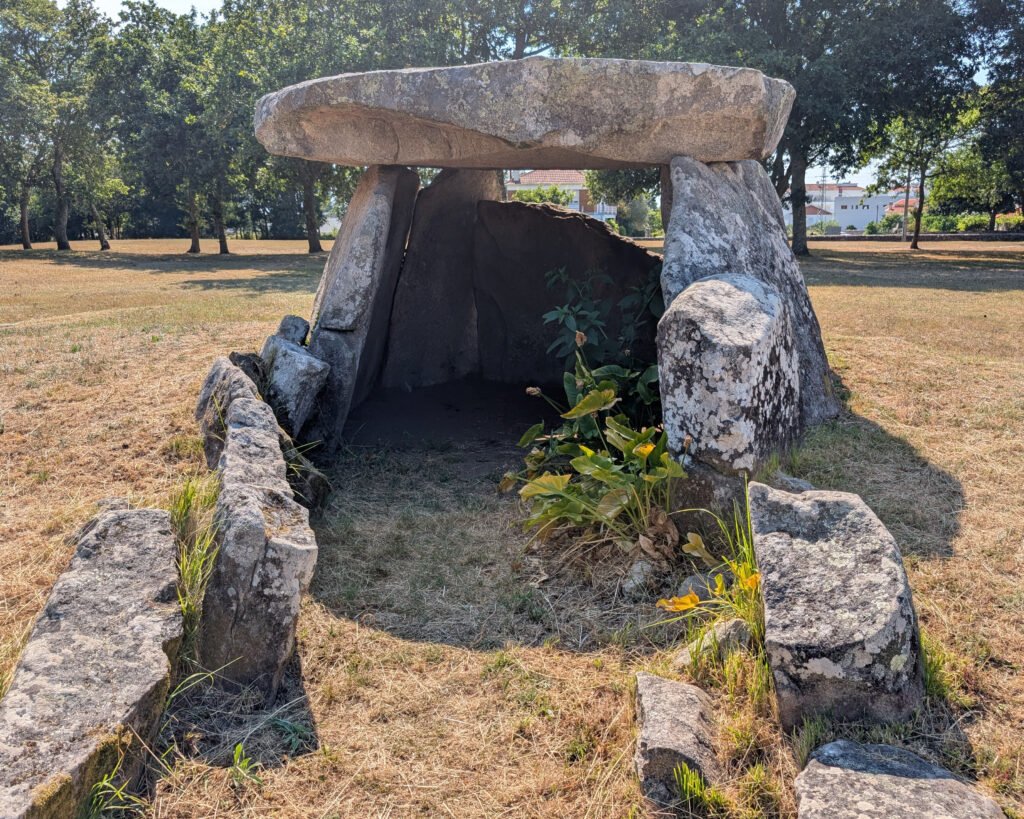
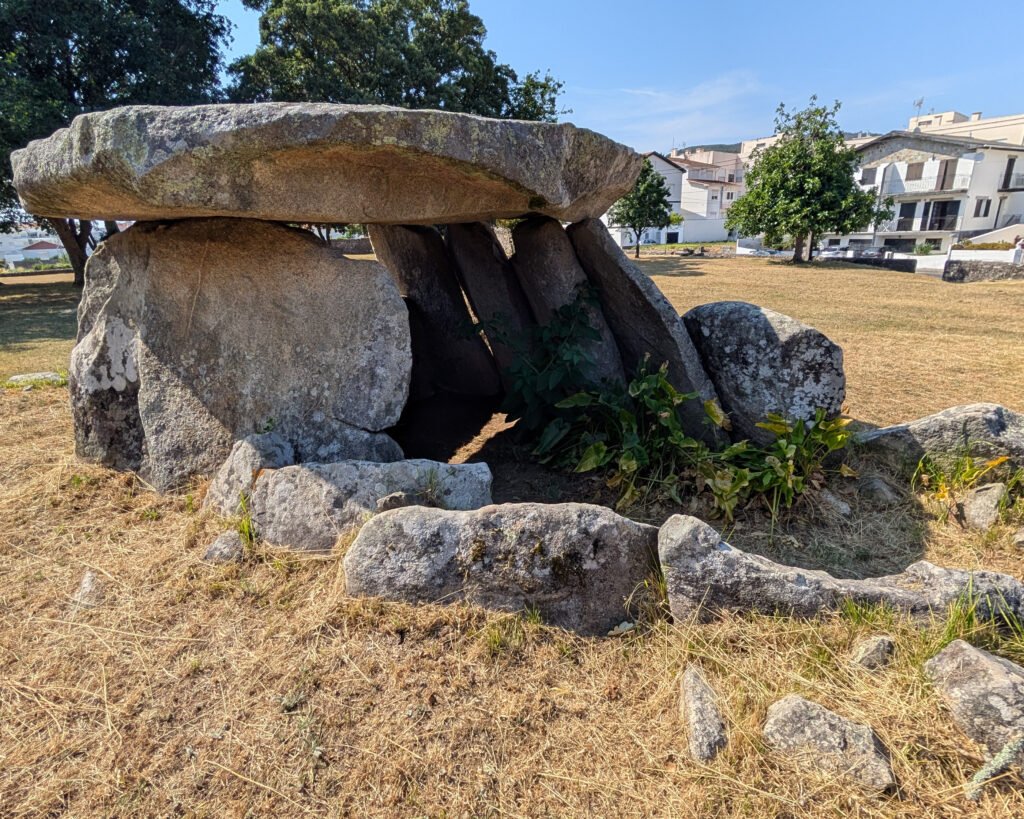
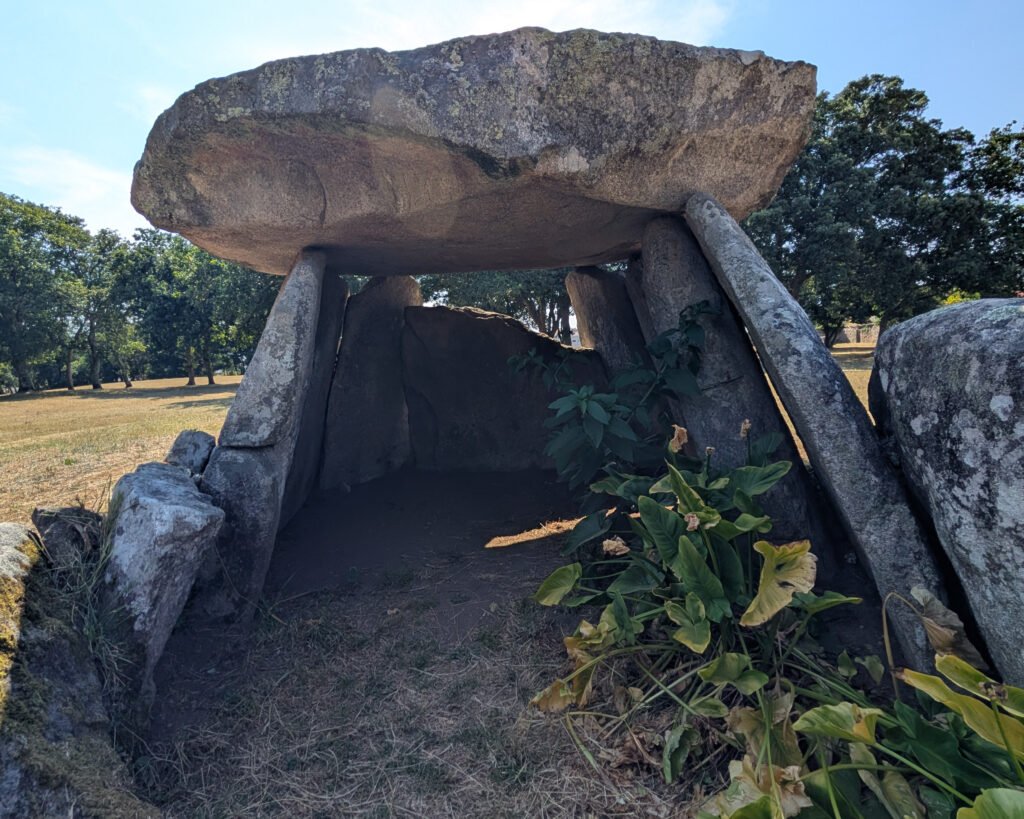
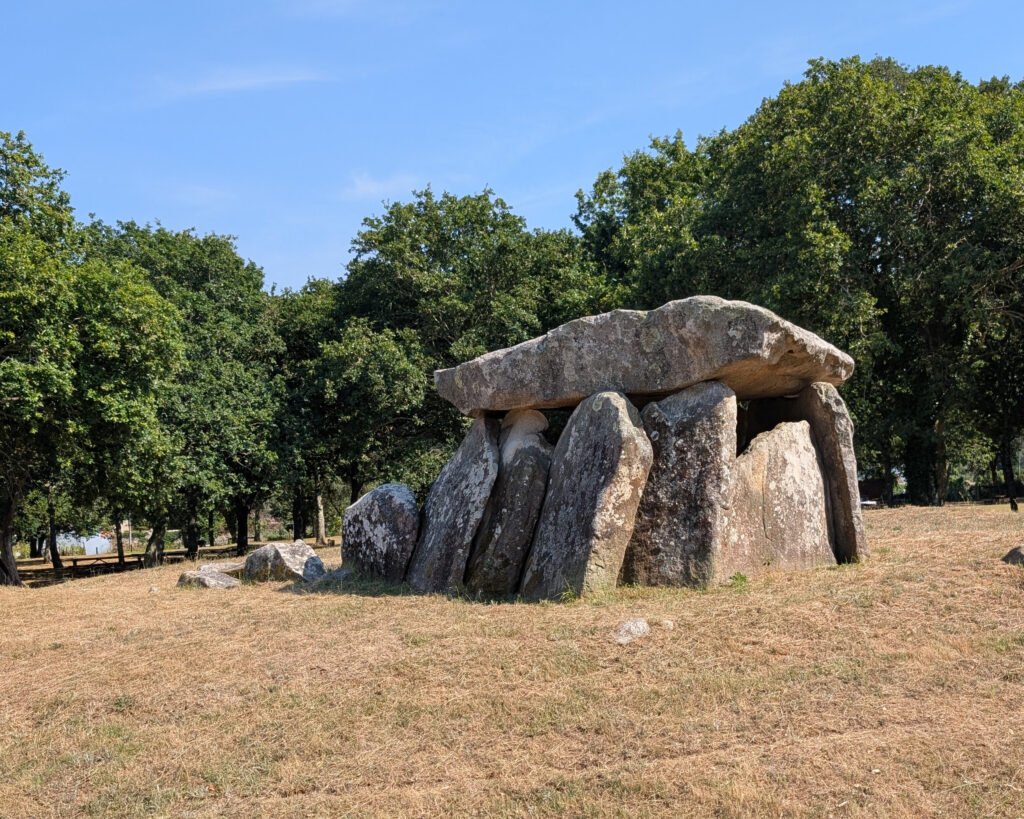
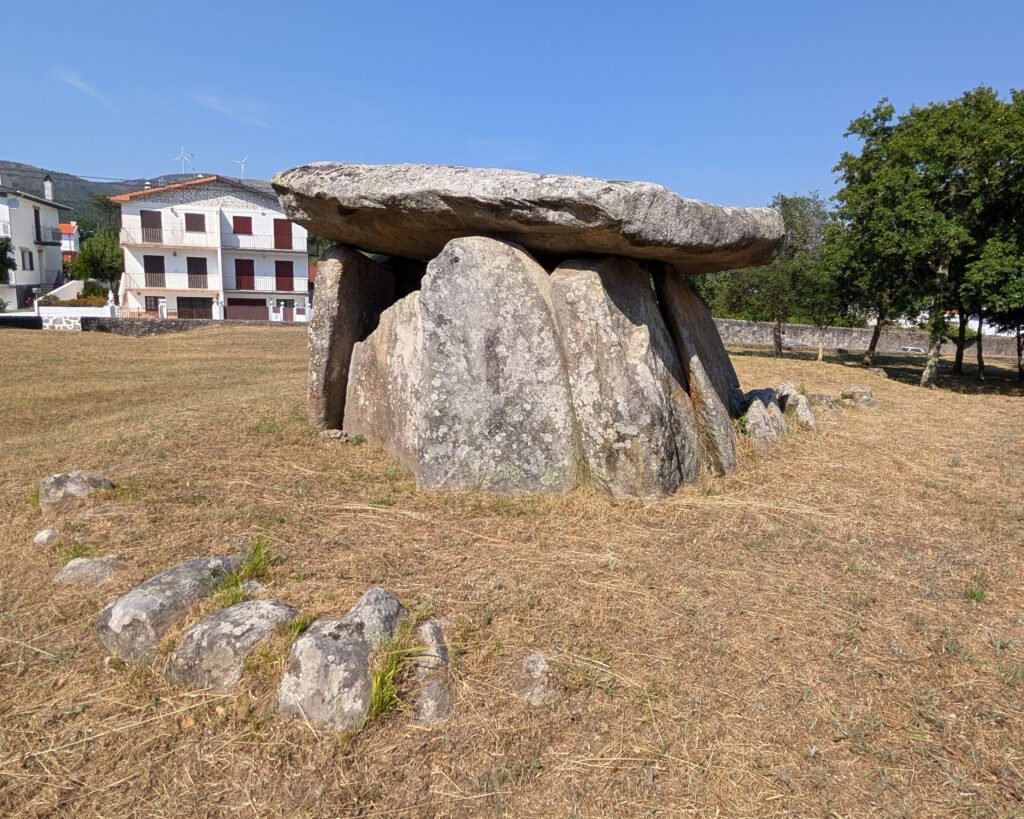
This dolmen (anta is the typical Portuguese word, although dólmen is also used, especially in this region) is arguably the most notable and important megalithic structure in the northwest of Portugal. This is an iconic dolmen, almost undoubtedly the largest and best preserved funerary monument in the region. The actual dating of the dolmen is unclear: ranging from “Late Neolithic” to “Bronze Age.”
Locally, the structure was known (and is sometimes still referred to) as the “Lapa dos Mouros” – the “Cave of the Moors.” The term “Mouros” actually predates the Moorish occupation of Iberia, referring to the “Enchanted Mouras” of ancient Portuguese legends.
The chamber is formed by 8 upright stones (orthostats, or esteios in Portuguese), with an enormous capstone. It has a corridor of about 1.5m wide by about 6m long, facing East. There does not seem to be any traces of its original covering mound, although there are some stones circling it at some distance.
The dolmen was originally excavated in 1879 by Francisco Martins Sarmento, who found stone tools and ceramic fragments1. It was designated a National Monument in 1910 as the “Anta da Barrosa.” Further excavations were made in the late 1940’s by João de Castro Nunes, where more stone tools were found2. He also found engravings on some of the dolmen’s orthostats, including serpentiform patterns and “U”-shaped designs3. Artefacts that were found are kept in the Museu de Sociedade Martins Sarmento in Guimarães. In 2016, further excavations found Roman artefacts, indicating its reuse thousands of years after its construction.
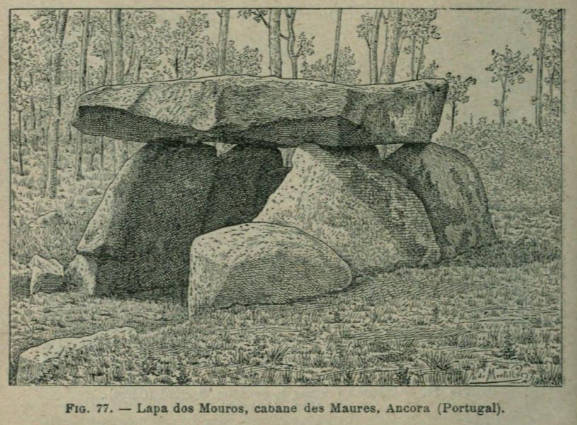
The dolmen was located on private land, and only in the latter decades of the 20th century was the land purchased by the municipality and the park established to preserve the monument.
Location
The anta is in the northern Minho region, in the district of Viana do Castelo. It’s in the municipality of Caminha, in the parish of Vila Praia de Âncora. The dolmen is in the centre of a village park with picnic tables.
Coordinates: 41.810035, -8.850636
Access
The dolmen is in the middle of a park, so it’s a short walk across flat grassy lawns.
Signage
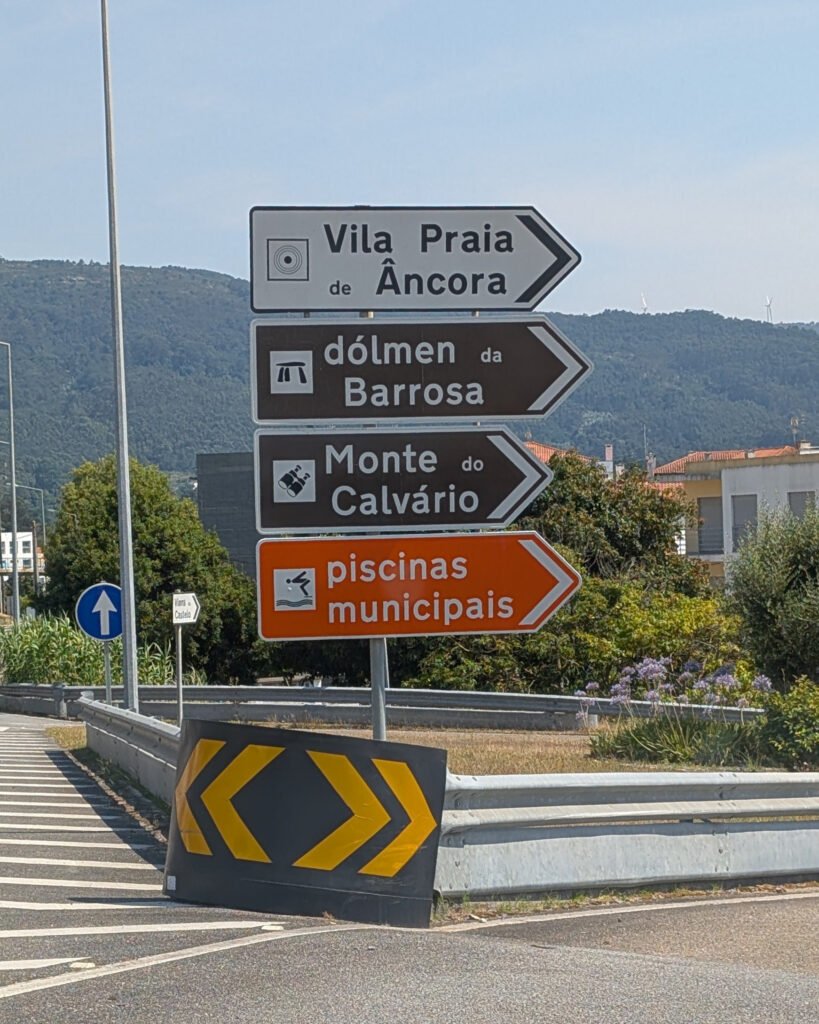
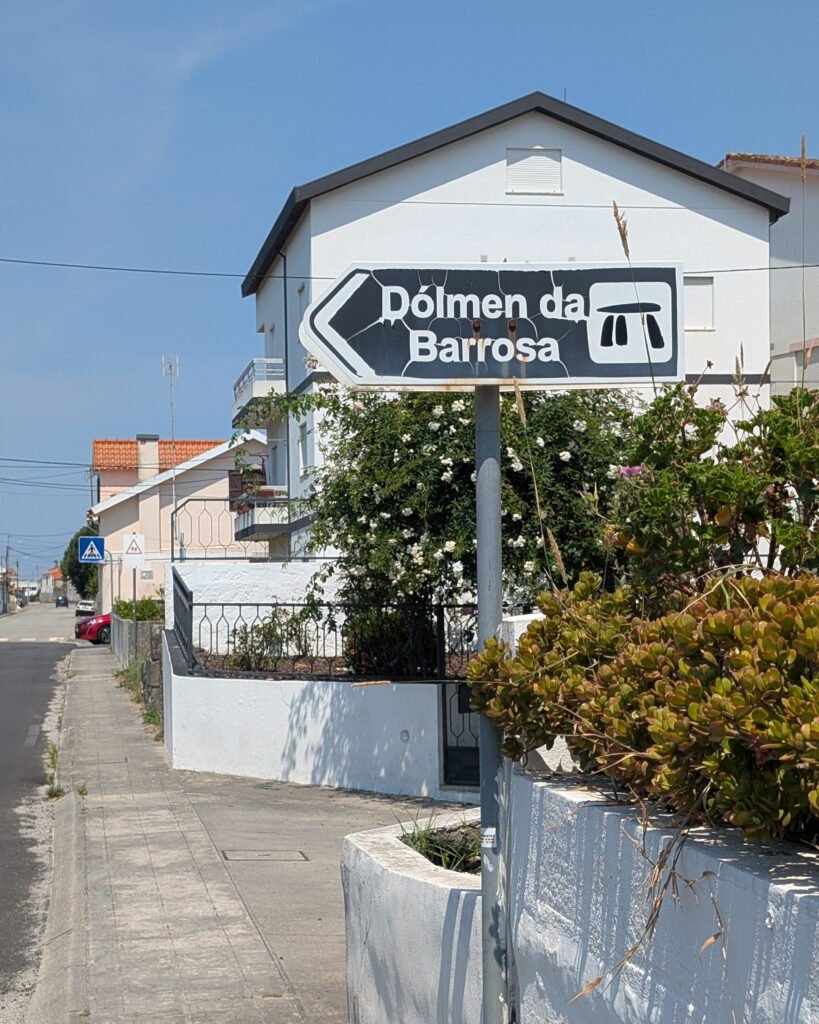
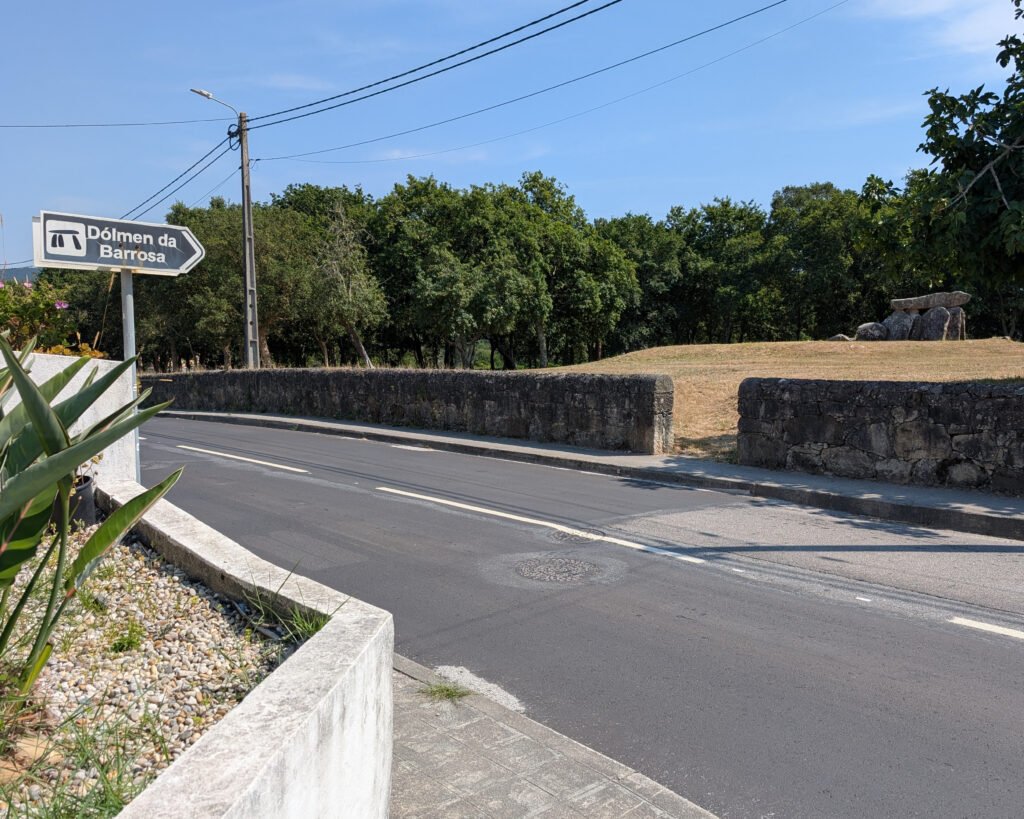
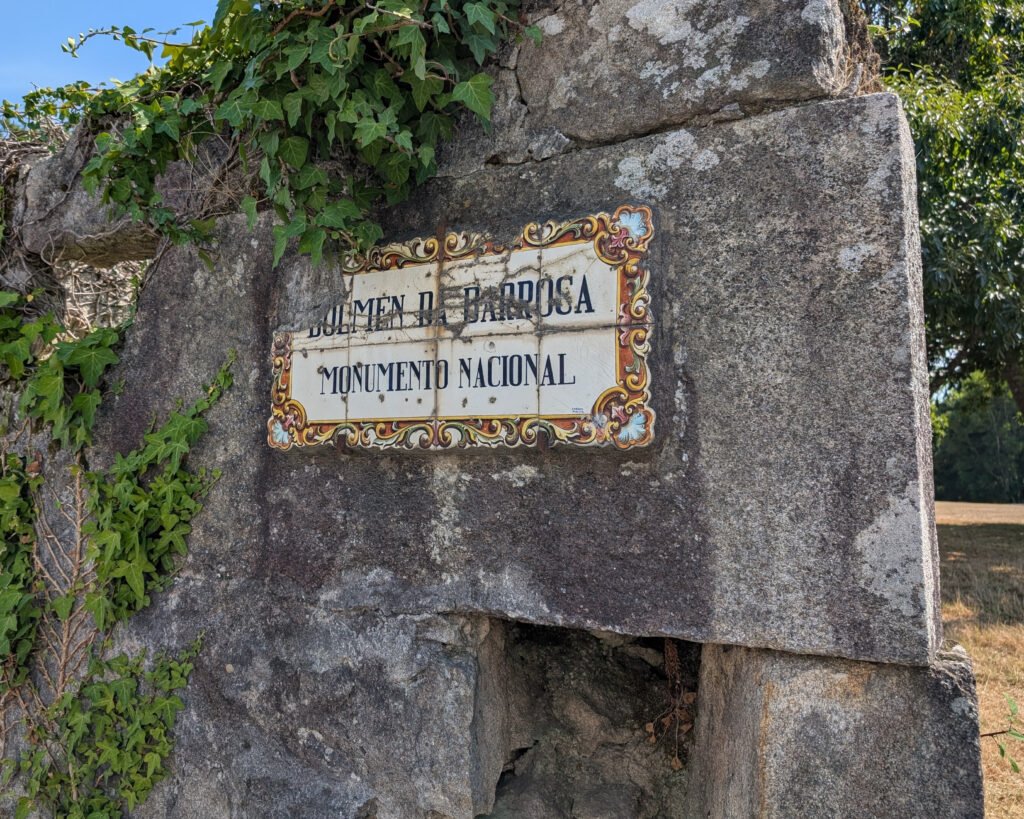
There are signs all around directing you to the site, and signs immediately outside the park. There are no information boards about the dolmen.
Links
- Article (in Portuguese) from Wikipedia
- Entry (in English) in the Megalithic Portal
- Information (in Portuguese) from the municipality of Caminha
- Information (in Portuguese) about the “Rota da Arte Rupestre e do Megalitismo” from AltoMinho (including a downloadable PDF) – which includes the Dólmen da Barrosa
- Description (in Portuguese) from the local blog, “Vila Praia de Âncora” by Brito Ribeiro
- Video (in Portuguese) from À Descoberta de Portugal
- Description (in Portuguese) from Archaeologist’s Portal of Directorate-General of Cultural Heritage
- Designation (in Portuguese) as a National Monument by the Directorate-General of Cultural Heritage
- Detailed information (in Portuguese) in the database of the Directorate-General of Cultural Heritage
Nearby
There are many prehistoric sites in Afife, just south of Âncora. The Mamoa of Eireira is probably the closest. There is also an excellent museum in Caminha, to the north.
Sources
- Cardoso, Mário, Monumentos Arqueológicos da Sociedade Martins Sarmento.
Revista de Guimarães, 61 (1-2) Jan.-Jun. 1951, p. 5-80. https://www.csarmento.uminho.pt/site/files/original/54926d94ef2389e740e4cf4d47593cf70e425d86.pdf Accessed 25 July 2026. ↩︎ - Nunes, João de Castro. “Escavações No Dólmen Da Barrosa, ÂNcora..” Revista De Guimarães, no. 61 (1–2), 1951, pp. 196–204. Casa de Sarmento, Universidade do Minho, https://www.csarmento.uminho.pt/site/s/arquivo-digital/item/56488. Accessed 10 July 2026. ↩︎
- Nunes, João de Castro, Escavações no Dólmen da Barrosa, Âncora. Revista de
Guimarães, 65 (1-2) Jan.-Jun. 1955, p. 154-159. https://www.csarmento.uminho.pt/site/s/arquivo-digital/item/56729 Accessed 13 July 2026 ↩︎ - Cartailhac, Émile. La France préhistorique, d’après les sépultures et les monuments. 1903. Paris, Alcan. (page 196) https://archive.org/details/lafranceprhist00cartuoft/page/196/mode/2up Accessed 25 July 2026. ↩︎