
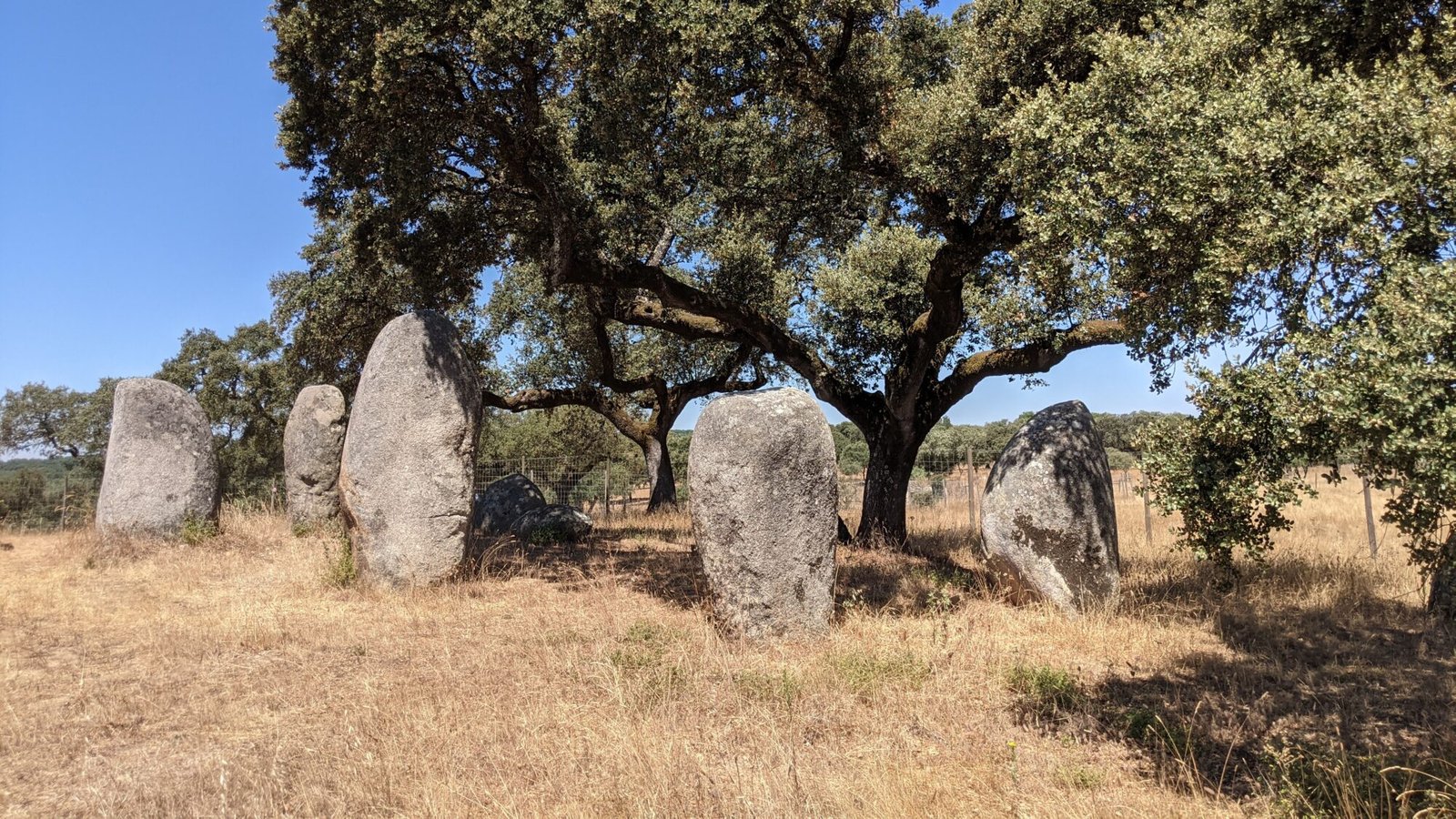
I am an immigrant to Portugal, who came here five years ago to make it my family’s home. Since that time, we’ve traveled to many corners of the country and have loved every place and every experience.
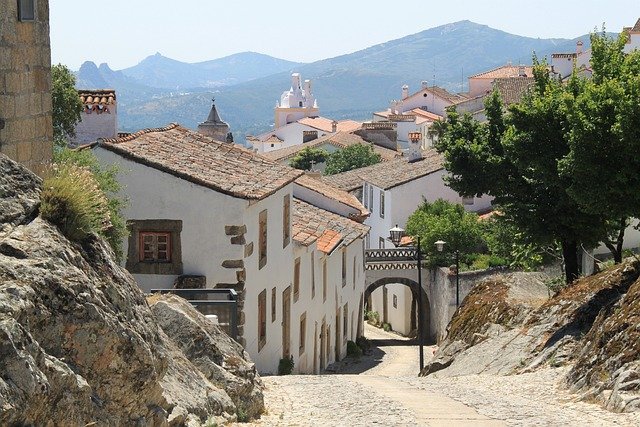
Last year, we visited the beautiful town of Marvão, in the Alto Alentejo. This gorgeous city is a walled city in the Serra (Mountains) de São Mamede, along the Spanish border. Perched high in the mountains, it commands a view of all the lands surrounding it, both in Portugal and in Spain. José Saramago, wrote “from Marvão you can see the whole world.”
The town of Marvão, and its walls and castle, date back to the 8th or 9th century when it was constructed by Ibn Marwan, and the town’s name comes from “Marwan.” Strolling around this thousand-year-old town was a wonderful experience of history, beautiful views, and lovely architecture.

From Marvão, we headed south. A short way from the town, we saw signs for the Roman site of Ammaia, so we made a detour. In a valley in the Serra de São Mamede, we walked among the pillars and plazas of this ancient town, admiring the views and the peacefulness of this two-thousand year old settlement.
We continued on through the Serra de São Mamede, passing through various villages. We headed towards the village of Esperança, which Portugal’s National Geographic had included in their publication of the most beautiful villages of Portugal. One of the highlights of the village mentioned by the magazine was the nearby prehistoric rock paintings of Vale de Junco (or Abrigo dos Gaivões). So we made our way there and admired the paintings people had made five thousand years ago. Human figures, abstract patterns, and strange symbols: we wondered at their significance and tried to understand the thinking and experiences of people from so long ago.
From there, we headed to our final destination of Évora, where we spent the night enjoying much the town had to offer, including the Roman Temple of Diana which sits at the heart of the city.
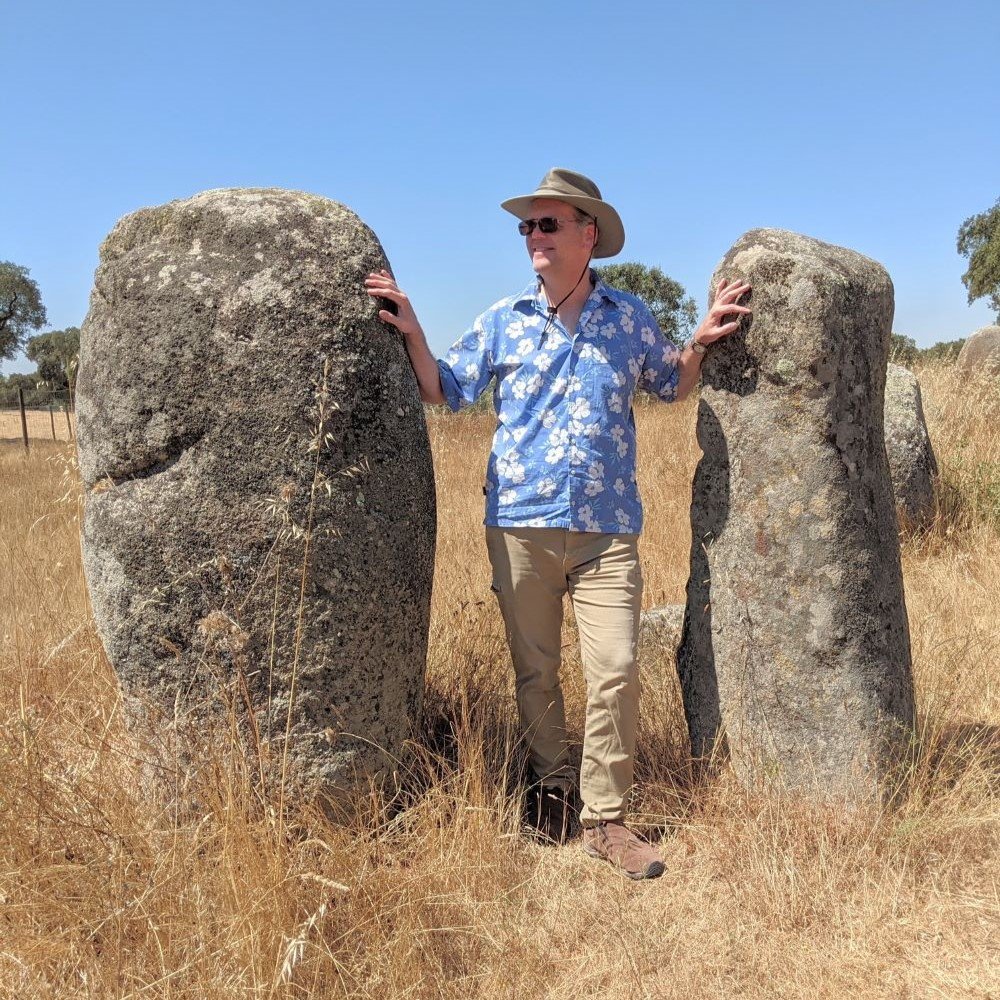
The next day, we walked around the nearby Cromlech of Vale Maria do Meio, admiring the stone circle from seven thousand years ago, peacefully sitting beneath cork oak trees, basking in the Alentejo sun. Who had put them there? For what purpose? What did they do in the site? So many questions, with few answers.
This trip back through thousands of years of history, all done within two days, gave me a real sense of awe and wonder at the vastness of human experience here in Portugal. And I was amazed at how many places there were here in Portugal that were unknown to English speakers. Much of Portuguse history, from Roman times to the present, is published in English. Some prehistoric sites (such as the famous Cromlech of Almendres or the rock carvings of the Côa Valley) are known and published in tour guides, but there is so much more across the country that doesn’t appear in any English publications.
As I started researching the prehistoric sites of Portugal, practicing my Portuguese and learning new vocabulary, I found that there was also a lack of comprehensive accounts even in Portuguese. There were a few books, many archaeological publications, some websites, etc. but nothing that included everything. Furthermore, as I researched I was continuously stumbling across references to more sites. There seemed to be no limit to the richness of the prehistoric heritage of Portugal.
And thus was born Prehistoric Portugal! In this website, my goal is to comprehensively catalog all the sites of Portugal. I will write about the sites that I have visited… and my plan is to start visiting more and more. (Will I be able to visit them all? That would be wonderful… only time will tell!)
Good Day
Thank you very much for your articles about the prehistory of Portugal.
I also find it amazing that the Portuguese have ignored, not paid much attention or done enough research into such an interesting time in the history of the land and the origins of the human settling in what is Portugal.
I am Portuguese by nationality, but I was born in Mozambique at the time when it was still a colony of Portugal. The first time that I had the opportunity to visit Portugal was 1 year ago at the age 67 years. I wanted to visit Porto which was my mother’ s birth place and she always spoke so proudly of it as well as other cities close to Porto. While in Porto I realized that a trip to Guimaraes by train was quite a quick one so I took the train and went to visit Guimaraes for the day.
I walked up to the castle which was a really beautiful experience. As I walked around the outside of the castle I came upon these indentations made in the large rock outcrops. I happen to live in South Africa and there are many such finds in the southern African country side. The explanation given to it is that it is man made, people used to make it to grind seeds and food products in communal basis. I found strange that there was no mention to explain the reason for those indentations there in Guimaraes. I asked one of the guides in the castle about it and his explanation was that it is a natural phenomena that the outcrops get eroded by water. I totally disagree, and I am quite sure if some research or diggings were to take place evidence of early human activity would be found around the castle.
I am happy that I came across your site and thus have the opportunity to be able to share this curiosity. I would appreciate if you could share your thoughts about what I have observed and mention in here. I would like to send you the photos but some how I am not able to attached it here.
Kindest regards
Claudio Mendes
Thanks for your interest. I’ve responded directly to you via email.