
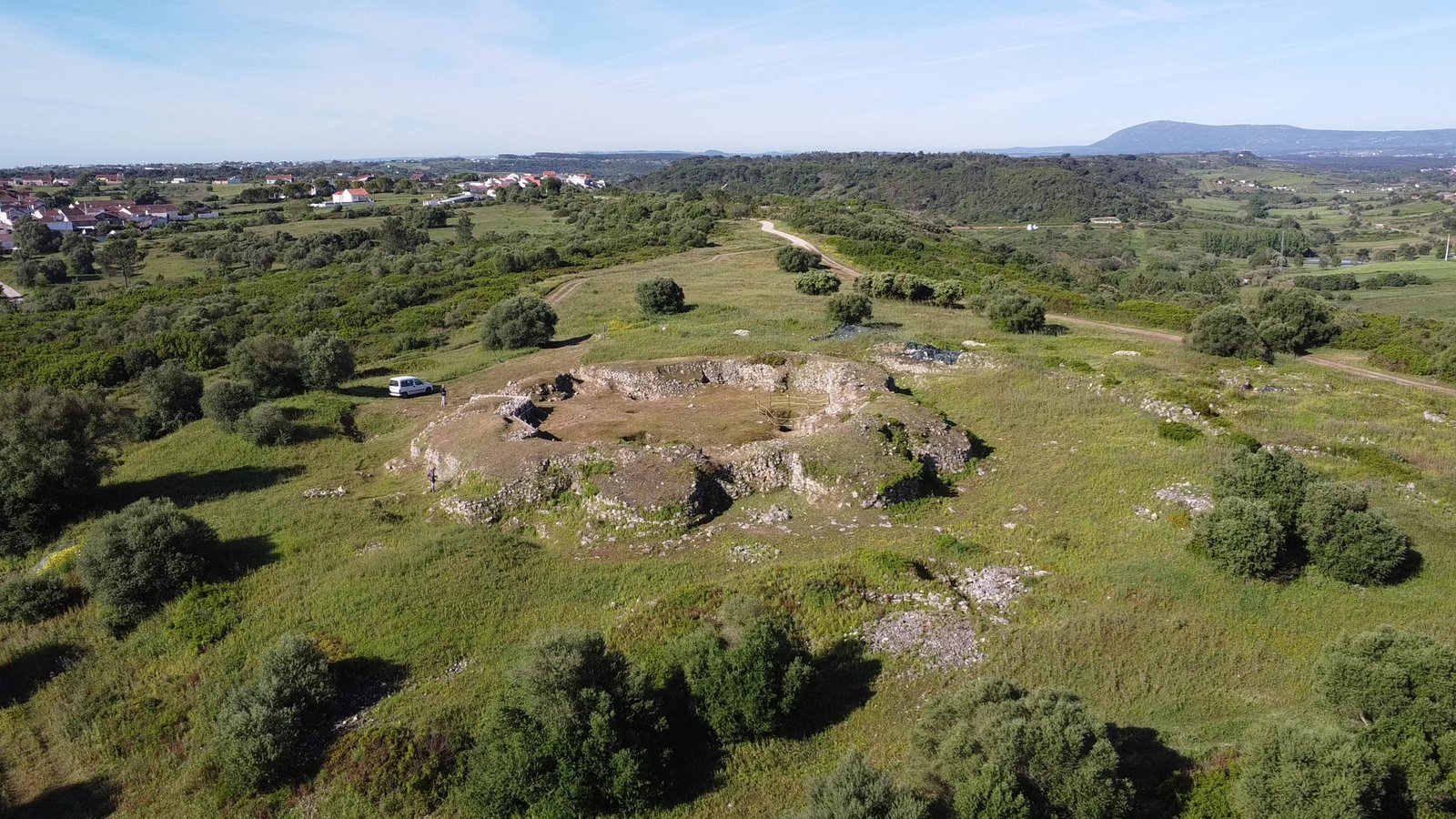
Also known as: Povoado Calcolítico (“Chalcolithic settlement”) or Povoado fortificado (“fortified settlement”) of Vila Nova de São Pedro
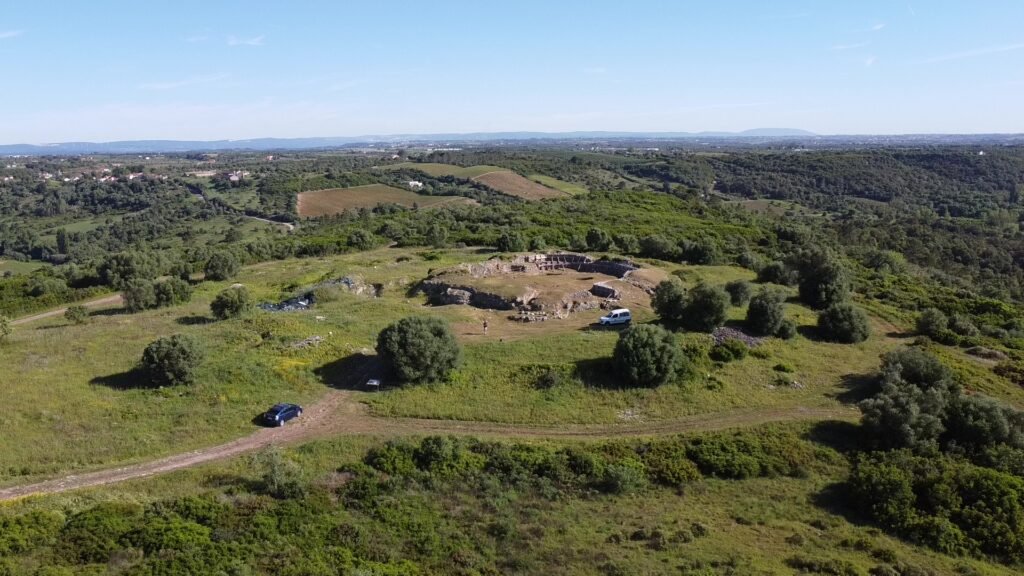
Stand on the hilltop and look around the surrounding area. Across the river valley, you can see surrounding hilltops and, off in the distance, mountain ranges. It’s a secure location, and it feels even more secure when you move inside the thick stone walls. These walls were built over four thousand years ago, by a people in need of good defense. Archaeologists are teasing out the secrets of these people’s lifestyle activities, but for the casual visitor the site tells a story of a successful society which needed to defend the fruits of its labours with walls and weapons.
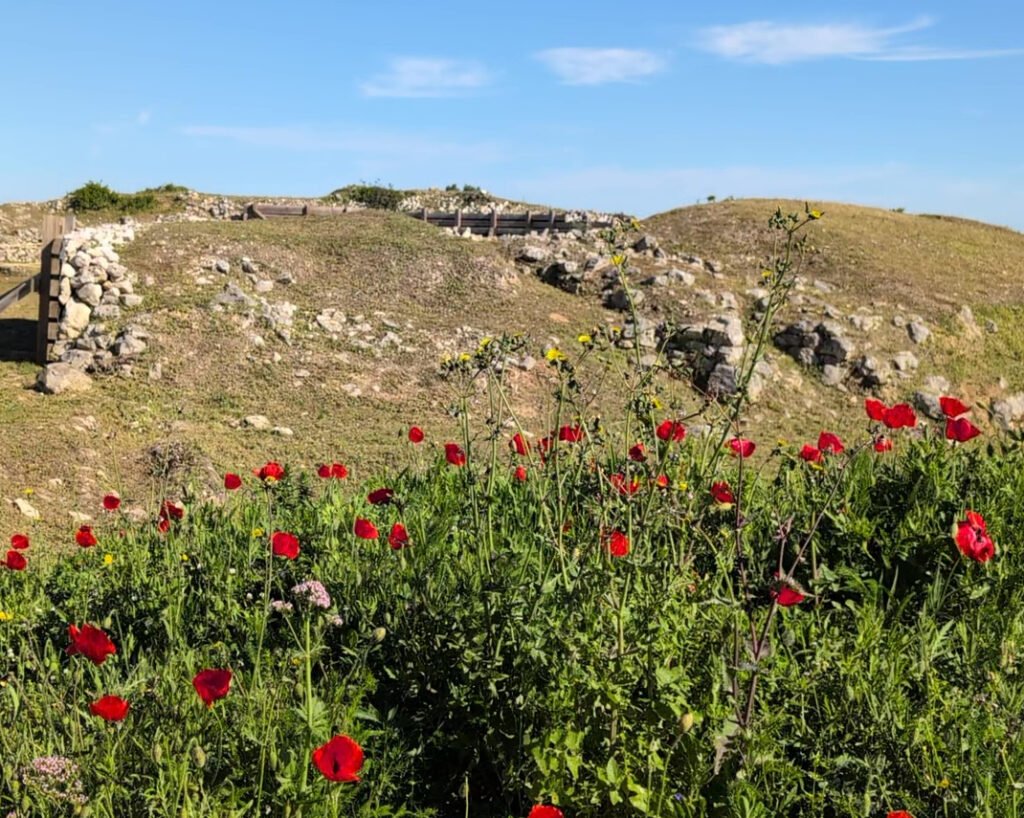
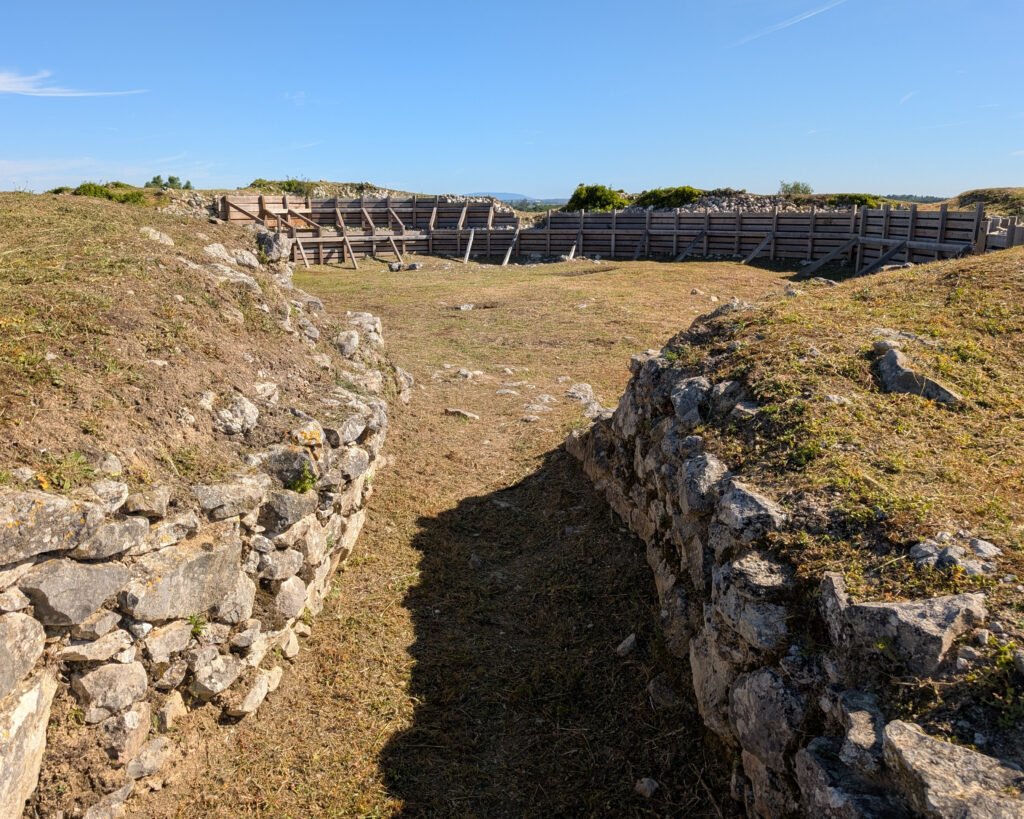
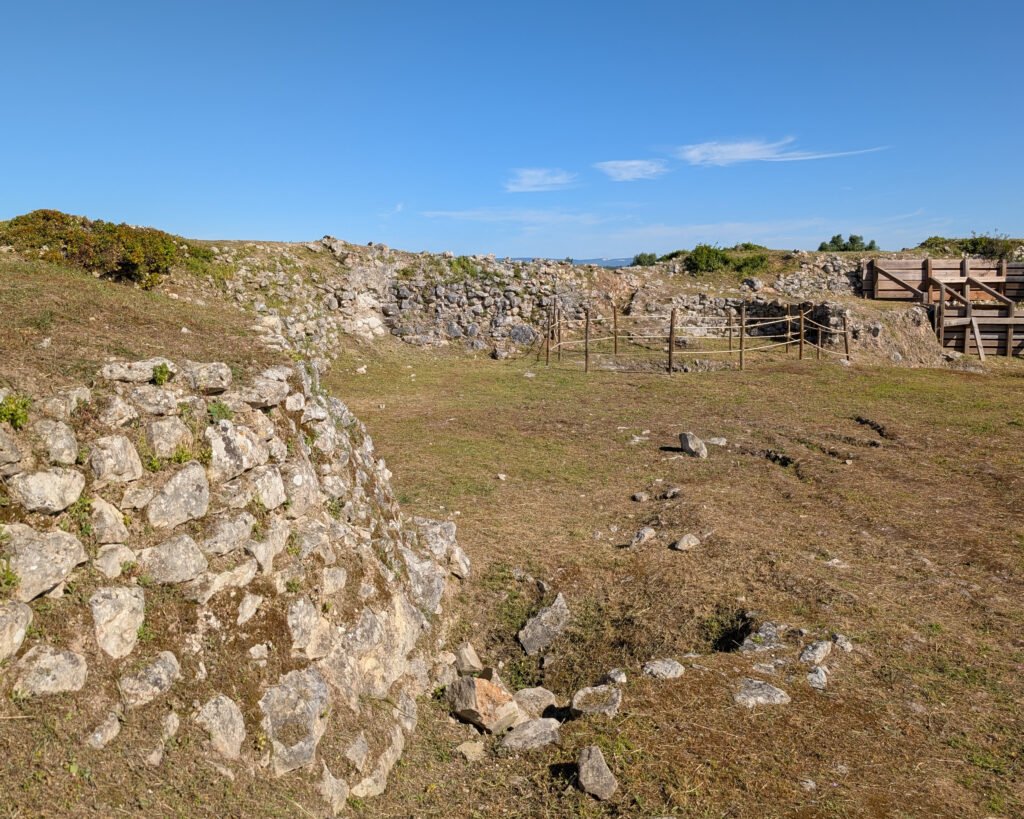
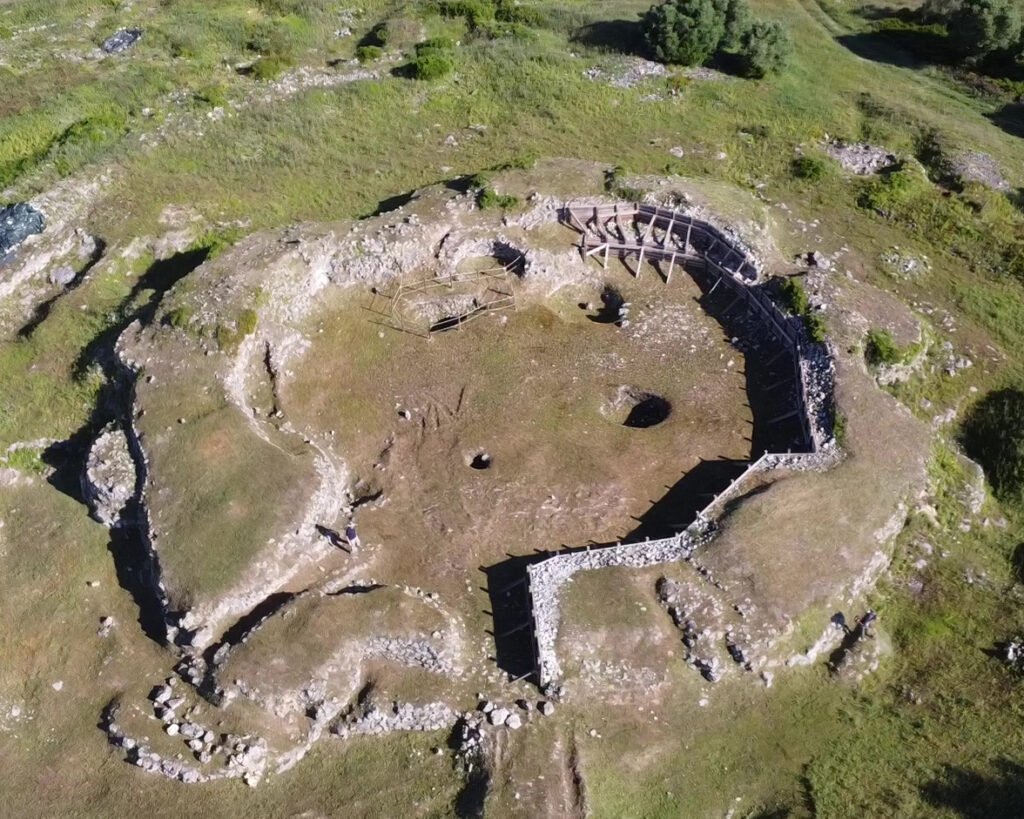
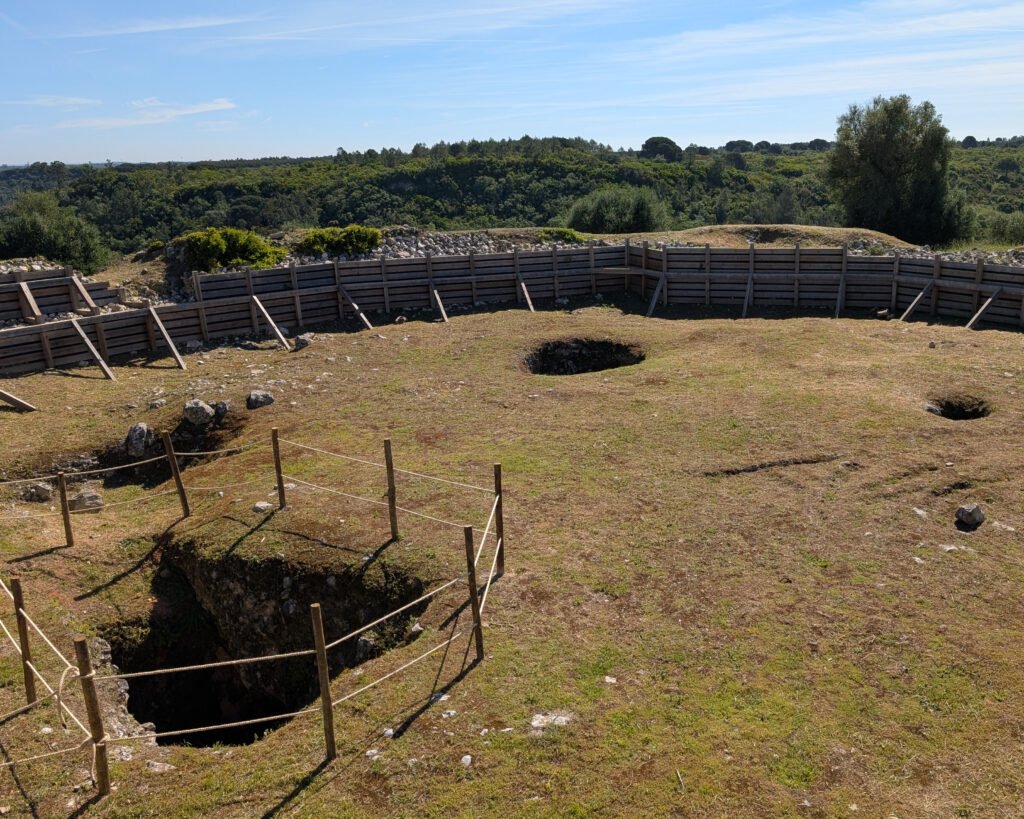
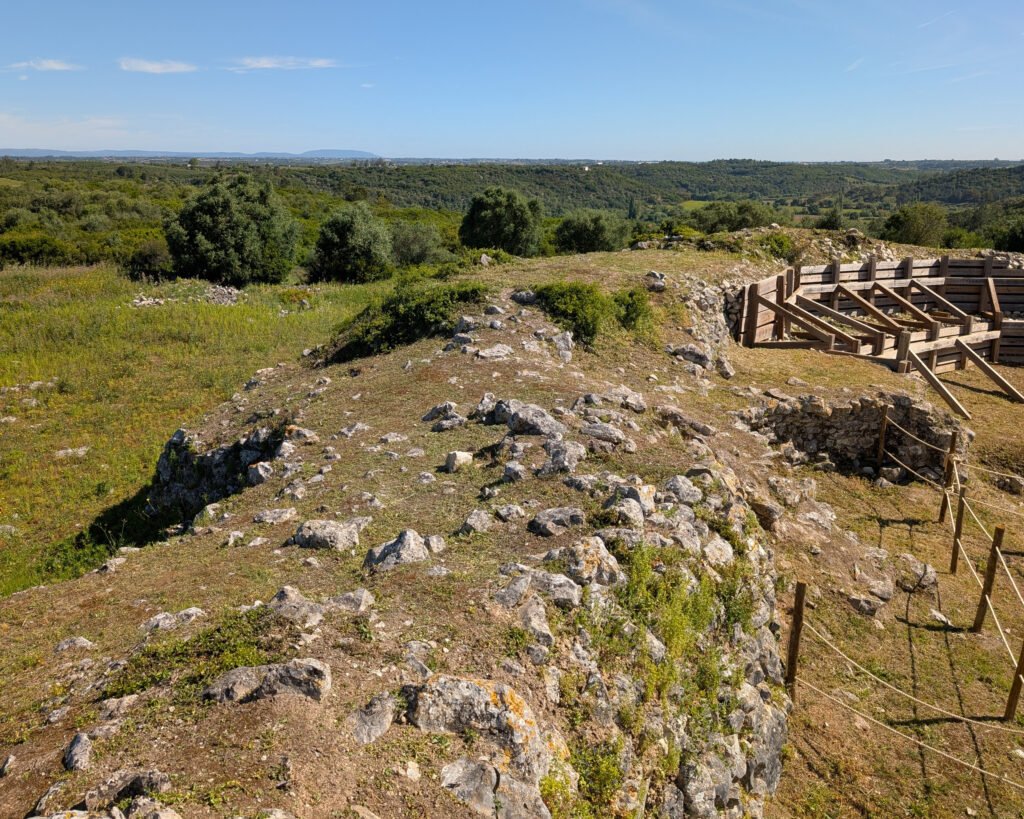
This “castro” (or hillfort) is an important and iconic example of a fortified settlement from the Chalcolithic period (or Copper Age), dating to about 3,200 to 2,000 BC. It is located on a hilltop providing excellent defensive conditions, surrounded by a valley and ringed with other hills: the Serra de Montejunto (to the Southwest) and the Serra d’Aire e Candeeiros (to the North) are easily seen from the hilltop. The Almoster stream, in the valley ringing the castro, would have provided ample water: indications are that it was much more navigable at the time and would have allowed access to the Tejo valley.
It was discovered in 1936 and excavated for thirty years by members of the Portuguese Archaeologists Association, led by Afonso do Paço and Eugénio Jalhay. The locals who lived in Vila Nova de São Pedro and Torre de Penalva were involved in these excavations, and the community involvement was a welcome source of excitement as well as income1. After the site was declared a National Monument in 1971, work began again the local community welcomed the return of archaeological works. There have been continuing excavation campaigns since them as part of the project “Vila Nova de São Pedro, again in the 3rd millennium” (VNSP3000)2.
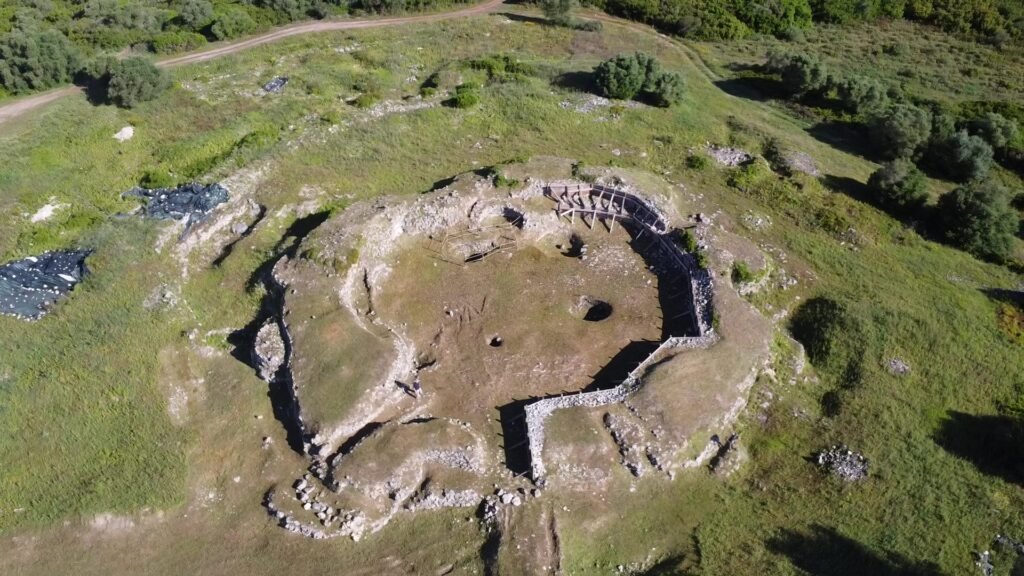
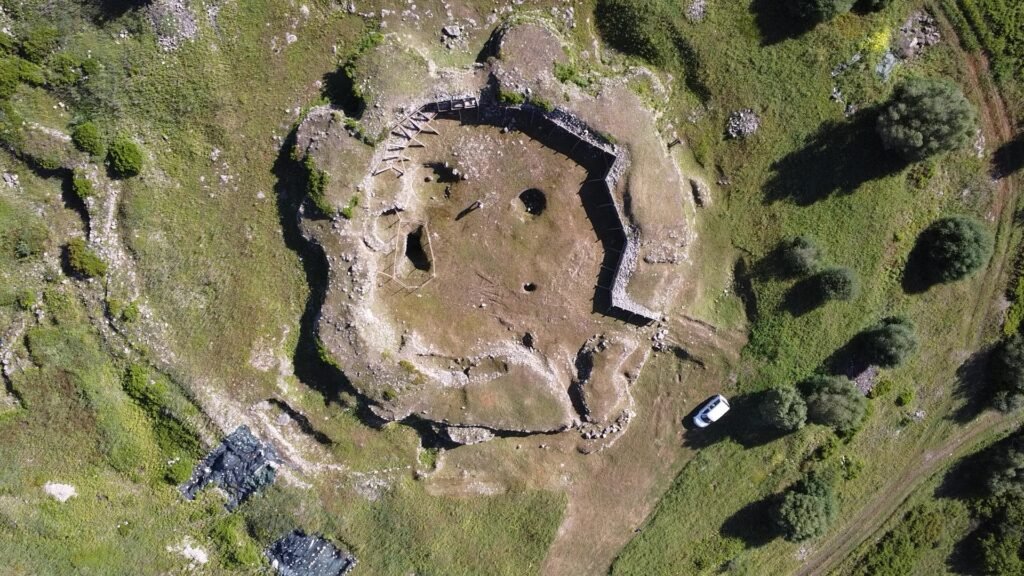
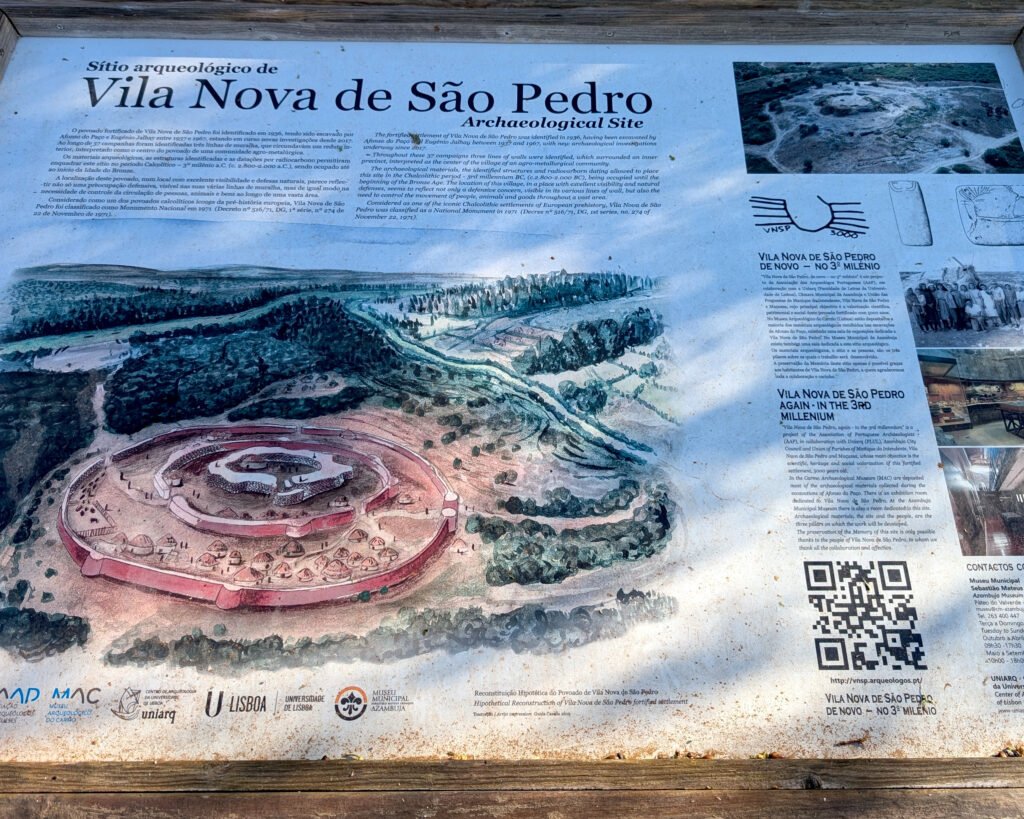
During these excavations, three lines of walls were identified. The central section, a fortified redoubt, was primarily used for storage and final refuge for people. These inner walls are exceptionally thick and tall, with a star-type shape providing extra defense. Large reserves of arrowheads have been found here, indicating a great need for armaments. Within this redoubt, an oven was found with nearby pottery and a cistern below, shows that this was a place for manufacturing ceramics. There was also a storage cellar, and a hole which was the foundations of a wooden building. Places for people to live or take refuge would have been outside the central redoubt, inside the outer walls.
The castro was built in several phases. Originally, settlement here would have been open, using the natural defenses of the hilltop. Then stronger fortifications were built. These were constructed in different phases. It is unclear the order in which the rings were built. It seems likely that the central redoubt was built most recently3.
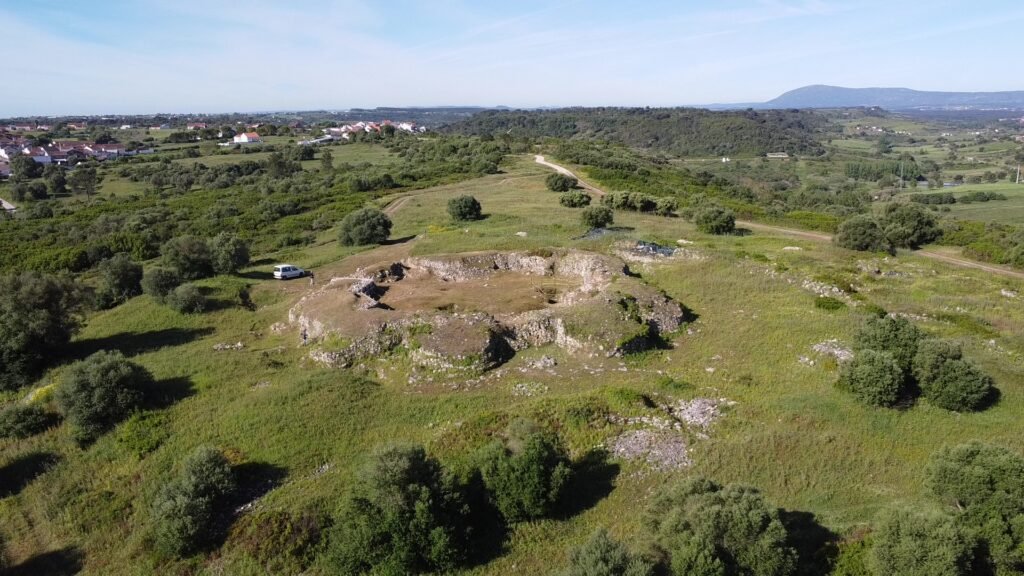
Artefacts recovered from the site are housed in the Archaeological Museum of Carmo, in Lisbon.
Location
The castro is in the district of Lisboa, municipality of Azambuja. It’s in the united parish of União das Freguesias de Manique do Intendente, Vila Nova de São Pedro e Maçussa, just outside the town of Vila Nova de São Pedro.
Coordinates: 39.21971762998646, -8.840459957209182
Access
There is a dirt road leading to the site, and paths up to and around the site. It’s openly accessible.
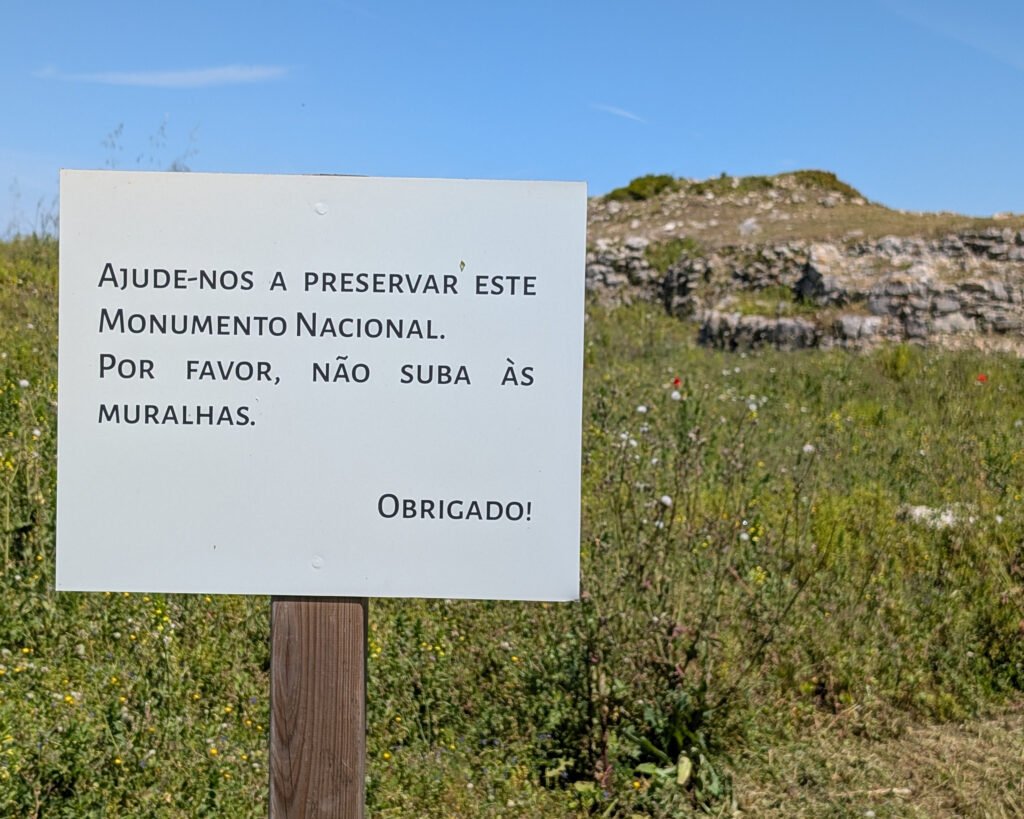
Please note: There is a sign (in Portuguese) that asks visitors to not climb on the walls. These can be damaged: they are thousands of years old, but were buried for nearly all that time. Some of the walls have wooden reinforcements to prevent collapse. This is also a site that is actively being excavated and studied. Please be respectful and careful.
Signage
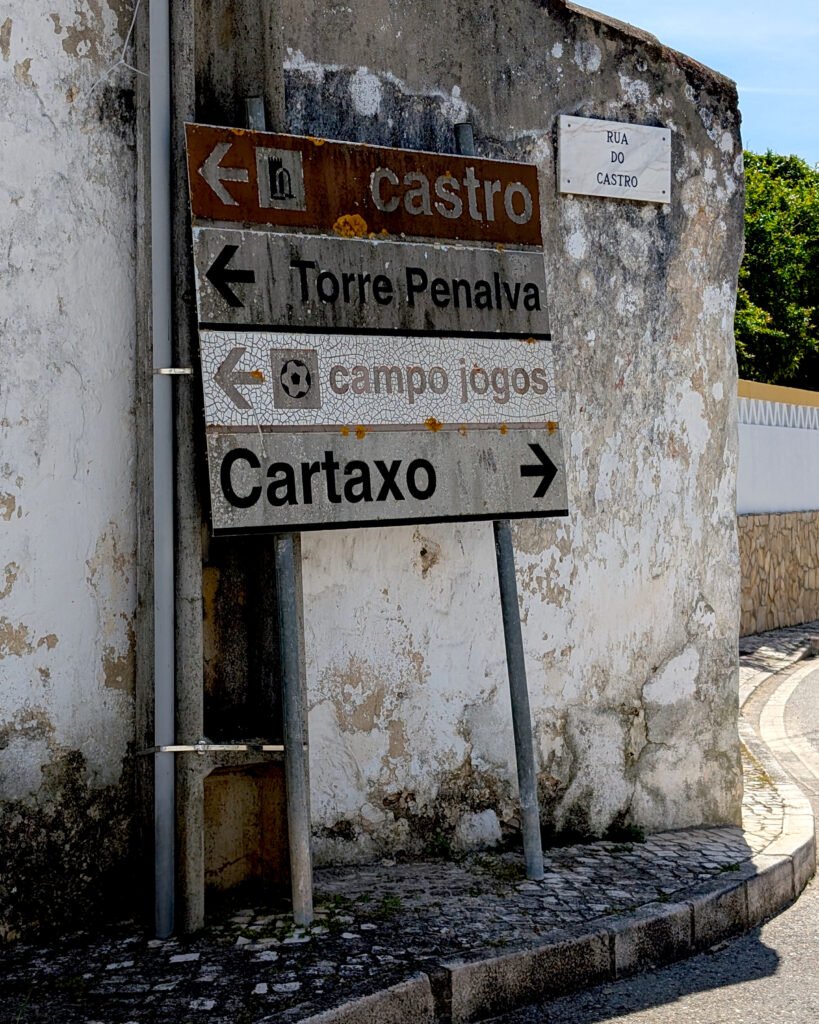
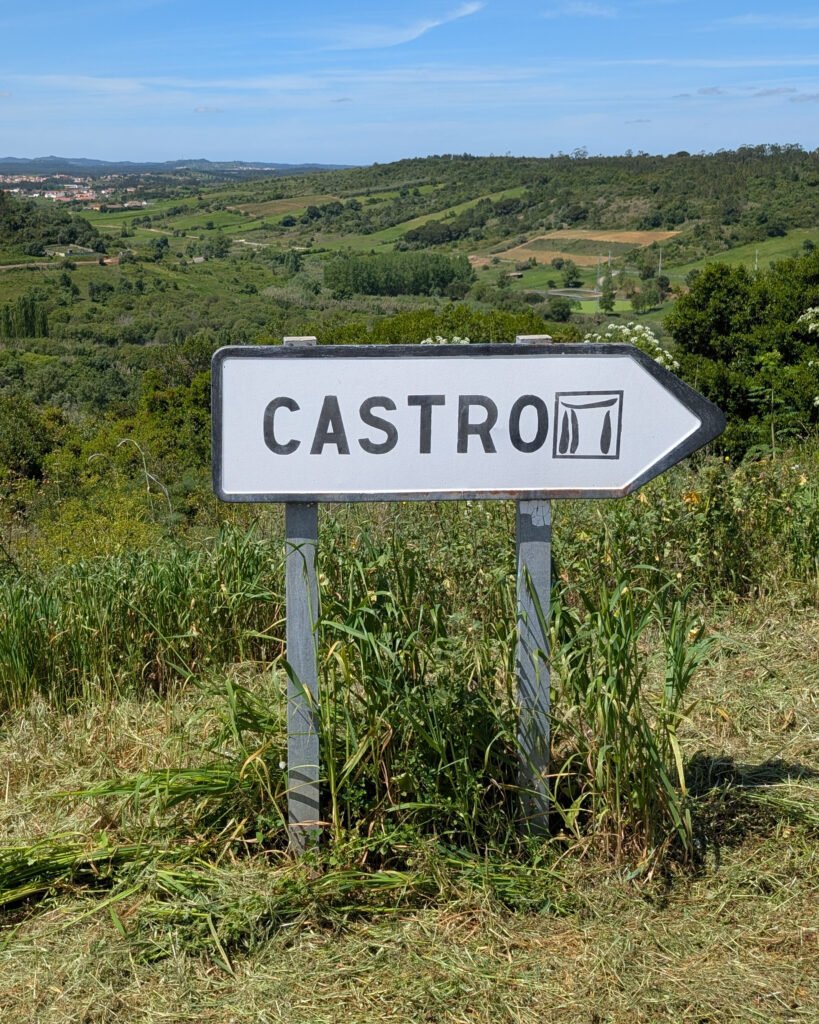
Road signs in the area point to the town of Vila Nova de São Pedro. There are signs in the town of Vila Nova de São Pedro that point to the castro.
Links
- Article (in English) from Wikipedia
- Entry (in English) in the Megalithic Portal
- Website (in Portuguese) from the Association of Portuguese Archaeologists
- Facebook page (in Portuguese) of the VNSP 3000 project
- Description (in Portuguese) from the town hall of Azambuja
- Description (in Portuguese) from the United Parishes of Manique do Intendente, Vila Nova de São Pedro e Maçussa
- Walking trail (in Portuguese) of PR2 AZB from Visit Ribatejo
- 3D aerial image (no language – description in Portuguese) by José Júlio Cachado (from Facebook)
- Video (in Portuguese) featuring archaeologist Andrea Martins by UNIARQ
- Video (in English) by One-Eyed-Giant Rock Riffs
- Video (in Portuguese) about an open day by newspaper O Mirante
- Video (in Portuguese) about the excavations and the community’s involvement and memories.
- Description (in Portuguese) from Archaeologist’s Portal of Directorate-General of Cultural Heritage
- Designation (in Portuguese) as a National Monument by the Directorate-General of Cultural Heritage
- Detailed information (in Portuguese) in the database of the Directorate-General of Cultural Heritage
Nearby
There’s not a lot very near to this site. The town of Muge, home to the Mesolithic shell middens (and with a lovely interpretation centre), is about 30km away, along the Tejo River. The Dolmen-Chapel of Alcobertas is about 35km northwest towards Leiria.
The two other major castros of the Estremadura region are the Castro of Zambujal (60km away) near Torres Vedras, and the Castro of Leceia (90km away) in Oeiras, near Lisbon.
In Lisbon itself, the Carmo Archaeological Museum is the home of the Association of Portuguese Archaeologists and has a large section displaying artefacts found at the Castro of Vila Nova de São Pedro, as well as a large model showing the site.
Sources
- Arnaud, José Morais, et al. “Vila Nova de São Pedro E a Arqueologia Pública – a Consolidação de Um Projecto Através Dos Agentes Da Sua História.” Arqueologia Em Portugal, vol. 2023-Estado da Questão, 2003, pp. 1943–1961, hdl.handle.net/10451/61105. Accessed 12 Apr. 2026. ↩︎
- Arnaud, José Morais, et al. “Vila Nova de São Pedro – de Novo, No 3o Milénio. Um Projecto Para O Futuro.” Arqueologia & Hisória, vol. 66-67, 2014, pp. 7–17. Revista da Associação dos Arqueólogos Portugueses, www.researchgate.net/publication/323389634_Vila_Nova_de_Sao_Pedro_de_novo_no_3_milenio_-_novas_interpretacoes_e_novo_projecto. Accessed 12 Apr. 2026. ↩︎
- Cardoso, João Luís. “The Fortified Site of Leceia (Oeiras) in the Context of the Chalcolithic in Portuguese Estramadura.” Oxford Journal of Archaeology, vol. 19, no. 1, Feb. 2000, pp. 37–55, www.academia.edu/9672827/The_Fortified_site_of_Leceia_Oeiras_in_the_context_of_the_Chalcolithic_in_Portuguese_Estremadura, https://doi.org/10.1111/1468-0092.00098. Accessed 2 May 2026. ↩︎