
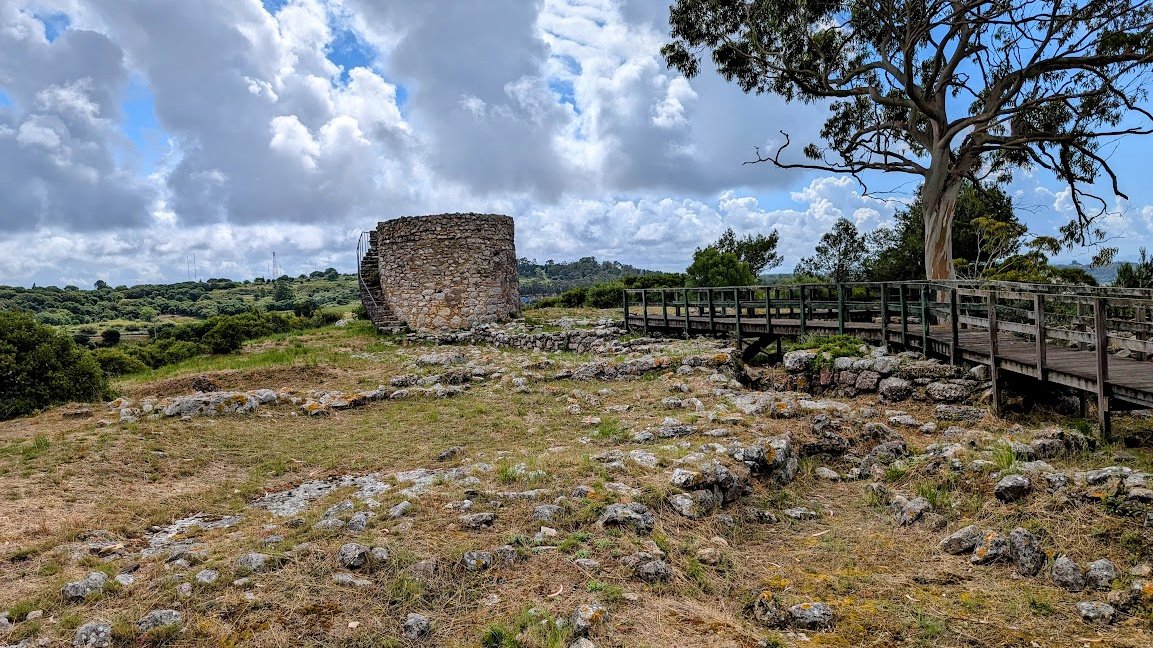

Also known as: Povoado Pré-Histórico de Leceia, Povoado calcolítico de Leceia, Estação Eneolítica de Leceia, Castro de Leceia, Estação Arqueológica de Leceia
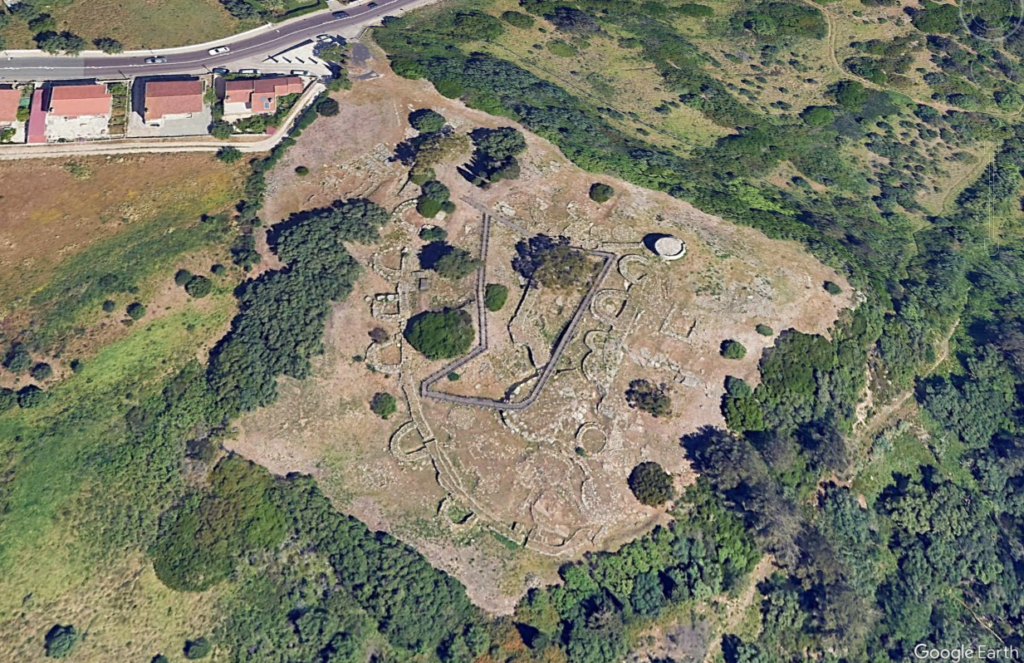
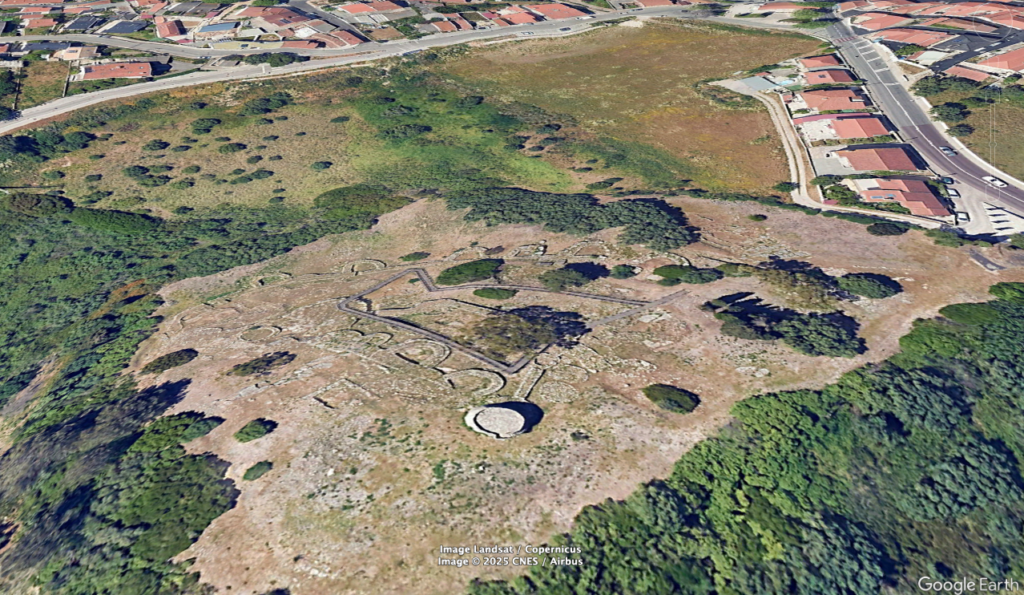
Walking along the boardwalk, you can admire the views: wooded hills, with the town of Leceia, then on the other side a sharp drop down to the Barcarena stream. Look down at the ground and you see the stones: they are scattered all around. As you walk towards the centre of the site, the forms become more distinct: circular ring of house walls, fireplaces made of vertically placed stones, labyrinthian passageways between walls, circular platforms, and thick walls fortified with circular buttresses. This was a heavily defended settlement, a long time ago. Many thousands of years ago, people lived here and felt compelled to protect themselves from outsiders.
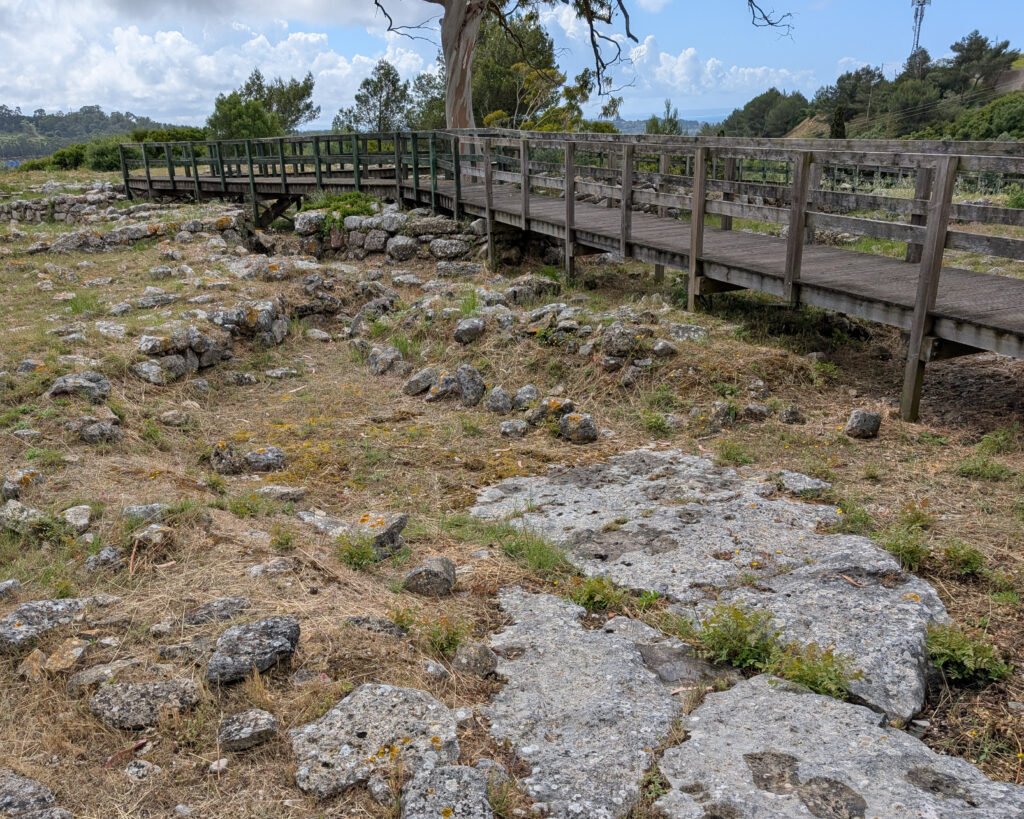
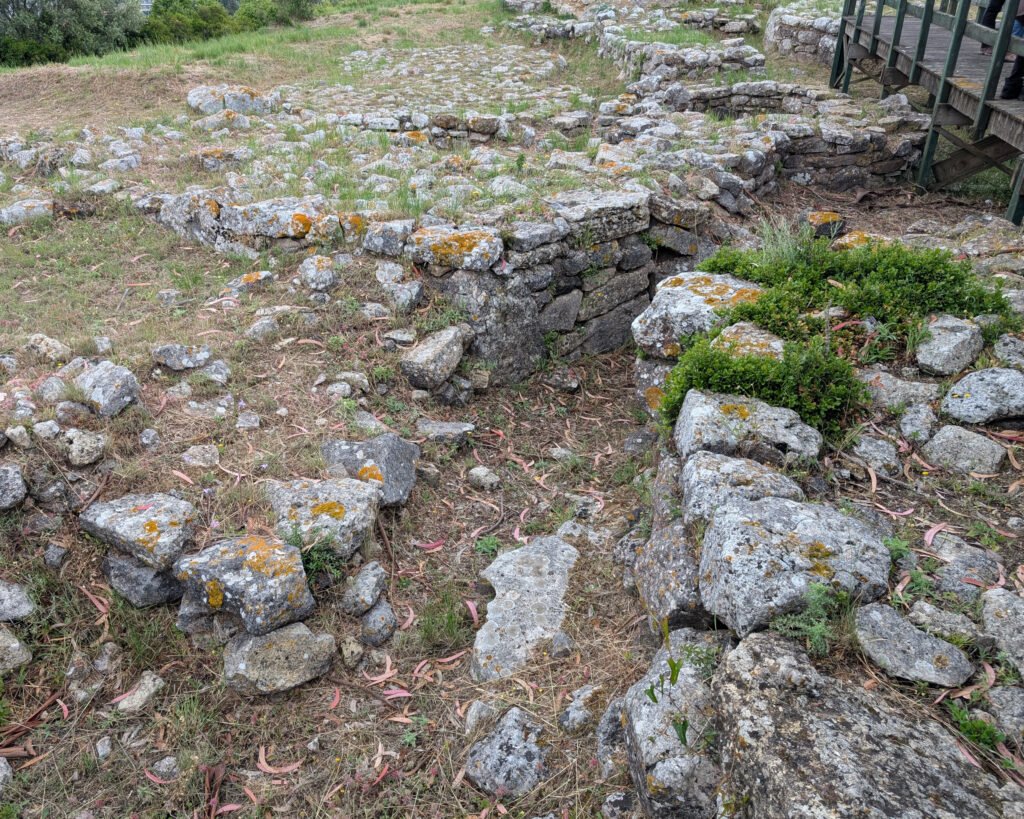
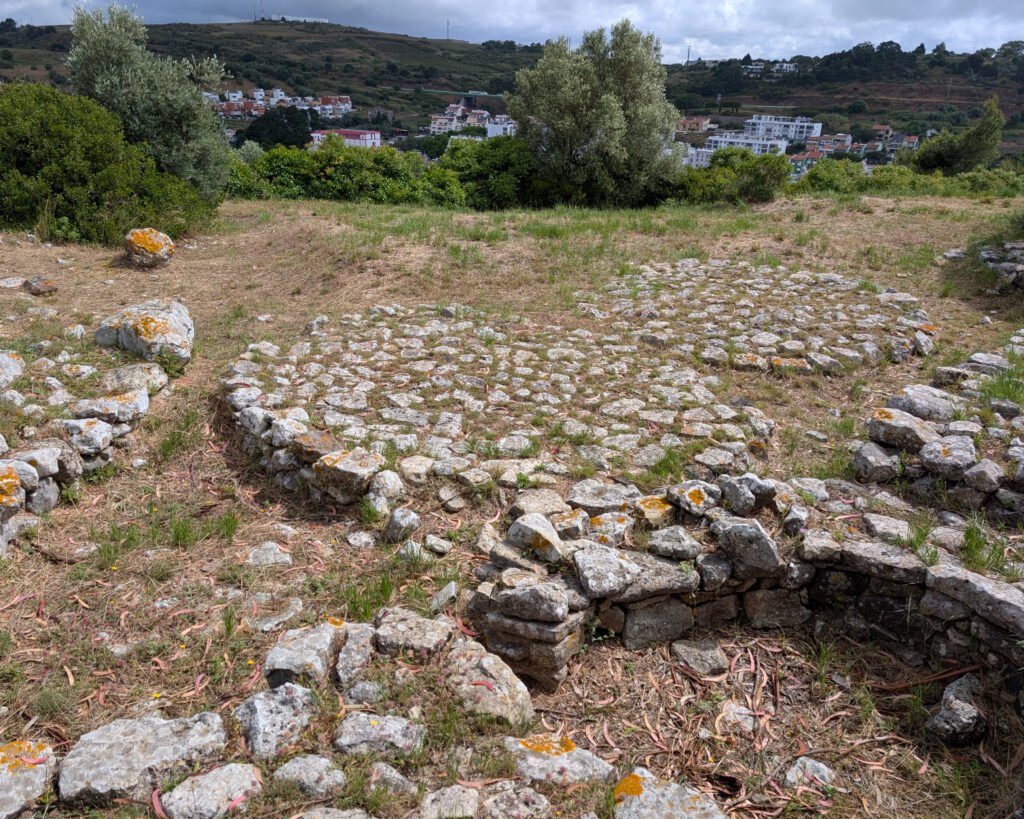
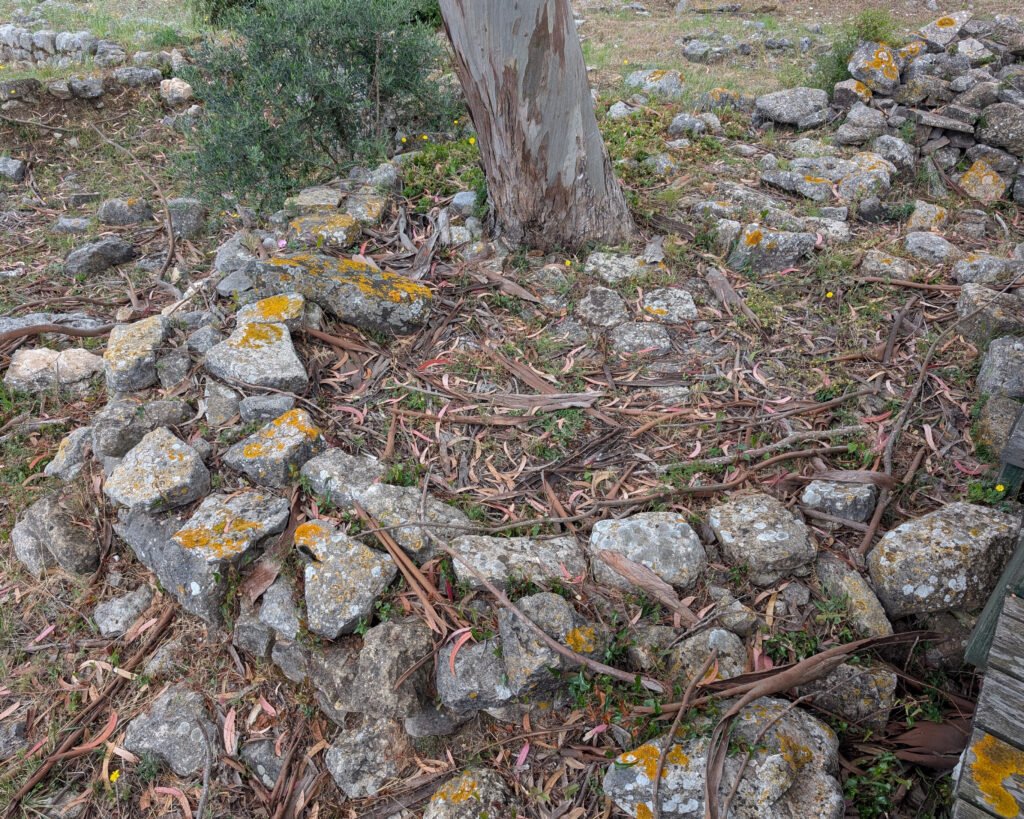
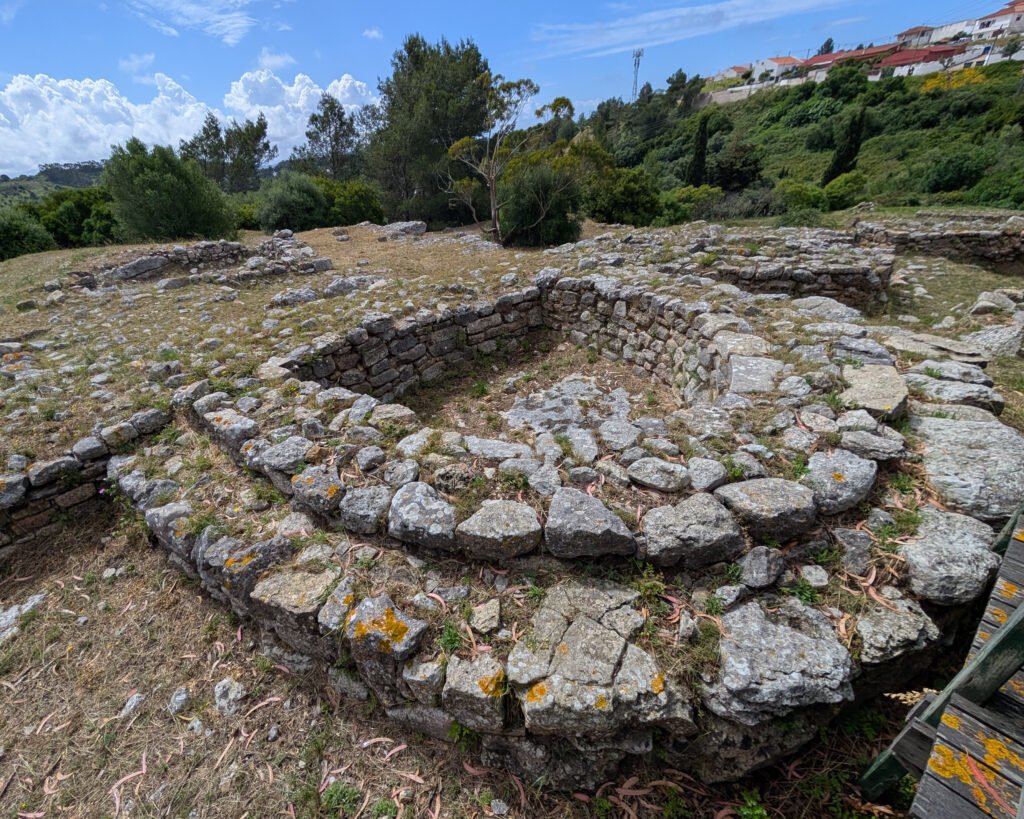
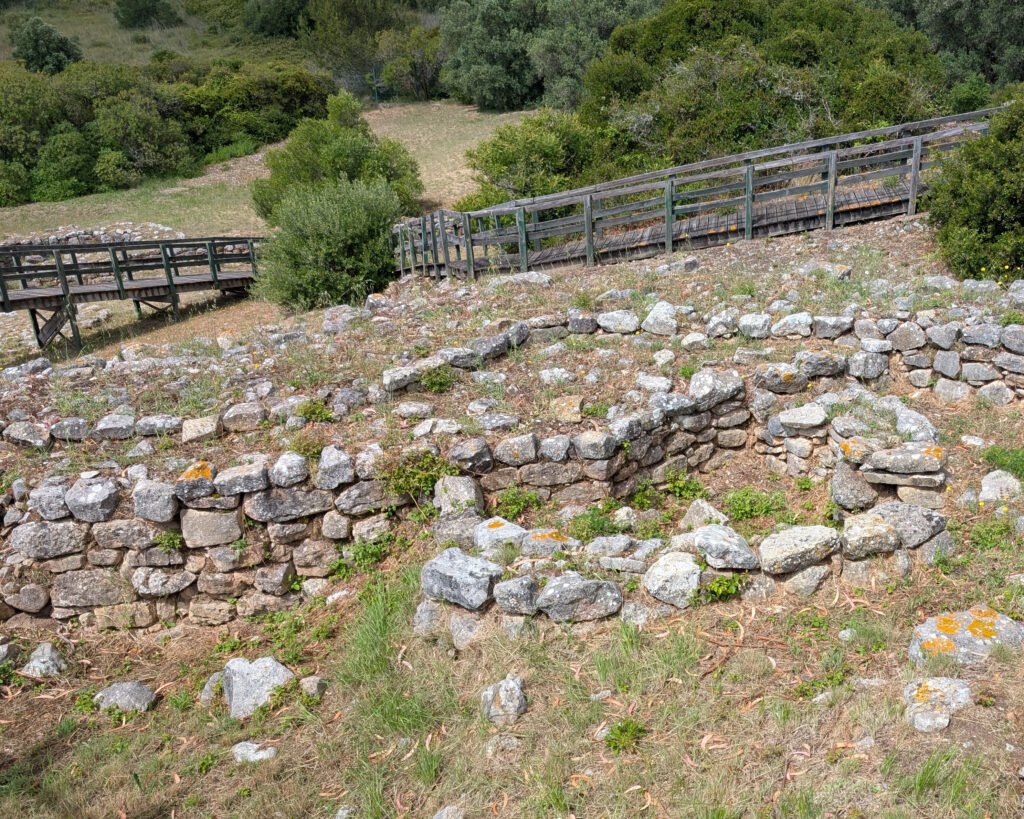
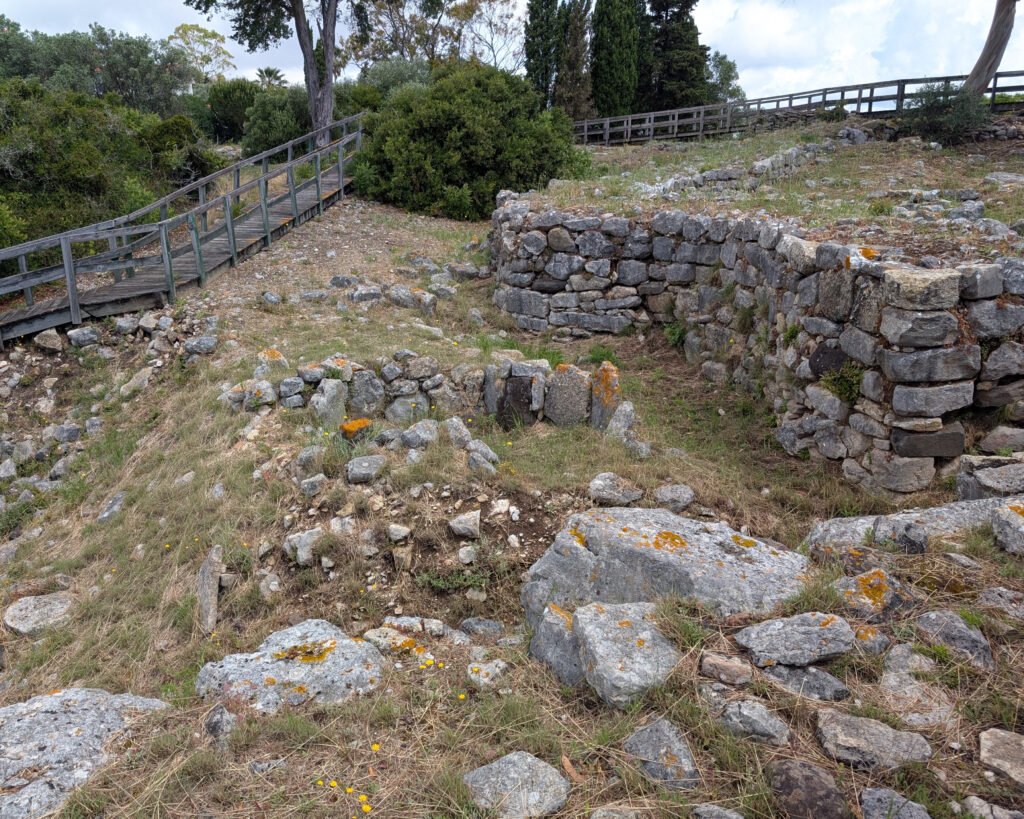
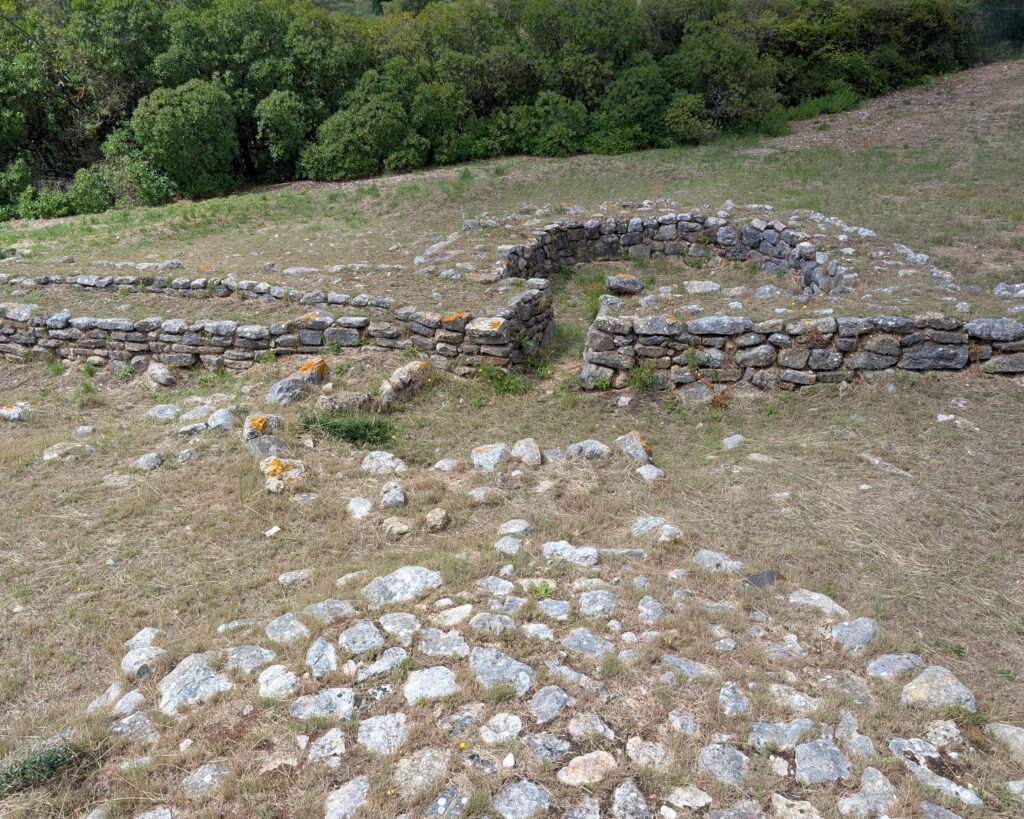
The site shows evidence of human habitation from the Late Neolithic period (around 3,200 BC)1, and then construction of a castro (“hillfort” or “fortified settlement”) in the Chalcolithic period, starting around 2,800 BC. The castro was constructed in multiple phases throughout the Chalcolithic period, eventually being abandoned at the beginning of the Bronze Age, around 2,200 BC.
This was really a fortified settlement: behind big stone walls with circular ramparts, there were houses and places for domesticated animals and food storage. The settlement supported around 200-300 people, although only some would have lived inside the walls. Most would have had wooden houses outside the walls, and only used the stone fortifications for protection in dangerous times.
Inside the walls, several circular houses are identified, along with paved barns or threshing floors. There are flat areas that would have corresponded to a town square, narrow paths with staircases, and enclosed towers incorporated into the walls that could have held livestock or other storage in peaceful times and served as defensive bastions during war or attack.
This is one of three main castros in the area, along with the Castro of Zambujal, near Torres Vedras, and the Castro of Vila Nova de São Pedro, near Santarém2. Of the three, Leceia is by far the largest in area.
The site was discovered in 1878 by archaeologist and geologist General Carlos Ribeiro, but wasn’t properly excavated until 1983 when João Luís Cardoso began his two-decades long study of the site3. The excavations here, as well as in the other regional castros, have given archaeologists a much fuller picture of what life was like during this transitional period between the stone age and the ages of metals. Copper production didn’t seem to happen here, but copper artifacts were found that came to this settlement through trade.
Virtual Visit
Location
This site is in the Lisbon district, municipality of Oeiras. It’s in the Leceia neighbourhood of the town of Barcarena.
The coordinates to the entrance are: 38.728719, -9.282354
Access
The site is only accessible by pre-arranged guided visit. (Visits are free, but must include 10 to 30 people. Details are on the Oeiras website.) You can see the artefacts and gain more information about the settlement in the nearby Fábrica da Pólvora Negra (Black Gunpowder Factory).
Signage
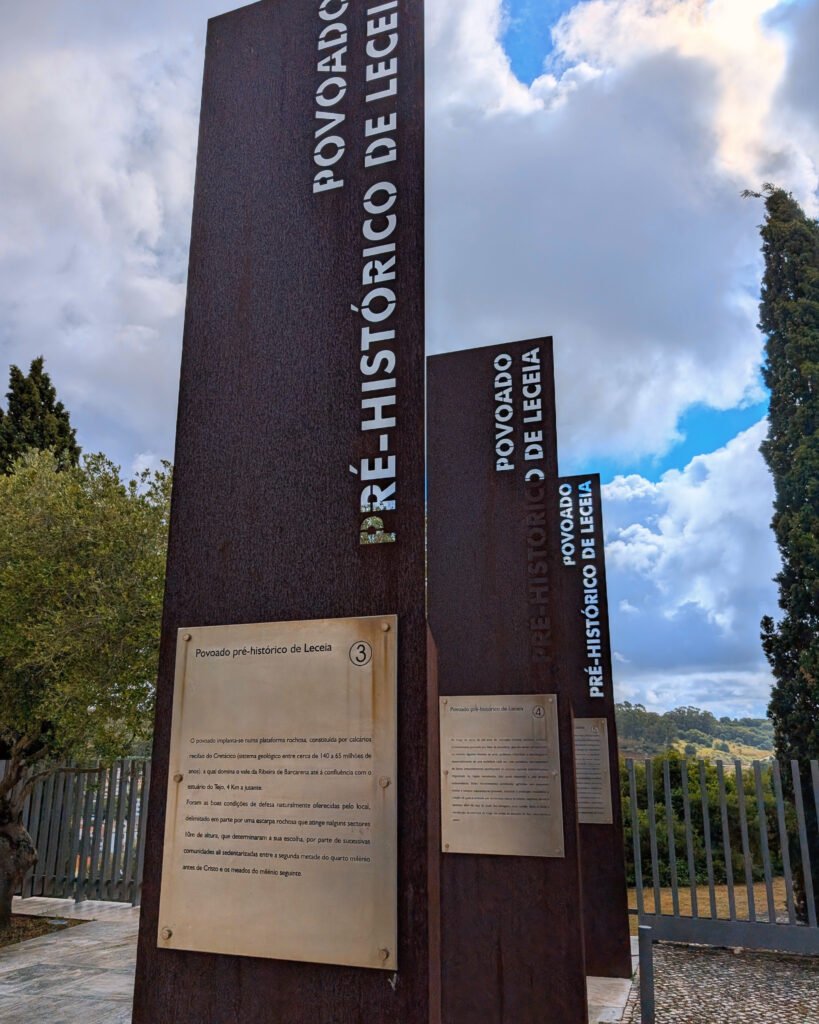
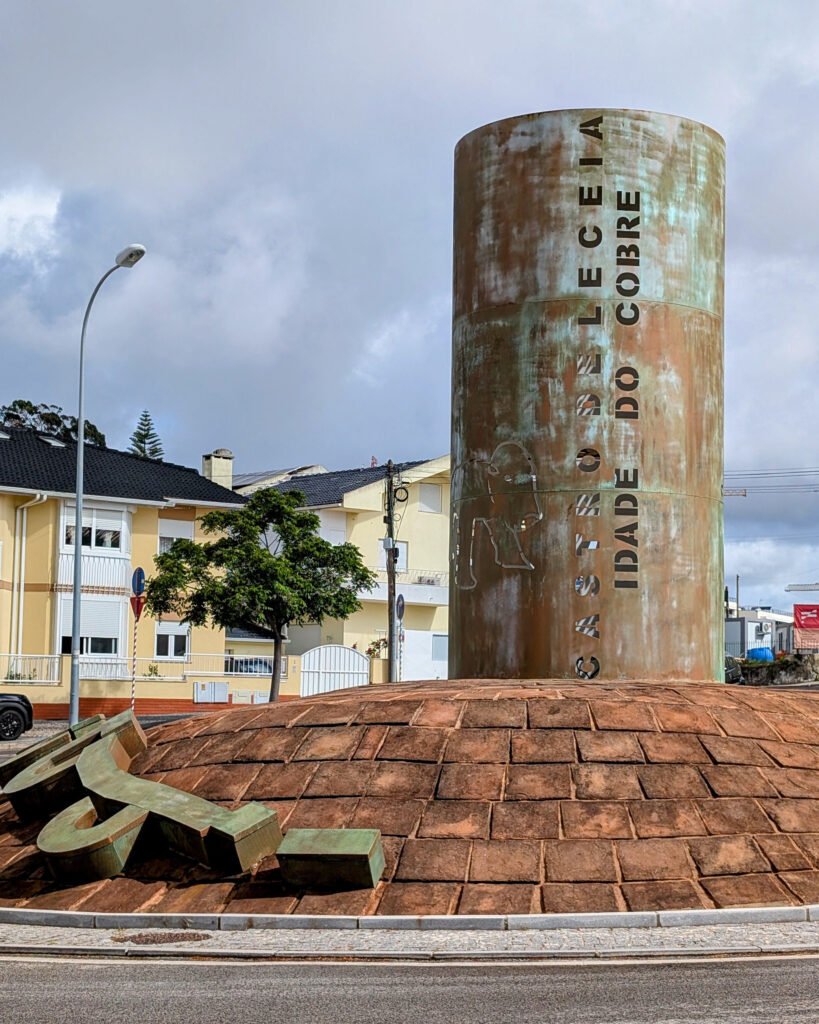
There are signs at the entrance to the settlement, as well as a big display on the roundabout in the neighbourhood.
Links
- Article (in English) from Wikipedia
- Entry (in English) from the Megalithic Portal
- Website (in Portuguese) from the Câmara Municipal of Oeiras
- Video (in Portuguese) from the Câmara Municipal of Oeiras
- Virtual 3D Visit (Portuguese annotations) from the Câmara Municipal of Oeiras on Sketchfab
- Description (in Portuguese) from Archaeologist’s Portal of Directorate-General of Cultural Heritage
- Designation (in Portuguese) as a Property of Public Interest by the Directorate-General of Cultural Heritage
- Detailed information (in Portuguese) from the database of property by the Directorate-General of Cultural Heritage
Nearby
The Fábrica da Pólvora Negra (Black Gunpowder Factory) houses a permanent exhibit about Leceia: the Exposição Monográfica do Povoado Pré-Histórico de Leceia (Monographic Exhibition of the Prehistoric Settlement of Leceia). There is also a general exhibition of the archaeology of the municipality of Oeiras, which includes artefacts and information about Paleolithic, Neolithic, and more recent prehistory and history. The factory (now a cultural site, with museums, restaurants, gardens, etc.) is only a few kilometers away, the other side of the town of Leceia.
Other nearby sites include the Roman villa of Freiria (which also has evidence of Iron Age occupation). There are several Neolithic and Chalcolithic dolmens in the area, as well as the artificial caves of Carenque.
Sources
- Cardoso, João Luís. “The Chalcolithic Fortified Site of Leceia (Oeiras, Portugal).” Universidade de Lisboa, 2008, hdl.handle.net/10451/9736. Accessed 1 May 2026. ↩︎
- Cardoso, João Luís. “The Fortified Site of Leceia (Oeiras) in the Context of the Chalcolithic in Portuguese Estramadura.” Oxford Journal of Archaeology, vol. 19, no. 1, Feb. 2000, pp. 37–55, www.academia.edu/9672827/The_Fortified_site_of_Leceia_Oeiras_in_the_context_of_the_Chalcolithic_in_Portuguese_Estremadura, https://doi.org/10.1111/1468-0092.00098. Accessed 2 May 2026. ↩︎
- Cardoso, João Luís. “O Povoado Pré-Histórico de Leceia 50 Anos de Trabalhos Arqueológicos (1972-2022).” Estudos Arqueológicos de Oeiras, vol. 31, 2022, www.oeiras.pt/documents/20124/2094284/2022+EAO+31+O+povoado+pr%C3%A9-hist%C3%B3rico+de+Leceia.+50+anos+de+trabalhos+arqueol%C3%B3gicos+%281972-2022%29.pdf/3c4c35db-69c9-cb44-3790-af7e9e29c3d1?t=1674656644870. Accessed 10 Feb. 2026. ↩︎