
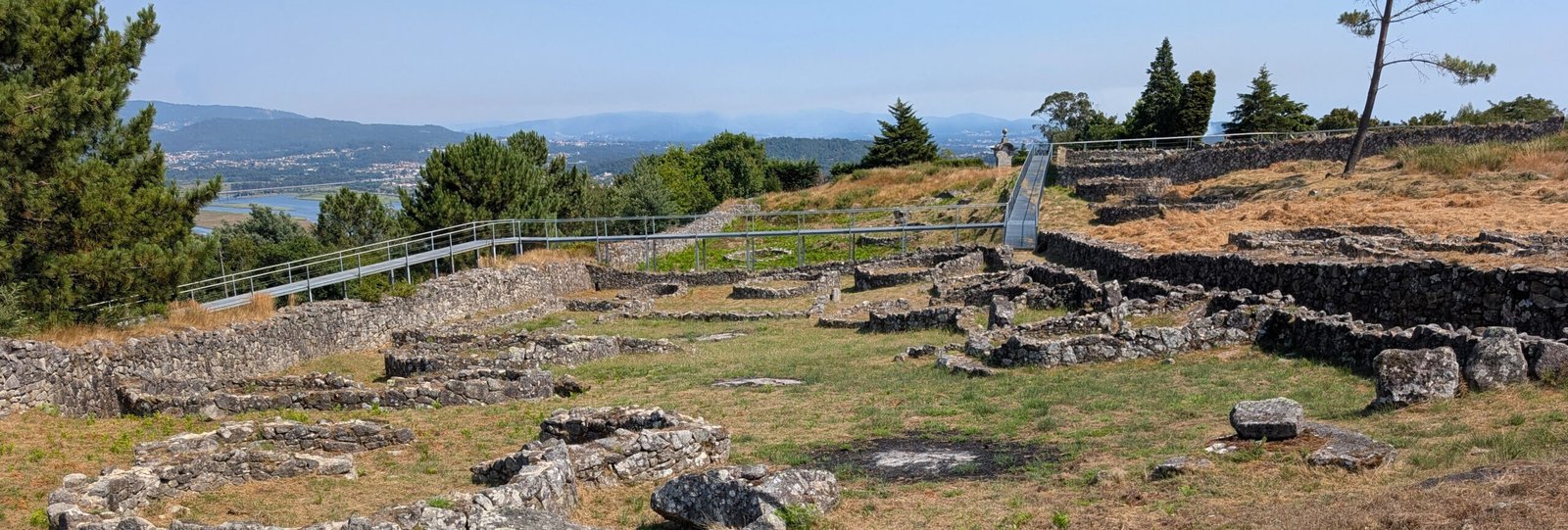
This page features some of the settlements that existed in Portugal during the prehistoric period – typically during the ages of metal. Some were fortified stone hillforts (castros), while others were places enclosed with ditches. Many prehistoric settlements continued to be occupied in the historic period, and the artefacts and remnants of the prehistoric period may be lost. When there is a significant element of prehistory in such a location, it will be included here.
Use the map in the sidebar to browse or search among the various prehistoric sites. (The “Filters” control in the top right corner allows you to select types of sites.) Highlighted map markers indicate sites that are described on this website.
Below is a list of all the Settlement sites on our website (so far!).
-
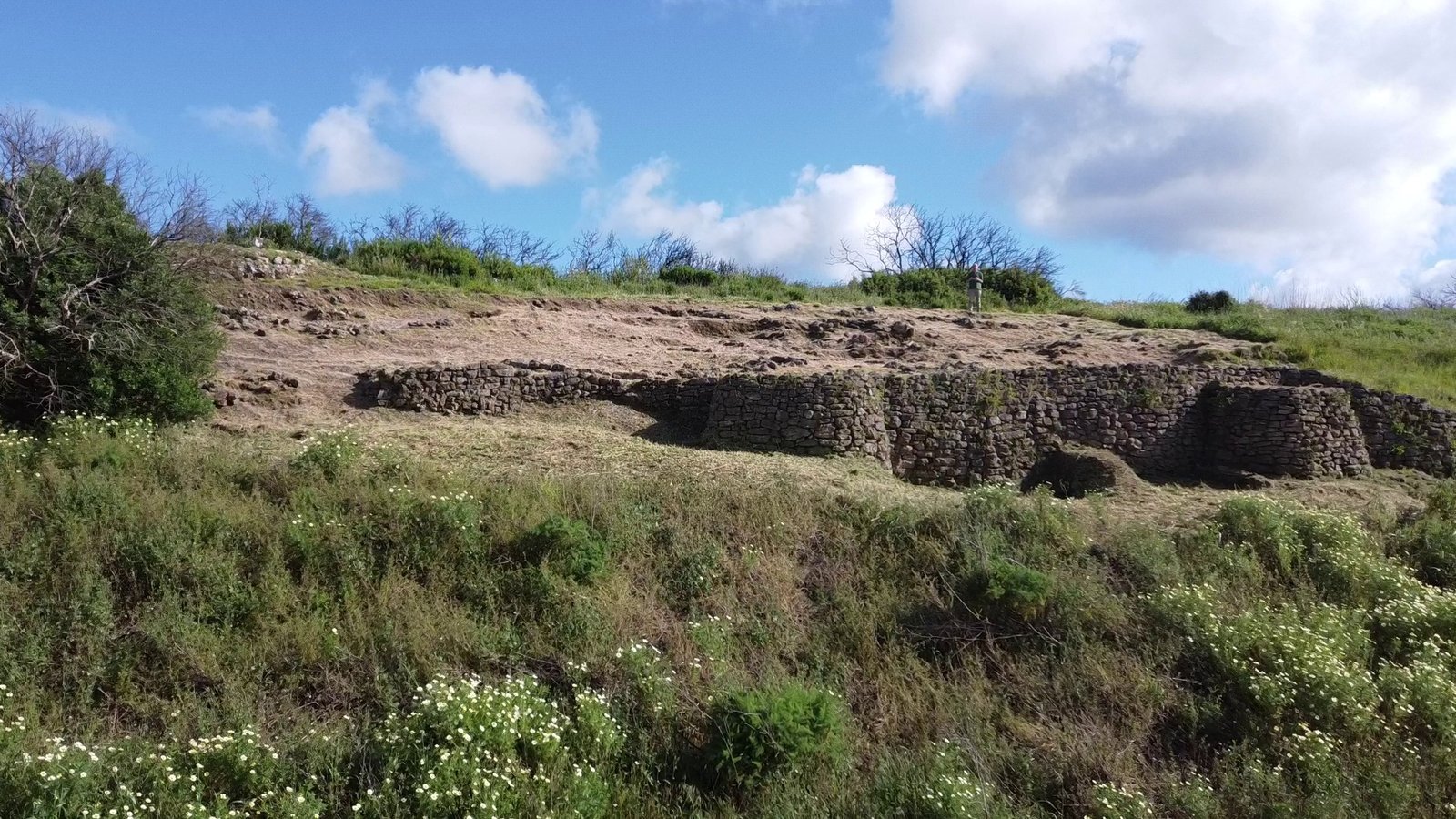
Castro de Chibanes
Also known as: Povoada de Chibanes Walk along the ridge of the Serra de Louro, and enjoy the tremendous view. To the east stands the castle of Palmela on a high hill. To the north, you can see to the Tejo River mouth and the capital city of Lisbon. To the south, you can see…
-
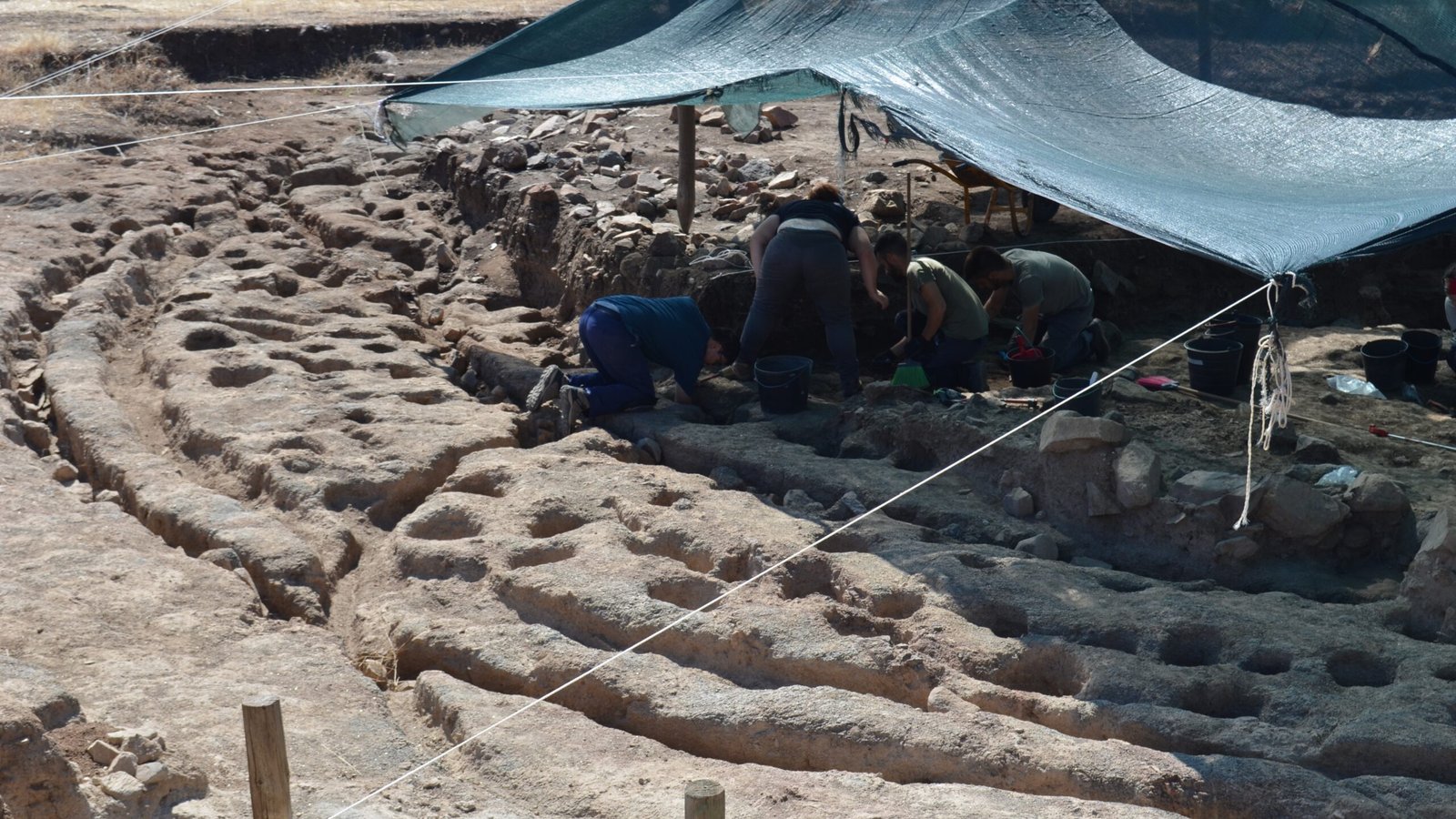
Perdigões Archaeological Complex
Also known as: Cromeleque de Perdigões Below the flapping tarpaulins, archaeologists work, carefully excavating holes in the hard clay. There are many holes, forming a series of concentric circles. The team leader explains the site, using maps and illustrations. He points off to the East and explains how the enclosure opened up towards the rising…
-
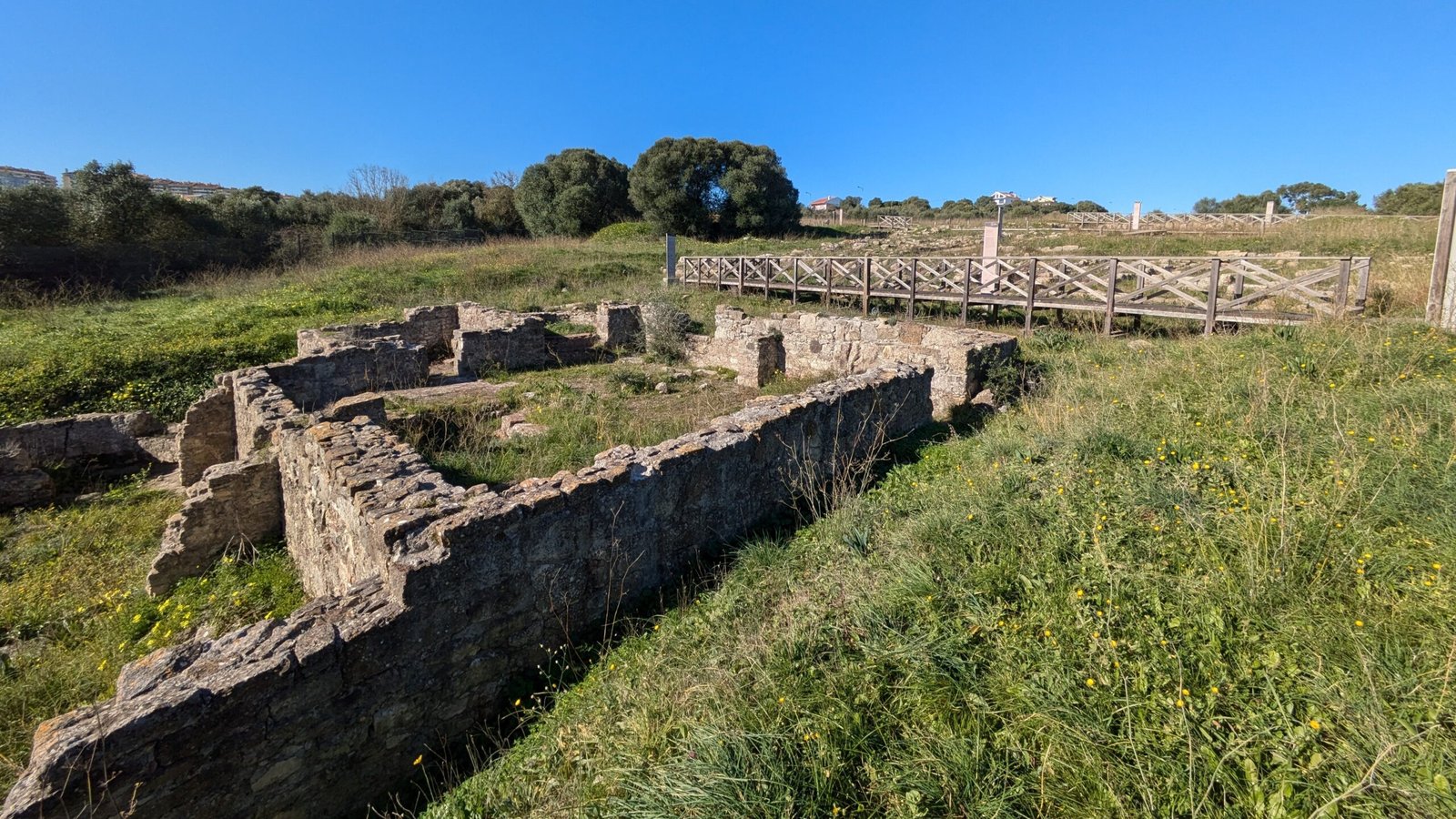
Roman Villa of Freiria
This is a Roman site, but it does also have remnants of an Iron Age settlement. Most of the site is of Roman construction (1st century AD/CE), but there are remnants of earlier Iron Age buildings. Pottery from the Chalcolithic period was found on the site, indicating continued occupation from prehistoric to Roman times. Other…
-
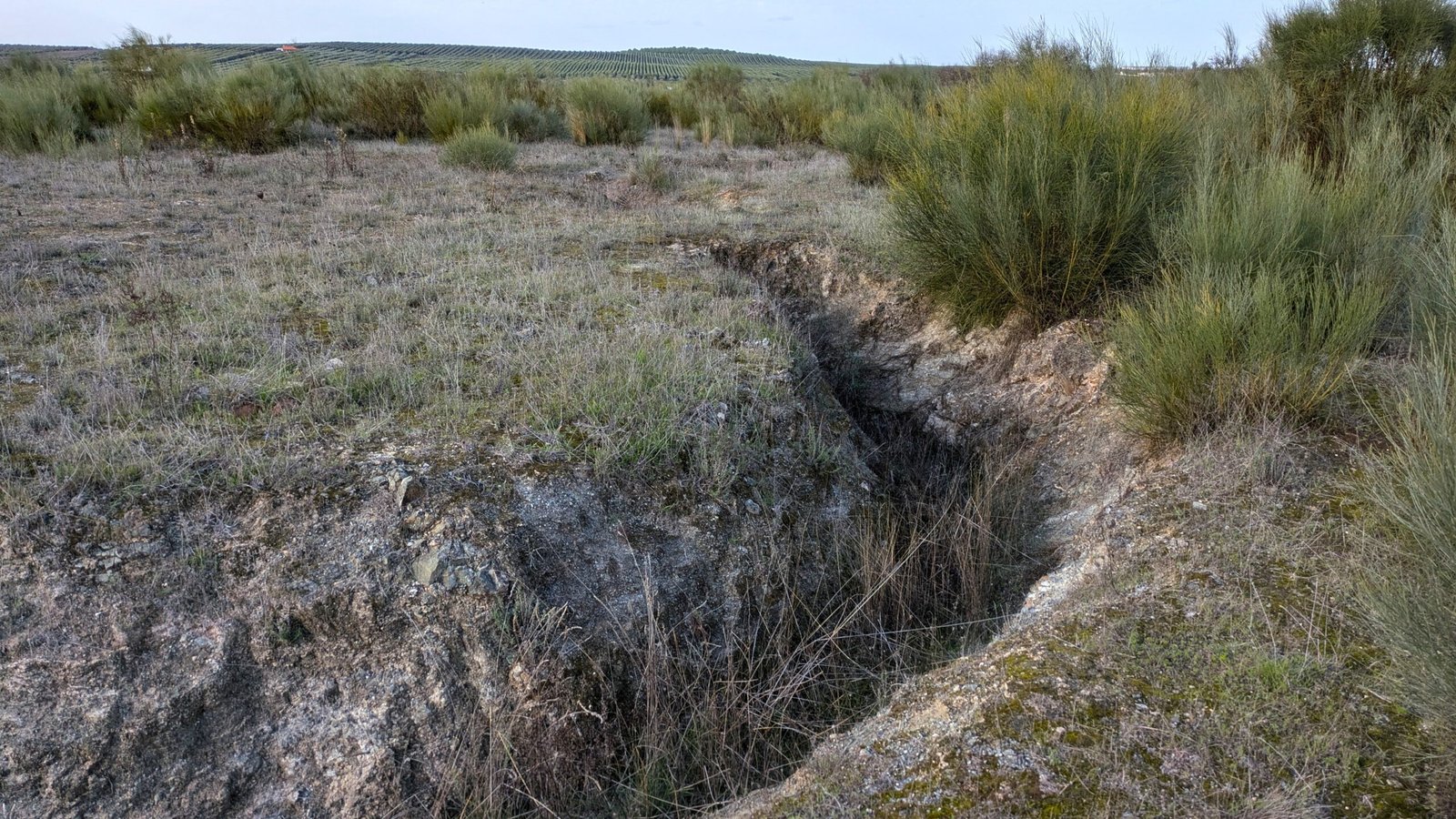
Santa Vitória
Also known as: Povoado Pré-Histórico de Santa Vitória Climb the metal staircase which spirals 4 meters above the hilltop. Look around at the surrounding countryside: the farms, the nearby town, the water works behind you. Then look down at the hilltop surface. Look closely. There, carved into the ground are curving ditches and holes. They…
-
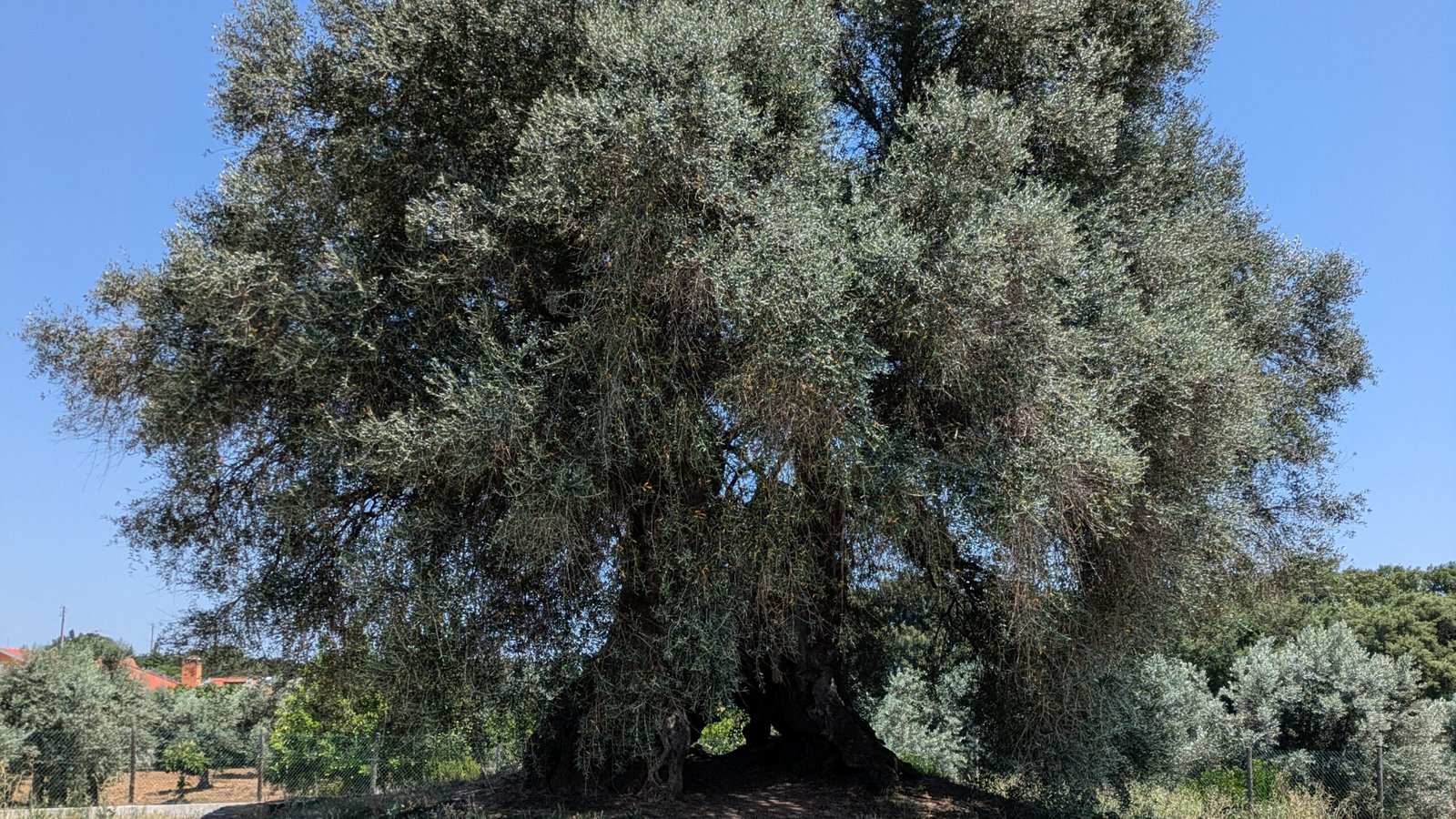
Oliveira do Mouchão
In a sleepy corner of a small village just north of the Tejo River, stands an oliveira, or olive tree. It’s massive trunk is hollowed out, and is cut off just over three meters above the ground, allowing fresh young branches to grow. The wind whispers softly through the leaves and whistles slightly as it…